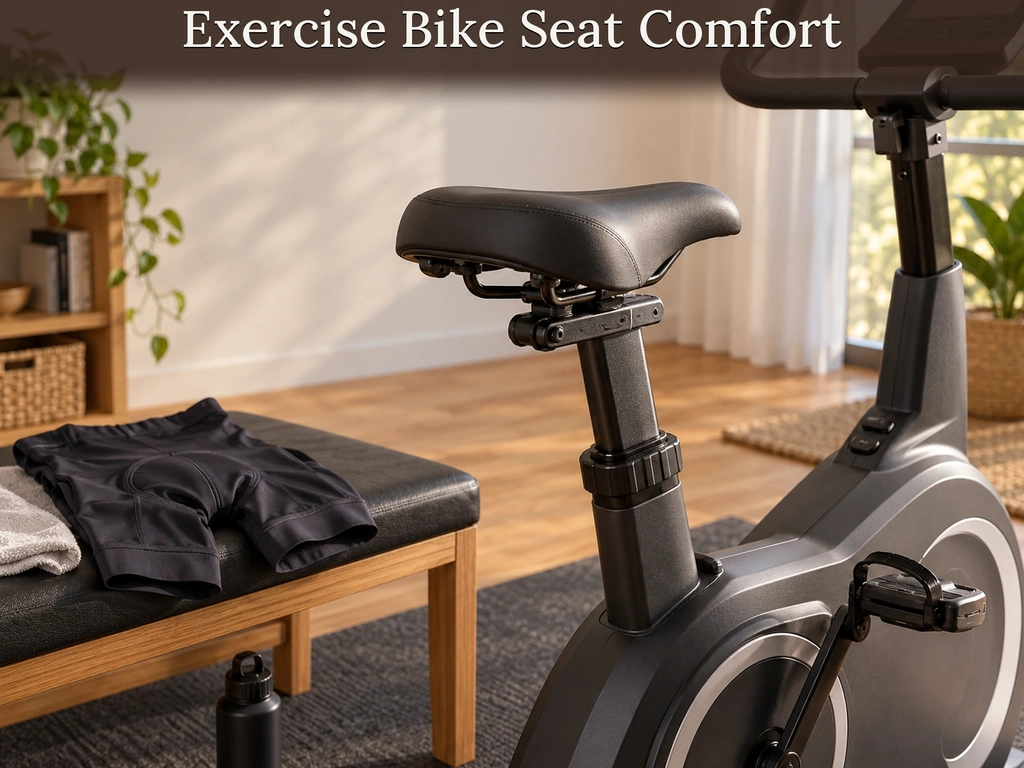
How to Make an Exercise Bike Seat More Comfortable

Founder
I founded HomieGym to help you make informed decisions about training at home. My background includes university-level sports science education, practical coaching, gym training and combat sports.
An exercise bike seat usually hurts for one of three reasons: the seat is set wrong, the seat is the wrong shape for how you sit, or the material traps heat and sweat. Padding fixes only some of that, which is why a gel cover helps on one bike and does nothing on another.
We have ridden a lot of exercise bikes for our reviews, from cheap folding X-bikes to spin bikes and recumbents, and the seat was the most common complaint across all of them. This guide uses what we noticed on those seats: when they started to bother us, what fixed it, and which bikes let you swap the saddle when nothing else works.
Table of Contents
Find the Cause Before You Buy Anything

Where it hurts and when it starts tell you more than any product listing. Note it on your next ride, then match it here.
| What you notice | Likely cause | First thing to try |
|---|---|---|
| Pressure that builds after 20 to 30 minutes | Seat too small or too hard | Gel cover or a wider saddle |
| Rubbing or a sore spot at a seam | Clothing or a seat that is too wide | Padded shorts, then saddle shape |
| Sweat and sticking to the seat or backrest | Vinyl or faux leather that does not breathe | Towel over the seat or backrest |
| Sliding forward or rocking side to side | Seat height or tilt | Fit check before anything else |
| Tight calves or Achilles | Pedal and foot position, not the seat | Check how your foot sits on the pedal |
| Numbness or sharp pain | Too much pressure in one spot | Stop and get it checked |
The last two rows matter. Not every complaint on a bike comes from the seat, and numbness is a signal to stop, not something to ride through.
What We Found on the Seats We Rode
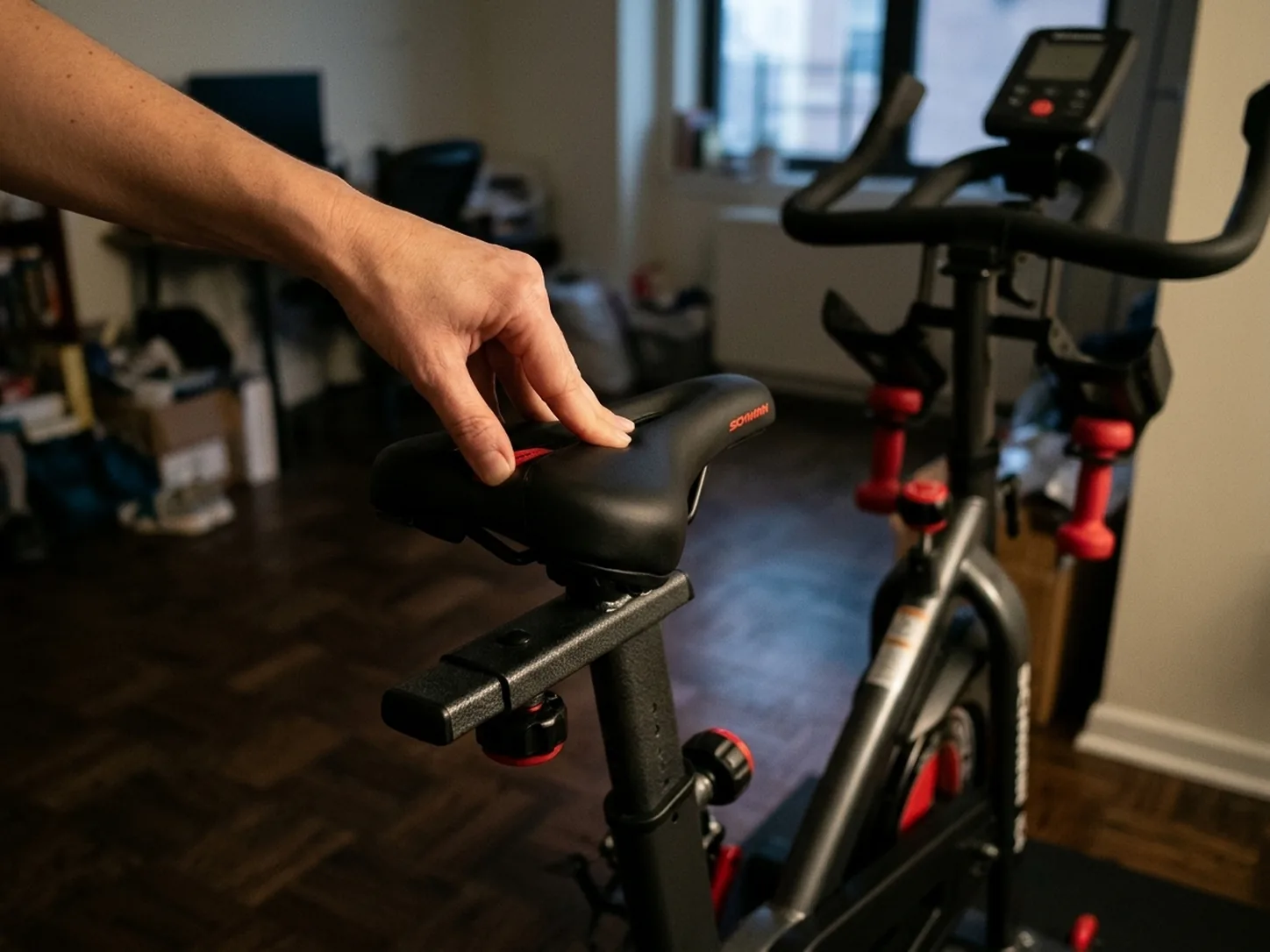
These are our notes from the bikes we have reviewed, grouped by the kind of seat.
| Bike | Seat | When it bothered us | What helped |
|---|---|---|---|
| Marcy ME-708 | small (about 25 x 25 cm) and hard | after 20 to 30 minutes | a seat cover solved most of it |
| Schwinn 130 | medium width, cruiser style, not soft | past 30 to 40 minutes | gel cover or a new saddle on its standard rails |
| ATIVAFIT 5-in-1 | looks soft, foam is not dense | rubs after 25 to 30 minutes | gel cover |
| XTERRA FB150 | wide and padded, firm filling | on longer rides | gel cover |
| Schwinn IC4 | narrow spin saddle with gel | hard for the first few rides | got used to it; standard rails take a cover or new saddle |
| Keiser M3i | narrow and firm, road style | fine for hard training | standard mount takes a gel cover or another saddle |
| Peloton Cross Training Bike | redesigned seat | stayed comfortable | nothing needed |
| Schwinn 230 | hard plastic seat and backrest, slippery | from the start | a cushion |
| YOSUDA recumbent | very flat, material does not breathe | sweat after about 30 minutes | towel over the backrest |
| SOLE R92 (2026) | comfortable faux leather, mesh backrest | sweaty seat on longer rides | towel over the seat |
| VANSWE RB4056 | thicker cushion, wider backrest | still comfortable after 30 minutes | nothing needed |
The pattern was clear. On cheap upright and folding bikes, the problem is a small or thin seat, and a cover helps. On spin bikes, the narrow saddle feels hard for the first few rides, and nobody in our group was sore once we were used to it. On recumbents, the problem is rarely pressure; it is sweat and how much the backrest supports you.
Set Height and Reach Before Adding Padding
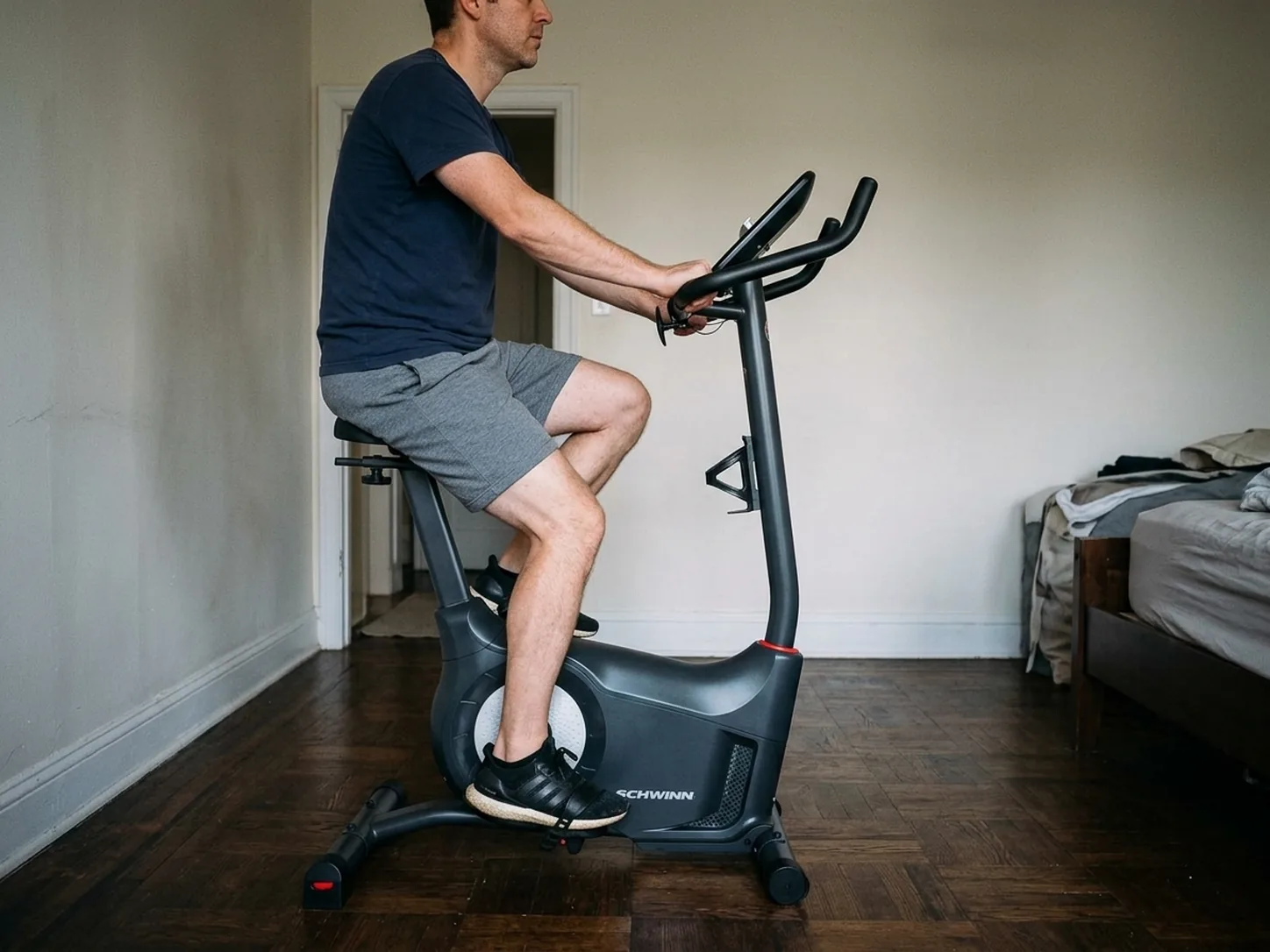
A seat set too low makes you rock and push down into it; set too high, your hips slide side to side to reach the bottom of each pedal stroke. Both feel like a seat problem. On an upright or spin bike, stop with one pedal at the bottom: your knee should still have a slight bend. On a recumbent, stretch the leg toward the far pedal with the ball of your foot on it and look for the same slight bend, then move the seat closer or farther.
Reach matters too. If the handlebar is too far, you lean onto the front of the seat. Bikes differ a lot here. The Schwinn 130 handlebar only tilts. The MERACH S26B2 seat moves in four directions but its handlebar only goes up and down. The IC4 and the Keiser adjust both the seat and the handlebar up, down, forward and back, which makes it easier to find a position the seat can live with.
Change one setting at a time, note the hole or mark you started from, and ride 10 minutes before changing the next. On recumbents with a sliding seat, check that it is locked before every ride; some VANSWE RB4056 owners report seats that slip during a ride, although ours stayed put.
Upright and Spin Saddles: Pressure and the First Rides
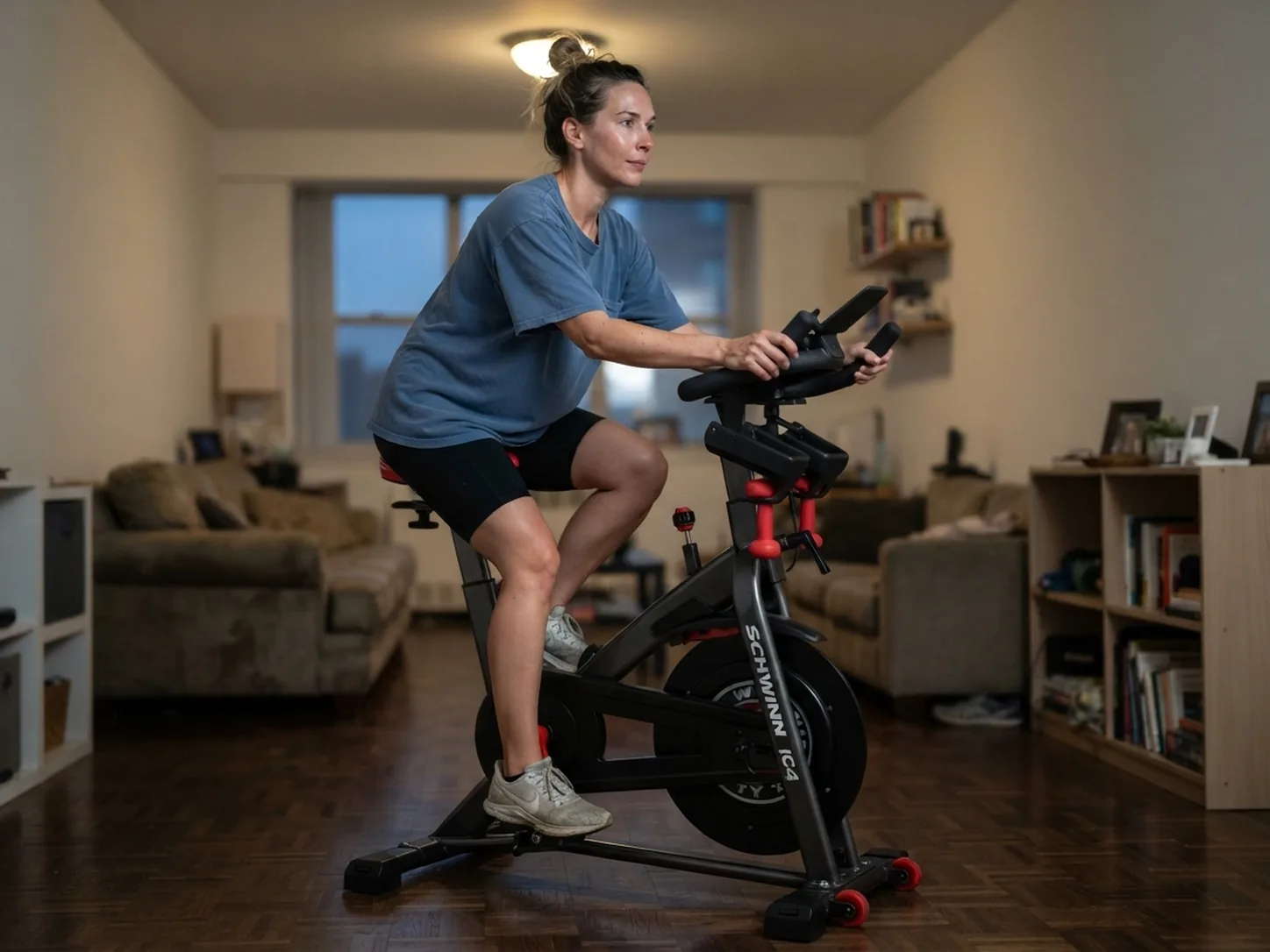
Narrow saddles feel worst at the beginning. The IC4, Keiser, S22i and S26B2 all have firm, narrow seats, and the first few rides on them felt hard. Nobody in our group was sore afterward, and the hard feeling faded as we rode more often. If you came from a soft cruiser seat, expect a few uncomfortable rides before deciding the saddle is wrong.
Small budget seats are a different problem. The Marcy seat is about 25 x 25 cm and hard, and it was uncomfortable after 20 to 30 minutes no matter how often we rode. That is a size problem, so a cover helped more than time did.
Padded cycling shorts are the cheapest upgrade for any saddle. They are made to be worn without underwear, because an extra layer adds seams that rub and holds moisture.
Recumbent Seats: Sweat and Back Support

A recumbent spreads your weight over a wide seat and a backrest, so pressure is rarely the issue. Heat is. Seats and backrests made of vinyl or faux leather do not breathe, and after about half an hour on the YOSUDA we started to sweat against the backrest. On the SOLE R92 the faux-leather seat got sweaty on longer rides even though its mesh backrest stayed cool. A towel over the seat or backrest solved it on both.
Mesh backrests are the better design for long rides. The Sunny smart recumbent, the MERACH S19 and the R92 all use mesh, and on the Sunny it noticeably kept sweating down.
Back support varies more than the photos show. The VANSWE RB2518 backrest gives little lumbar support on long, hard sessions, while the RB4056 has a wider backrest and thicker seat cushion that you notice past half an hour. The Schwinn 230 has hard plastic for both, which is durable but slippery, and many owners add a cushion. If you are still choosing between a saddle and a backrest seat, our recumbent vs upright bike comparison covers the rest of the trade.
Gel Covers and Cushions: When They Help

A gel cover works when the seat is too small or too thin: the Marcy, the Schwinn 130 on longer rides, the ATIVAFIT and the FB150. It does little when the real problem is fit, sweat or a seat that is too wide and rubs.
Pick a cover that matches the seat shape and tightens underneath with a drawstring, so it does not shift. A loose cover slides, and sliding causes the rubbing you were trying to stop. A cover also raises you a little, so check the knee bend again after fitting it.
On a recumbent, add a cushion only when the seat itself is hard, as on the Schwinn 230. A thick cushion against the backrest pushes you forward and shortens your reach to the pedals, so move the seat back to match.
Swapping the Saddle: Which Bikes Take a Standard One
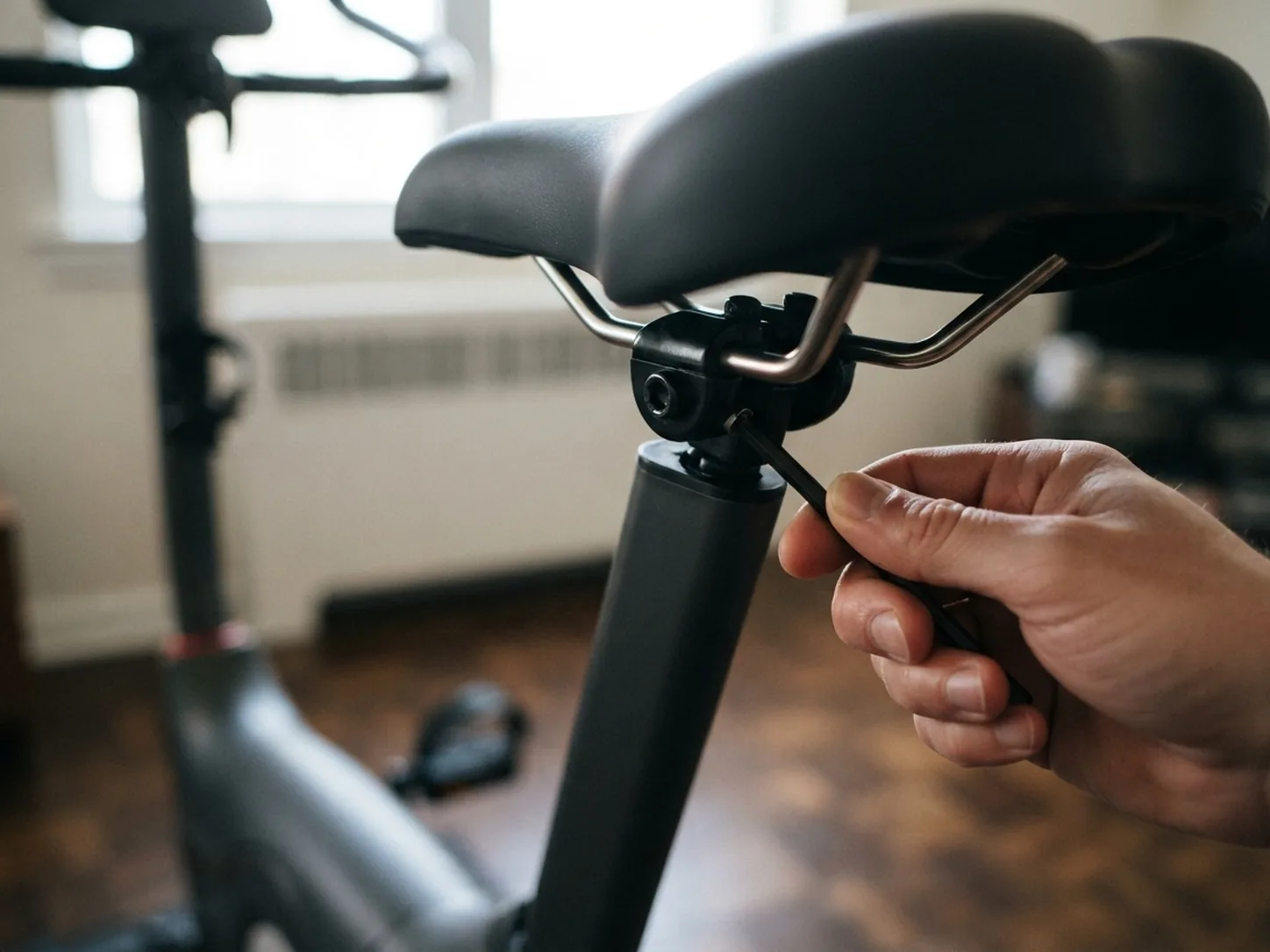
When a cover is not enough, a new saddle is the real fix, but only on bikes with a standard mount. Standard means two metal rails under the saddle held by a clamp on the seat post, the same as a road bike. The Schwinn 130, Schwinn IC4 and Keiser M3i use standard rails, so most bicycle saddles fit. S26B2 owners often swap the saddle too.
Some bikes use their own mount. Owners of the pooboo folding bike report that its seat is hard to replace because the mount is not standard. Recumbent seats are a frame part with the backrest, not a saddle you can swap.
Before buying a saddle, look under your current one. If you see two round rails and a clamp, you can choose almost any saddle; if you see a flat plate bolted to the post, ask the maker for a compatible replacement.
Shorts, Pedals and Pain That Is Not the Seat
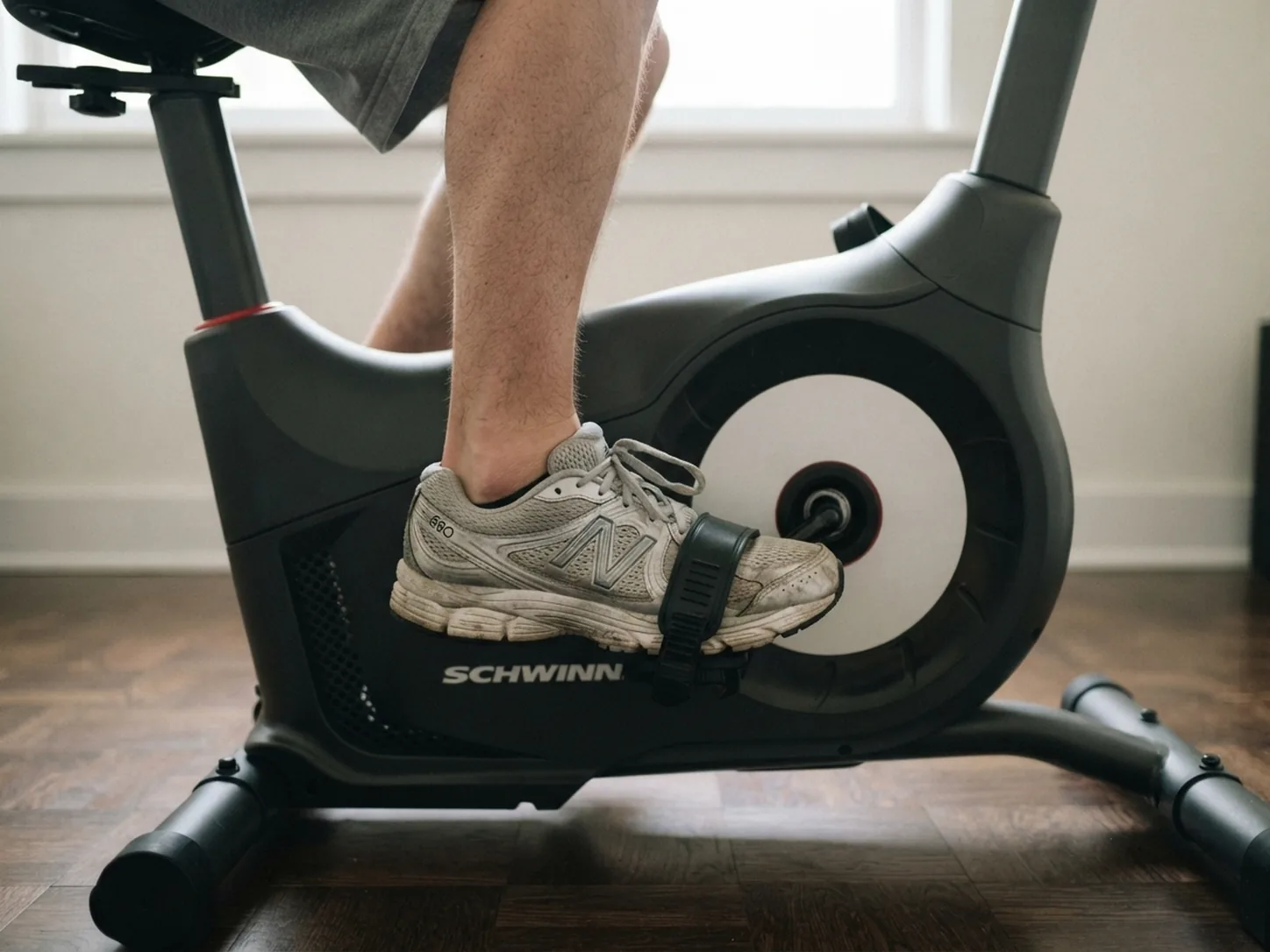
Some discomfort comes from below the seat. On the SOLE R92 the pedals put you on the balls of your feet for the whole ride, and I felt tightness around my Achilles tendon. On the ATIVAFIT the pedal platforms and straps are short for big feet, and on the Schwinn 130 the straps can feel tight on wide feet. A foot that slides or sits on its toes changes how you sit, so fix the foot first.
Start each ride in clean, dry shorts and get out of them after. Damp fabric rubs more than dry fabric, whatever the seat.
Stop riding if you feel numbness, burning or sharp pain, and do not wait for it to pass. If it comes back on later rides, see a doctor or a bike fitter before buying more equipment.
This guide provides general equipment and comfort information. It cannot diagnose or treat pain, numbness, skin problems, or a medical condition. Follow your bike’s instructions and seek individual healthcare advice for persistent or concerning symptoms.
FAQs
Is a softer exercise bike seat always more comfortable?
No, a very soft seat lets you sink in and can press where a firmer seat would not. On the bikes we rode, a firm seat of the right size was more comfortable than a soft seat that was too small.
Should I adjust the seat before buying a cushion?
Yes, set the height and reach first. A seat that is too low or too high makes you rock or slide, and padding cannot fix that.
How long does it take to get used to a bike seat?
On firm spin saddles, the hard feeling faded for us after the first few rides. A small, hard budget seat did not get better with time, so a cover or a new saddle is the fix there.
Should I wear underwear with padded cycling shorts?
No, padded cycling shorts are made to be worn without underwear. An extra layer adds seams that rub and holds moisture against the skin.
Can I replace any exercise bike seat?
No, only bikes with standard saddle rails take a normal bicycle saddle. The Schwinn 130, Schwinn IC4 and Keiser M3i do; recumbent seats and some folding bikes use their own mounts.
Should I keep riding until seat numbness goes away?
No, stop riding when numbness starts. If it returns on later rides, get it checked before changing equipment again.