
Stepper Machine Workout for Beginners: A Practical Home Plan

Founder
I founded HomieGym to help you make informed decisions about training at home. My background includes university-level sports science education, practical coaching, gym training and combat sports.
Equipment editor on our team: Milutin Tucakov
Start with a steady five-minute stepping block or try gentle changes of pace. These beginner sessions include walking warm-ups, cool-downs, and a simple way to progress.
A stepper machine workout can begin with five minutes of controlled stepping, with an easy walking warm-up and cool-down around it. That gives you a short session to practice before adding longer blocks or changes of pace.
I prefer that start because your breathing and balance should leave you in control of the pedals. Below are two home sessions, a simple weekly schedule, and a way to progress without chasing the calorie display.
Table of Contents
Stepper Machine Workout: Choose Your First Session
Start with the steady session if you are still learning the movement. Try the changes-of-pace session once you can keep the pedals moving smoothly without rushing or leaning heavily on a support.
| Session | Stepping | Activity time | Main purpose |
|---|---|---|---|
| Steady introduction | 5 minutes | 15 minutes | Learn a repeatable rhythm |
| Gentle pace changes | 8 minutes | 18 minutes | Practice changing effort |
Both sessions include five minutes of easy floor walking before stepping and five minutes afterward. Allow extra time to get on and off or take breaks. These are starting examples: shorten the pedal block when needed and follow your model's use and cooling limits.
A 15-Minute Steady Introduction
Begin with five minutes of easy walking on the floor, gradually settling into a comfortable rhythm. Then mount the stepper as its manual directs and spend five minutes stepping at an easy, even pace.
The stepping block is practice as well as activity. Keep your gaze ahead enough to stay oriented, allow the pedals to move under control, and finish early if you cannot maintain the position. You do not have to reach moderate intensity during this first session.
Slow your stepping before dismounting according to the manual, then walk easily on the floor for five minutes as your breathing settles. The arithmetic is 5 minutes warming up + 5 minutes stepping + 5 minutes cooling down = 15 minutes of activity. If you stop the pedal block at three minutes, you have thirteen minutes of planned activity; that is a valid adjustment.
An 18-Minute Session With Gentle Pace Changes
Use this option after you can repeat the steady session comfortably and your machine permits the eight-minute pedal block. Start with five minutes of floor walking, then follow the sequence below on the stepper.
Moderately brisk means you can still talk, but singing is difficult. Slow down if you lose control of the pedals.
| Part | Time | What to do |
|---|---|---|
| Settle in | 2 minutes | Easy, even stepping |
| Change pace | 4 minutes | Repeat 30 seconds moderately brisk, 30 seconds easy, four times |
| Ease down | 2 minutes | Return to easy stepping |
Finish with five minutes of gentle floor walking. The planned activity totals 5 + 2 + 4 + 2 + 5 = 18 minutes, with eight minutes on the pedals.
The faster portions should leave enough control for the easy portions to feel like recovery. If thirty seconds is too demanding, keep the whole block easy or return to the shorter session. I would build repeatability before making the brisk parts longer.
Choose Your Effort Before Your Speed
Use a pace that lets you keep a controlled stroke and judge your breathing. Someone else's step count may involve a different pedal travel, counting method, machine, or fitness level.
At an easy effort, you should be able to speak comfortably. For a moderate effort, the CDC describes being able to talk while singing becomes difficult; at vigorous effort, speech becomes limited to a few words before a breath. The brisk portions in the pace-change session aim for a manageable moderate effort, with room to slow down.
I use smooth movement as the condition for continuing a faster block. If the pedals start hitting their stops, your feet slide, or you need a large forward lean to keep going, return to an easier pace or end the stepping block.
Keep any permitted stable support available. Holding it for balance is compatible with learning the movement. Hands-free stepping and arm exercises do not belong in your first session merely because a workout demonstration includes them.
Build a Weekly Stepper Workout Plan
For a first practice week, put two short sessions on the calendar and leave room to see how you feel between them. This is a modest starting example, rather than a complete weekly activity target.
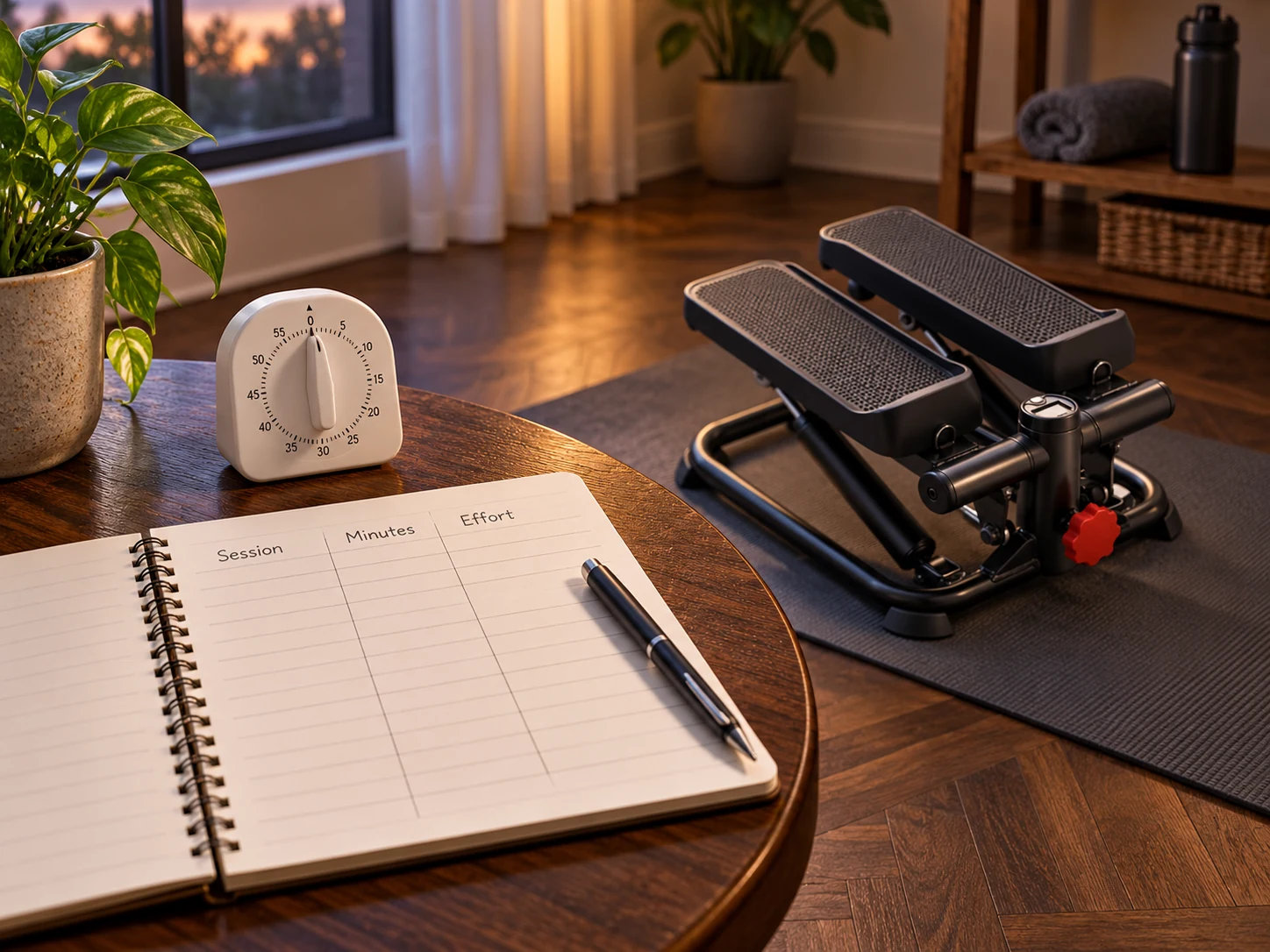
You might use the steady introduction on Tuesday and repeat it on Friday. If the second session feels controlled and comfortable, decide whether to repeat it the following week or try the changes-of-pace version. Keep your normal walking and other suitable activities in the week as well.
The CDC recommends at least 150 minutes of moderate aerobic activity, or 75 minutes of vigorous activity, or an equivalent mix each week for adults, together with muscle-strengthening activity on at least two days. Two short practice sessions are a starting point toward a larger routine, and easy walking or pedal practice should not automatically be logged as moderate exercise.
A stepper can provide one part of your cardio. Keep separate strength work for all major muscle groups, including your legs. Repeated pedal presses do not cover a complete strength program.
Progress One Part of the Session at a Time
Change duration or effort only when the current session is manageable. I favor a small change that you can evaluate at the next session, rather than increasing speed, pedal travel, and time together.
- Repeat first: use the same plan until the movement and recovery are predictable.
- Choose one change: add a little easy stepping within the manual's limit, or introduce a manageable brisk portion.
- Keep the easier option: return to the shorter session when the new version disrupts control or leaves you poorly recovered.
Log the stepping time, the session you chose, and how the effort felt. You can note a step count, but keep comparisons to the same device and settings. On the SF-S0978, for example, the manual says the count advances after one step with each foot, so a displayed count is not necessarily the number of individual foot movements.
A higher calorie number can result from staying on longer, while an unusual count can reflect a different counting method. Neither tells you whether your technique improved. Keep the practical notes that help you choose the next session.
Finish the Session Ready to Repeat It
End the stepping block with enough control to slow down and get off as instructed. Keep children, pets, and loose objects away from the moving pedals and let hydraulic components cool before handling or putting the unit away.
The Sunny SF-S0978 manual, version 2.6, warns that its cylinders can become hot and says to let them cool between uses.
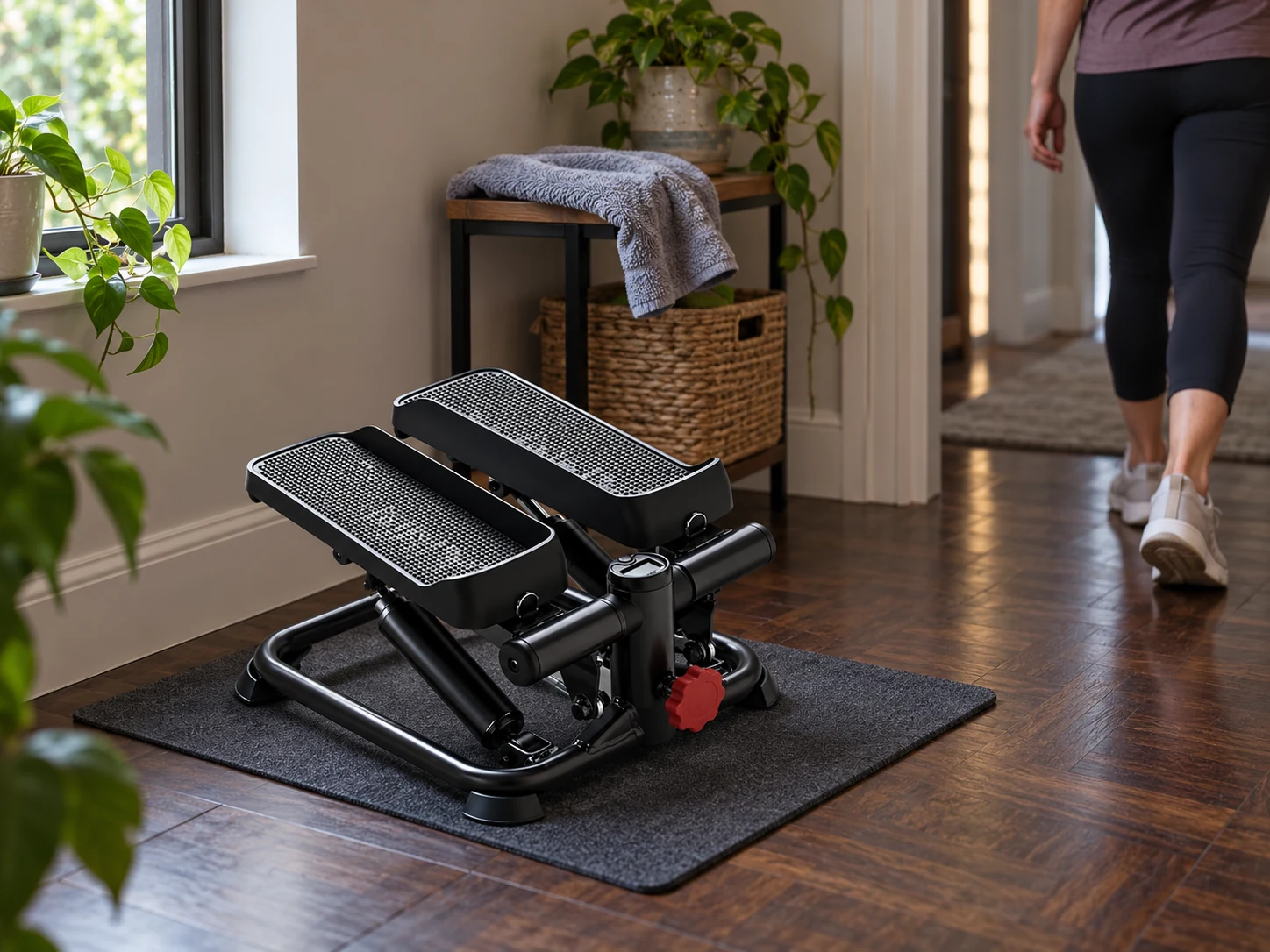
Stop earlier for pain, dizziness, unusual breathlessness, or a mechanical problem. If a health condition, balance limitation, or recent injury affects what activity is suitable, get individual advice before treating either example as your plan.
For your next session, choose the version you can carry out without rushing the setup or struggling through the final minutes. Write down that choice before you put the stepper away, then leave the equipment ready to check and use again.
FAQs
How long should you use a stepper machine?
Use a duration that suits your current ability and stays within the exact machine's instructions. The five-minute stepping block above is a starting example, and you can shorten it.
Can you do a stepper workout every day?
Yes, daily stepping can fit some established routines, but beginners do not need to begin with a daily commitment. Base frequency on recovery, other activity, comfort, and the machine's usage limits.
Is a stepper machine a good workout?
Yes, a stepper can provide a useful cardio session when the effort and duration suit you. Keep strength training and other movement needs in the wider routine.
How many steps should you aim for?
There is no universal step-count target for these beginner sessions. Follow time and effort first, because machines can count a step differently and pedal travel varies.
Should beginners use the resistance bands?
Beginners should learn controlled stepping before adding any arm work that the machine permits. If you need your hands for balance, keep the support and leave the bands for another time.
This guide provides general exercise education, not individualized medical advice or a rehabilitation program.