
What Muscles Does a Stepper Machine Work?

Founder
I founded HomieGym to help you make informed decisions about training at home. My background includes university-level sports science education, practical coaching, gym training and combat sports.
Equipment editor on our team: Milutin Tucakov
A stepper uses your thighs, glutes, and calves while your hips and trunk help you stay steady. See how machine type changes the work and what to expect for muscle growth.
A stepper machine works your quadriceps, glutes, and calves, with your hamstrings contributing and the muscles around your hips and trunk helping you stay steady. The exact mix depends on the machine and how much your knees, hips, and ankles move.
I see a mini stepper as a useful way to give your legs repeated work during cardio. If your main aim is a bigger or stronger butt, though, I would keep dedicated strength exercises in the plan. Feeling your glutes work and giving them enough training to grow are different expectations.
Table of Contents
What Muscles Does a Stepper Machine Work During Each Step?
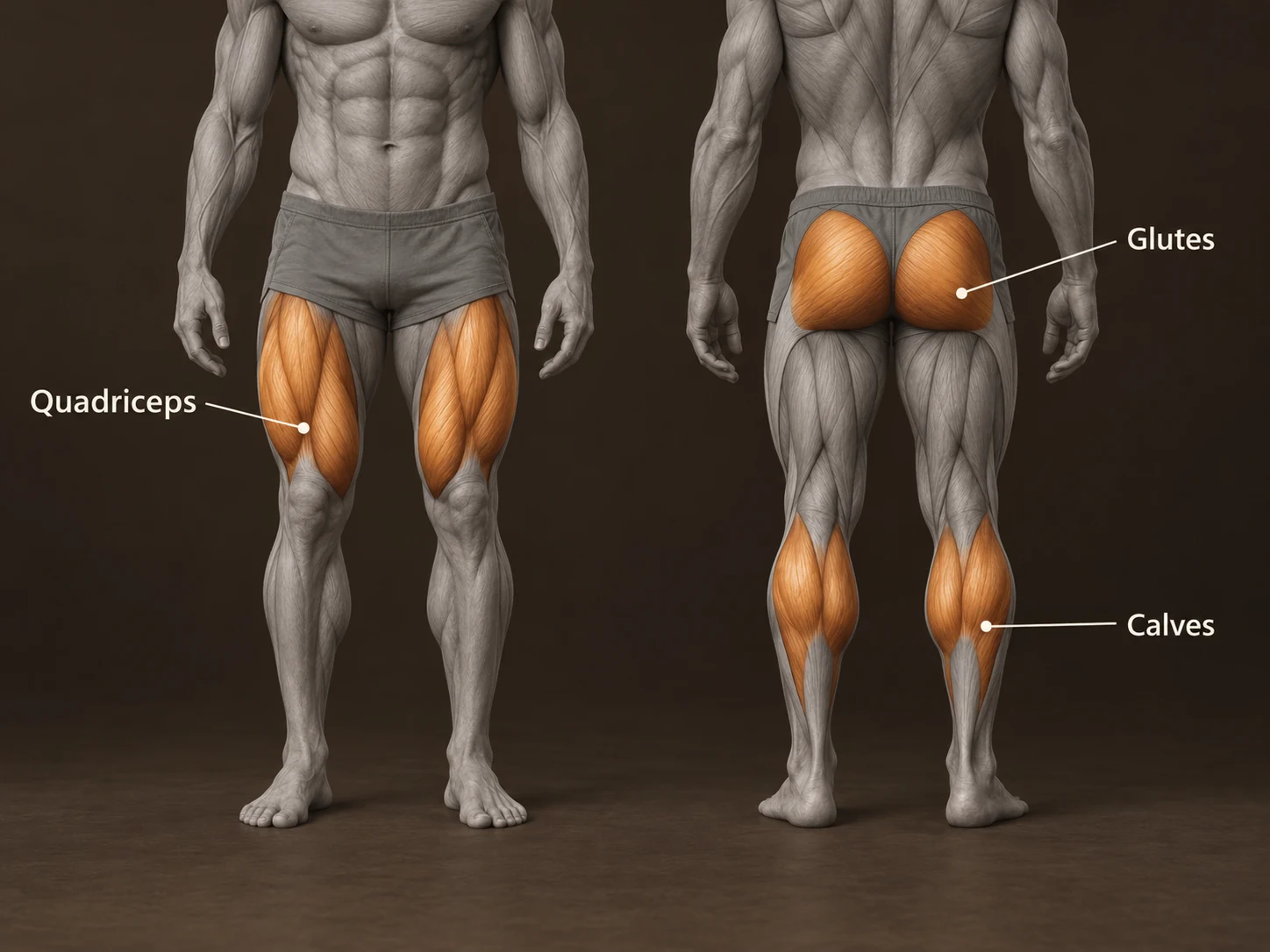
The thighs and buttocks help produce the stepping motion, while the calves contribute at the ankle. Some muscles move your joints; others help control your position. The table describes their likely roles from anatomy and the movement, rather than ranking measured activation on every stepper.
| Muscle group | Main job | What that means |
|---|---|---|
| Quadriceps | Straighten the knee | Help press the pedal down |
| Gluteus maximus | Extend the hip | Contributes as the thigh moves back relative to the pelvis |
| Hamstrings | Assist hip extension and bend the knee | Contribute across the stepping cycle |
| Calves | Control and push through the ankle | Work varies with pedal and ankle motion |
| Side-hip muscles | Help control the pelvis | Assist stability as weight shifts |
| Abdominal and back muscles | Help control the trunk | Support your position above the pedals |
The quads at the front of your thighs extend, or straighten, your knees. Your hamstrings at the back of the thighs assist hip extension and knee bending. The gastrocnemius and soleus in your calves contribute to plantar flexion, the ankle action that points the foot downward. How much the ankle moves on a stepper depends partly on the pedal design.
The large buttock muscle, the gluteus maximus, helps extend your hip. That means moving the thigh back relative to your pelvis, or bringing your body upright from a bent hip position. A small pedal stroke gives you a different movement from stepping onto a high stair, so I do not assume both provide the same glute challenge.
Your hip flexors also help bring the thigh forward as the leg returns. On a linked pedal stepper, the mechanism raises the opposite pedal as you press down. The returning leg is moving with assistance from the machine, so its movement alone does not tell you how hard a particular muscle is working.
Why the Type of Stepper Changes the Work
A hydraulic mini stepper, a full-size pedal stepper, and a rotating stair machine can involve similar muscle groups, but they give your legs different paths and ranges of movement. Treating them as interchangeable can lead to unrealistic expectations.
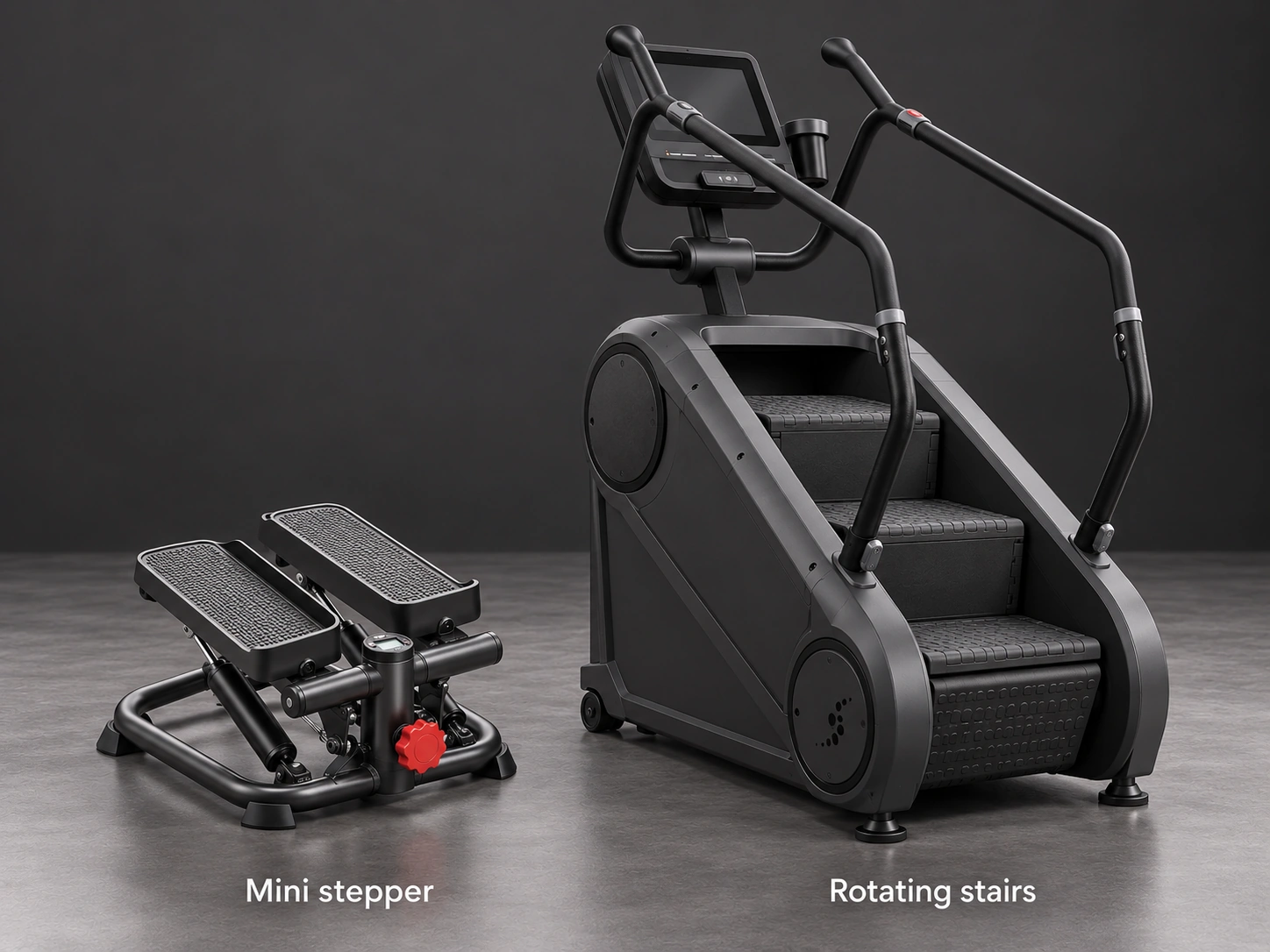
On a typical hydraulic mini stepper, both feet remain on separate pedals that move up and down. For example, the Sunny Health & Fitness SF-S0978 manual shows a cable-and-pulley mechanism and an adjustment for pedal stepping height. The adjustment changes how far the pedals can travel. It is not a standardized measure of resistance.
A rotating stair machine asks you to lift each foot and place it on the next tread. Real stairs also move you upward through space and eventually require a descent or another way down. A full-size pedal machine has its own pedal geometry and support options. The familiar word stepper can refer to all of these.
For that reason, a muscle-activation percentage measured while climbing real stairs should stay attached to that activity. It cannot tell you what percentage of your glutes a home mini stepper uses. Be cautious about charts that give precise muscle percentages without naming the machine and test.
What Your Core and Side Hips Are Doing
Your core and side-hip muscles help keep you steady while your legs alternate pressure. Stabilizing your body is useful work, but it does not make stepping a complete abdominal or hip-strengthening workout.
The gluteus medius and gluteus minimus help control the pelvis, including keeping it from dropping toward an unsupported side during single-leg stance. On a mini stepper, both feet can remain in contact with the pedals, so the task differs from balancing on one leg on the floor.
Your abdominal and spinal muscles also contribute to trunk control as your legs move. Judge this part of stepping by whether you can stay comfortably in control. Making the session wobblier to feel your abs more adds a balance challenge without establishing a better workout.
Use the support your machine's instructions allow when you need it. The SF-S0978 manual specifically advises holding something for support if balancing is difficult. Letting go to chase more muscle activation is a poor trade when you are struggling to stay secure.
Does a Stepper Machine Build Glutes or Other Muscle?
A stepper uses your glutes, but visible glute growth is not an established outcome of ordinary hydraulic mini-stepper sessions. I use that distinction to plan cardio alongside progressively challenging strength work when muscle size is the priority.
Muscular endurance means being able to repeat or sustain an effort. Hypertrophy means an increase in muscle size. A session can make your legs tired without telling you how much either quality will change over the next few months.
The directly relevant mini-stepper study I found used a modified hydraulic device to measure energy expenditure in office workers. It did not measure glute growth or long-term strength changes.(1) That leaves a practical gap between knowing the muscles are involved and predicting a larger butt.
Lighter resistance can still build muscle under suitable training conditions. In a 12-week trial, Morton and colleagues found muscle growth with both lighter and heavier resistance training when trained young men performed sets to voluntary failure. The supervised program also included protein supplementation.(2) That was resistance training, not a mini-stepper test, so it supports keeping an open mind about lighter loads without promising the same result from continuous stepping.
The same caution applies to claims that a stepper will tone your bum. People usually mean a firmer or more defined appearance, but that description does not specify a measurable training outcome. Neither muscle involvement nor a hard session tells you exactly how your shape will change.
Fit the Stepper Around Your Training Goal
Use the stepper for a leg-focused cardio session, and give strength goals their own exercises and progression. You do not need to force one machine to cover both jobs equally well.
If you already train your legs, consider whether stepping leaves them ready for the strength session you planned. Shorten or move a demanding stepper session when it interferes with that work. If you mainly want more indoor movement, you can value the repeated leg effort without judging success by whether your glutes grow.
Keep your movement within the machine's instructions and a comfortable range. Pain, losing your balance, or having to improvise an extreme posture is a reason to stop and reassess the session, not a sign that you have found a better way to target a muscle.
FAQs
Does a stepper work your glutes?
Yes, a stepper involves your glutes, particularly as you extend the hip and control your pelvis. The amount of work depends on the machine and movement, and involvement alone does not predict visible growth.
Does a mini stepper work your abs?
Yes, your abdominal muscles contribute to keeping your trunk controlled during stepping. That stabilizing role does not establish that a mini stepper provides enough challenge for your abdominal strength goals.
Does a stepper work your hamstrings?
Yes, your hamstrings can contribute through hip extension and knee control during stepping. Do not assume a pedal session replaces a dedicated hamstring exercise with a load and movement chosen for strength training.
Will a stepper make your butt bigger?
A bigger butt is not a predictable result of using a mini stepper. For a glute-size goal, prioritize strength exercises you can progress and treat stepping as additional conditioning.
Does a stepper with bands work your upper body?
Yes, pulling resistance bands while stepping adds upper-body work, with the muscles involved depending on the arm exercise. Follow the band's attachment and movement instructions, and leave the bands aside if they make it harder to balance.
This content is for informational and educational purposes only. It is not a substitute for professional medical advice, diagnosis, or treatment. Consult your healthcare provider before starting a new fitness program if you have a condition or symptoms that affect exercise.
References
- McAlpine DA, Manohar CU, McCrady SK, Hensrud D, Levine JA. An office-place stepping device to promote workplace physical activity. Br J Sports Med. 2007;41(12):903-907. doi:10.1136/bjsm.2006.034900. Accessed October 20, 2026.
- Morton RW, Oikawa SY, Wavell CG, et al. Neither load nor systemic hormones determine resistance training-mediated hypertrophy or strength gains in resistance-trained young men. J Appl Physiol (1985). 2016;121(1):129-138. doi:10.1152/japplphysiol.00154.2016. Accessed October 20, 2026.