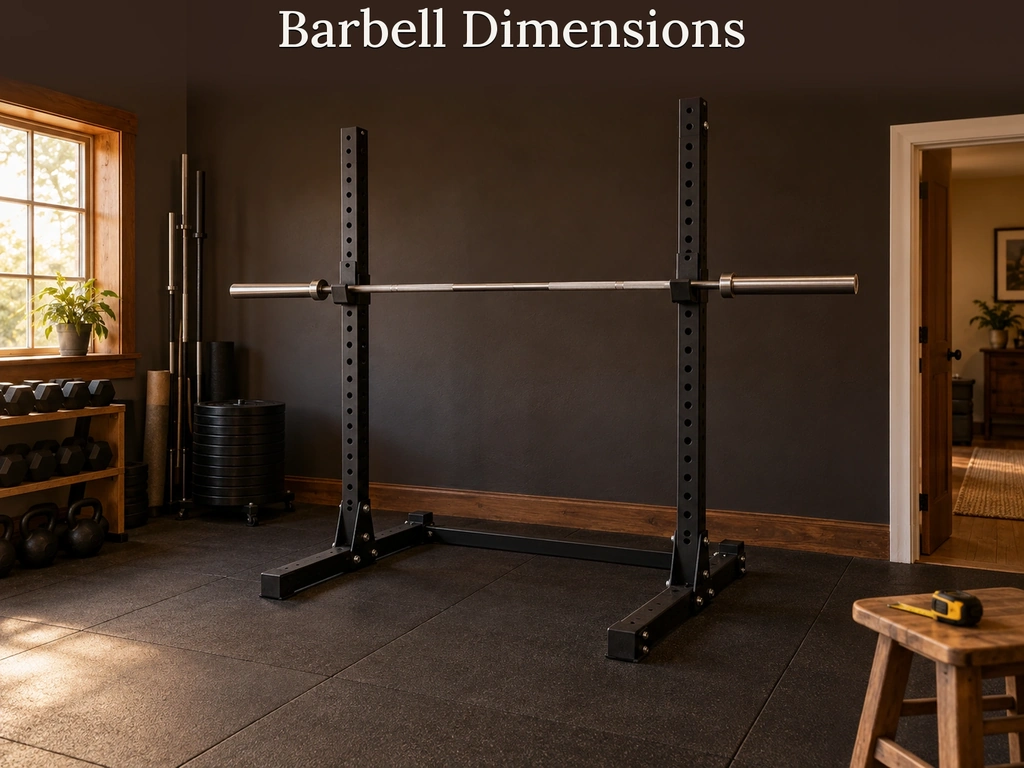
Barbell Length and Dimensions: Will It Fit Your Home Gym?

Founder
I founded HomieGym to help you make informed decisions about training at home. My background includes university-level sports science education, practical coaching, gym training and combat sports.
Check barbell length, rack contact span, sleeve space and plate-handling clearance before choosing a full-length or compact bar for your home gym.
Olympic barbell length can decide whether your home gym has room for a comfortable plate change or only enough room to hold the bar. A shorter model may give you more space at each end, but it can also leave less room for plates or fail to reach your rack's supports.
For rack-based squats and presses, I would keep rack fit ahead of the appeal of a compact bar. This guide explains the competition lengths, compares full-length and shorter examples, and shows how to check the space your bar, plates and lifting setup will actually use.
Table of Contents
Olympic Barbell Length and Dimensions at a Glance
An IWF men's competition bar is 220 cm long, about 86.6 inches; the women's competition bar is 201 cm, about 79.1 inches. Both have 50 mm plate-loading sleeves. These Olympic barbell dimensions follow International Weightlifting Federation rules, which specify different grip diameters for the two bars.
| Measurement | Men's specification | Women's specification |
|---|---|---|
| Overall length | 220 cm / 86.6 in | 201 cm / 79.1 in |
| Grip shaft diameter | 28 mm | 25 mm |
| Sleeve diameter | 50 mm | 50 mm |
| Grip section length | 131 cm / 51.6 in | 131 cm / 51.6 in |
An Olympic barbell size label such as 7-foot Olympic barbell can be approximate. Seven feet is 84 inches, about 2.6 inches shorter than the IWF men's bar. In a tight room, use the manufacturer's overall length rather than converting the category name into a measurement.
Shaft diameter measures the part you hold; sleeve diameter measures the ends where the plates go. Olympic barbell grip diameter therefore describes hand fit, while sleeve diameter helps you match plates and collars. The plate opening is a separate measurement and must fit over the sleeve.
Compare standard and Olympic barbells to understand sleeve sizing before matching plates and collars.
I keep four measurements beside the exact model name: overall length, shaft diameter, distance between the sleeves, and loadable sleeve length. Together they cover the room, your grip, the rack and your plate stack.

Check the Rackable Shaft Length
Rack fit depends on where the shaft meets both J-cups, the supports that hold the bar. The wider sleeves and their inner shoulders must sit outside those support contacts, with the clearance required by the equipment makers. Overall length cannot confirm that relationship.
For example, Rogue lists its 20 kg Ohio Bar in E-Coat at 86.75 inches overall, with 51-7/8 inches of shaft between the sleeves. Compare the second measurement with the outside span of the J-cup contact areas. The rack's floor footprint does not tell you where those supports meet the bar.
- Measure the supports at bar height. Record the outside-to-outside span of the two J-cup contact areas, not only the inside gap between uprights.
- Find the bar's inner sleeve shoulders. Ask for a drawing if the listing's shaft-length label is unclear.
- Allow for the actual rack hardware. Check the bar, J-cups and rack instructions, including the space needed during reracking.
- Confirm an uncertain pairing. Send both model numbers and the support measurements to the manufacturers before ordering.
A hypothetical 52-inch shoulder-to-shoulder span over supports spanning 49 inches leaves 3 inches of difference, or 1.5 inches per side when centered. That is the geometric gap, before checking hook shape, reracking movement and the makers' required clearance.
For a tight fit, I want the supplier to confirm the exact bar-and-J-cup pairing before purchase. The power rack dimensions guide covers the frame and working space around it.
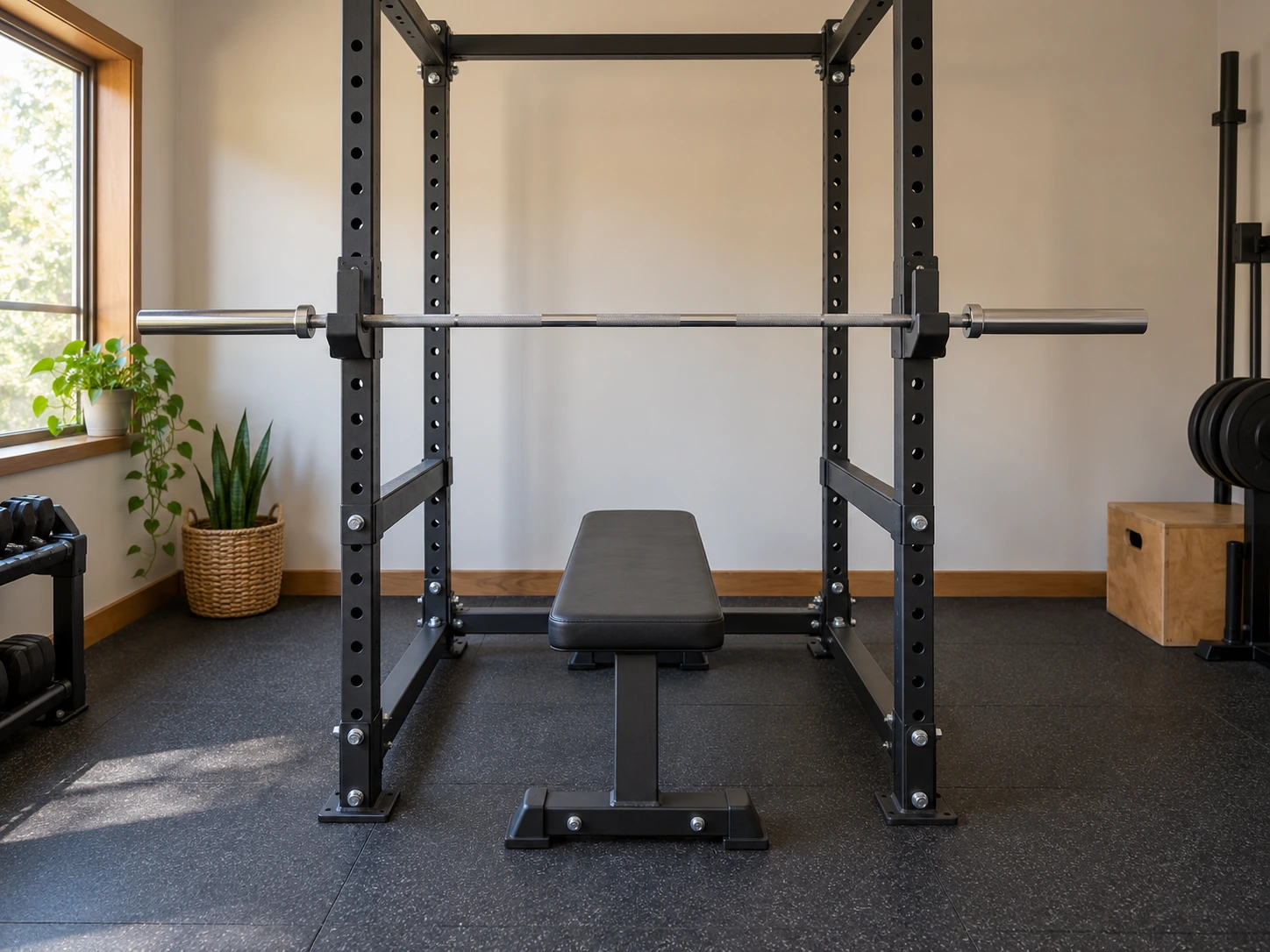
Measure the Room With Space to Change Plates
Measure the clear width along the bar's axis, then check how you will reach both ends. A wall-to-wall figure can overstate the usable width if a cabinet, door, column or stored equipment projects into that space at sleeve height.
For a centered bar, calculate clearance at each end = (clear room width minus overall bar length) ÷ 2. This assumes the obstructions are equally far from the centerline. If the rack sits off-center, measure the two end gaps separately instead of dividing one total.
| Bar length used | Calculation | Gap at each end |
|---|---|---|
| 86.75 in | (120 − 86.75) ÷ 2 | 16.625 in, about 16.6 in |
| 72 in | (120 − 72) ÷ 2 | 24 in |
The shorter bar gains about 7.4 inches at each end in this example. To decide whether either gap works, walk through carrying a plate to each sleeve, lining up its opening and sliding it on with room for your hands. Include nearby storage and the access route.
I keep the space beyond both bar tips available for plate changes. A plate tree beside the rack can consume the same gap you just calculated, so mark its position before deciding that the shorter bar solves the room problem.
Then check the other axes. A bench needs room in front of and behind its working position, and overhead lifts need clearance above the whole moving bar and plates. Use the weight bench dimensions guide for the bench footprint and access checks; a bar-width calculation does not cover them.

A Short Olympic Barbell Can Make Two Different Compromises
A short bar can save space at the sleeves, the shaft, or both. Saving sleeve length can preserve a rackable middle section. Saving shaft length can leave more room for plates while preventing use on an ordinary fixed-width rack.
The Rogue C-70S shows how a short Olympic barbell can preserve its middle section: 72 inches overall, 52 inches between sleeves, and 8.875 inches of loadable sleeve per side. It saves room by shortening the loading ends.
The Rogue C-70 makes the opposite trade: 69 inches overall, 43 inches between sleeves and 12-inch loadable sleeves. Rogue says that shorter shaft prevents it fitting most squat racks or stands. It retains more loading space than the C-70S but sacrifices the usual rack span.
| Model | Overall length | Between sleeves | Loadable sleeve, each |
|---|---|---|---|
| Ohio Bar, E-Coat | 86.75 in | 51-7/8 in | 16.40 in |
| C-70S | 72 in | 52 in | 8.875 in |
| C-70 | 69 in | 43 in | 12 in |
For rack-based squats and presses, I preserve the support span first, then check whether the shorter sleeves hold the planned plates and collars. A shorter shaft can suit floor-based work if it still accommodates your grip, including a wide snatch grip when needed.
Apply the same check to a 5-foot or 6-foot Olympic barbell: find out which section was shortened. Two bars with the same overall length can have different shaft spans and loading space.
Check Loadable Sleeve Length Against Your Plates
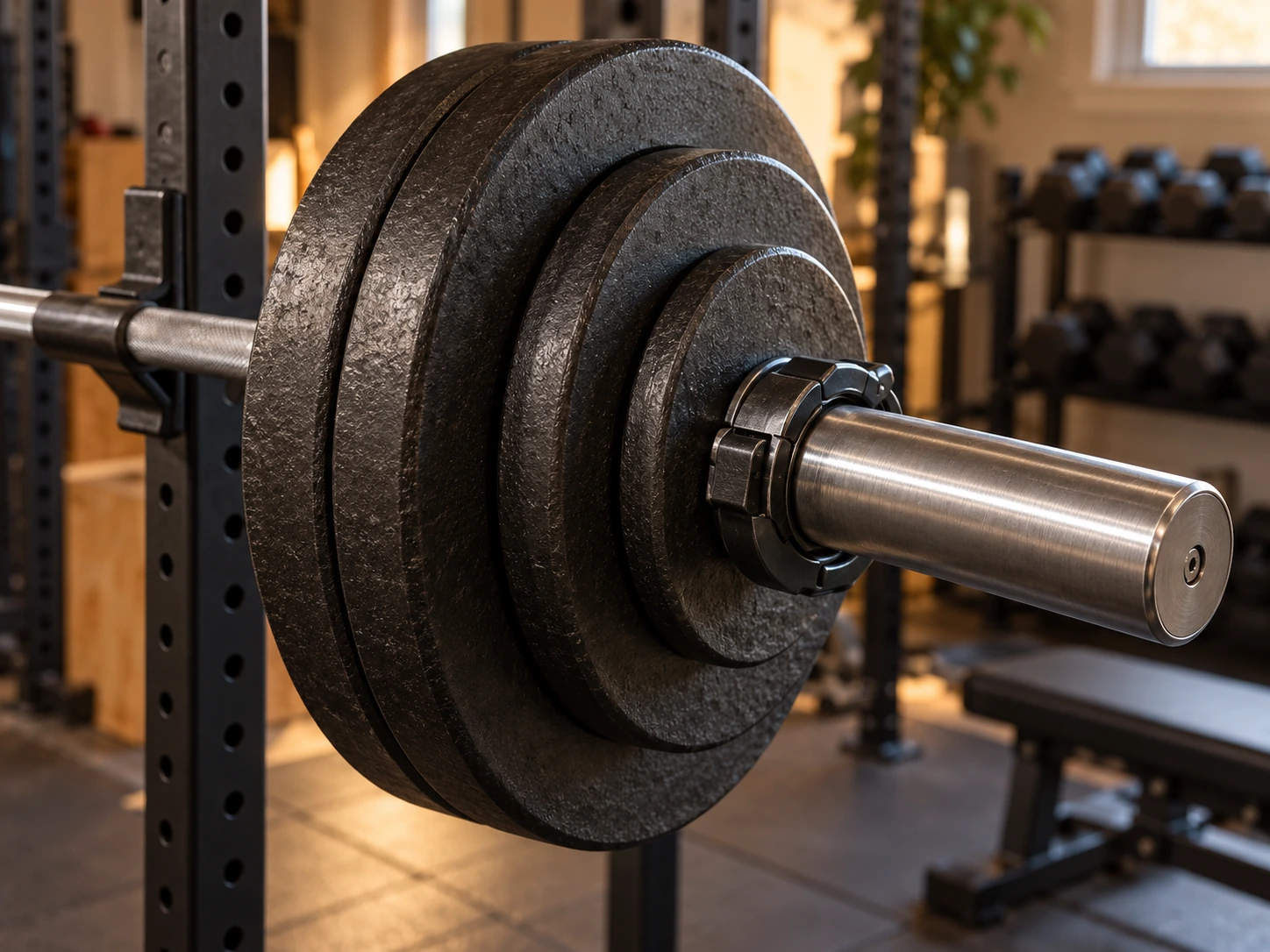
The plate stack and the required collar space must fit on each usable sleeve. Loadable sleeve length describes the available loading section. Keep the inner sleeve shoulder and any unusable end detail out of that measurement.
Add the thickness of every plate planned for one side, then add the sleeve space required to engage the collar fully. Use the actual plate and collar specifications or measurements. Equal plate weights do not guarantee equal stack widths.
For illustration, suppose three plates are 2 inches thick each, and a particular collar needs 2 inches of sleeve space. The planned arrangement needs 3 × 2 + 2 = 8 inches. On an 8.875-inch loadable sleeve, the arithmetic leaves 0.875 inch; four such plates plus that collar would need 10 inches and would not fit.
These are hypothetical plate and collar dimensions. For your equipment, confirm the collar's full engagement and the bar's permitted load and use. Sleeve space alone cannot establish a working-load limit.
I plan the stack for the next load I expect to need, as well as today's. If that already fills a compact sleeve, a shorter bar could force a replacement even though the shaft and room fit.
Measure Once Before You Order
Choose the bar only after the room, support span and plate stack agree. Keep one measurement record beside the exact model and finish you intend to order. A family name or a nominal foot length leaves too much room for a different specification.
Compare the straight-bar shortlist once those measurements are settled.
- Room: clear width at sleeve height, separate end gaps, door movement and access to both ends.
- Rack: J-cup support span, shoulder clearance and confirmation for the exact pairing.
- Bar: overall length, held shaft diameter, usable grip span and loadable sleeves.
- Plates and collars: compatible sizing, actual stack thickness and required engagement space.
- Movement and storage: bench access, overhead path, and a secure place to put the bar afterward.
If the rack pairing remains unclear, send the bar and rack model numbers plus your support measurements to the supplier. If loading a plate would require moving furniture each session, change the layout before ordering. Keep the completed measurements with the product drawing so you can compare another bar without starting over.
Specifications were checked October 16, 2026. This guide uses published dimensions and illustrative calculations. Follow the instructions for the exact bar, rack, plates, collars and storage system.
FAQs
How long is an Olympic barbell?
An IWF men's competition bar is 220 cm, about 86.6 inches, and the women's version is 201 cm, about 79.1 inches. Other Olympic-style bars vary, so use the exact model specification for room planning.
What is the diameter of an Olympic barbell?
IWF competition sleeves are 50 mm in diameter, while the held shafts are 28 mm for the men's bar and 25 mm for the women's bar. General training and power bars can use other shaft diameters while accepting Olympic-style plates.
Will a 6-foot Olympic barbell fit a power rack?
A 6-foot bar can fit a power rack when its usable shaft span matches the rack's support geometry. The Rogue C-70S, for example, is 72 inches overall with 52 inches between sleeves, so its shorter total length does not by itself rule out rack use. Compare that span with your actual J-cups and both makers' instructions; total bar length alone cannot confirm a compatible pair.
Is a 7-foot room wide enough for a barbell?
A 7-foot room is too narrow for a 220 cm competition bar along that axis, and an exact 84-inch bar would leave no end clearance. A shorter model may fit, but it still needs enough room to handle plates and perform the intended lifts.
Can I store a barbell vertically?
Yes, vertical barbell storage can work with a suitable holder and enough insertion and removal clearance. Check the holder instructions and the path past the ceiling or other obstructions, as removing the bar can require more height than storing it.