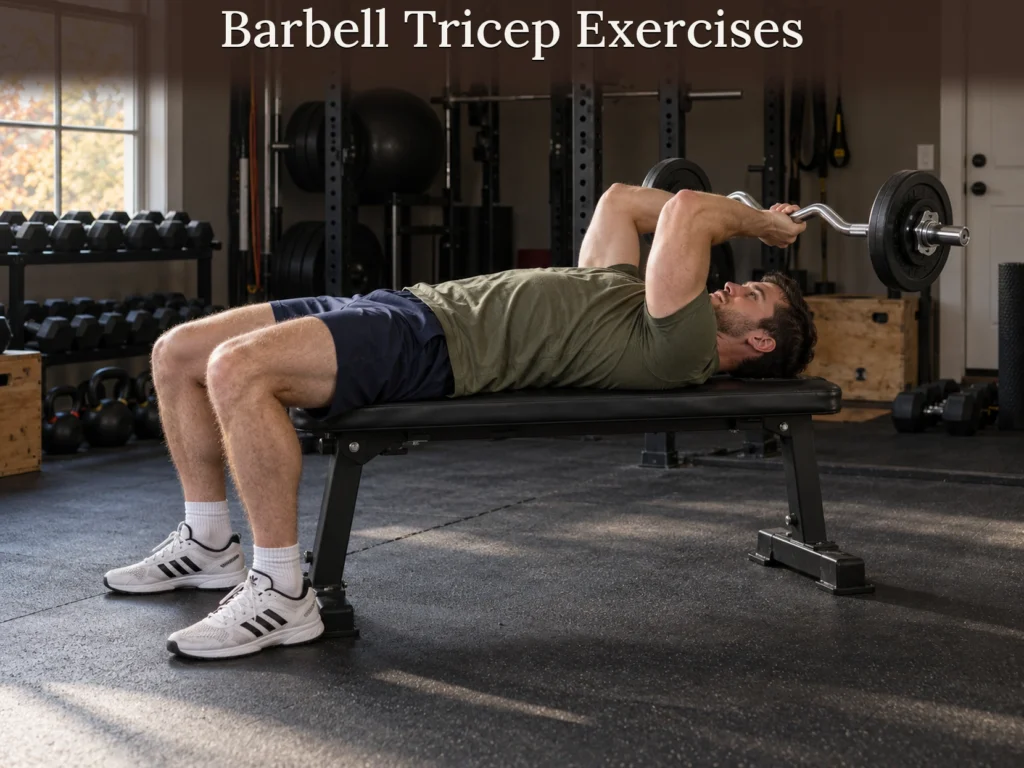
Barbell Tricep Exercises: Form and a Practical Home Workout

Founder
I founded HomieGym to help you make informed decisions about training at home. My background includes university-level sports science education, practical coaching, gym training and combat sports.
Barbell tricep exercises give you two useful types of work: presses that involve the chest and shoulders, and extensions that focus on straightening the elbows. I recommend starting with one press and one extension when your equipment and weekly training allow it. Adding several nearly identical extensions usually makes the session longer before it makes the choice clearer.
A straight bar, rackable curl bar, and short EZ bar offer different setup options. Choose the movements you can start and finish under control, then fit the working sets around the pressing you already do.
Table of Contents
Choose Barbell Tricep Exercises for Your Setup
Start with bar compatibility, available supports, and a rehearsed return. A bar's angled grips do not tell you whether it fits your rack, and having a bench does not establish how you will get the bar into position. Check those separately before selecting the exercises.
| Your setup | Practical route | Check first |
|---|---|---|
| Bench, rack, and compatible straight bar | Close-grip press plus one extension | Catch clearance, unrack, and return |
| Bench and compatible rackable curl bar | Same choices, using suitable angled grips | Approved support span and contact areas |
| Short curl bar with a workable handoff | One feasible extension | Control during both handoff and return |
| No usable bench or press station | Standing overhead extension if manageable | Overhead access and start/finish handling |
Triceps extensions with a curl bar can be lying or overhead. The generic exercise name does not choose the arm position for you. Lying extensions use a suitable bench with the upper arms raised in front of the torso; overhead extensions raise the upper arms beside the head. Choose the position you can control comfortably.
For triceps training with a curl bar, try the available angled grip with a light load and keep your thumbs wrapped around it. The same applies to an EZ curl bar. An angled grip may suit your hands, but it does not guarantee comfortable elbows or wrists. A short bar also must not be balanced across supports it cannot properly span.
I give repeatable handling priority over adding another variation. If getting into position is the hardest part, reduce the load or choose another movement. A manageable extension-only session is a valid smaller option when a full press station is unavailable.
Close-Grip Bench Press
The close-grip bench press trains the triceps during a press that also involves the chest and front shoulders. Use a suitable bench inside a compatible rack. Begin with a grip around shoulder width and adjust for your proportions; your hands do not need to touch.
Before loading, check that the cups allow a short unrack without losing your shoulder position. Rehearse a controlled descent and rerack. The safeties must allow your intended range while receiving the bar above your torso and neck if you cannot finish, with a clear exit. If the arrangement cannot do both, change the station.
- Set your base. Lie with head, upper back, and hips supported, feet stable, and shoulder blades set against the bench.
- Unrack deliberately. Take a closed grip, firm your abdomen, and clear both cups. Balance the bar above the shoulders before lowering.
- Lower and press. Keep wrists over forearms and guide the bar toward the lower chest through a comfortable controlled range. Press to straight elbows without bouncing or lifting your hips.
- Return to both cups. Finish while you still control the bar, guide it into place, and check both supports before releasing your grip.
If narrowing the grip makes your wrists fold or elbows feel forced, widen it slightly and rehearse again. Choose a new load for this variation instead of assuming your usual bench-press weight will fit.
A no-bench pressing option is possible only when its own station works. Use the barbell floor press setup guide for that specific lift. The floor does not solve an incompatible rack or an unsupported bar start.
Barbell Skull Crushers and Lying Extensions
Barbell skull crushers are lying elbow extensions. Your upper arms stay relatively steady while the elbows bend and straighten to move the bar. Use a manageable load and controlled stopping point; the name is not an instruction to touch your forehead.
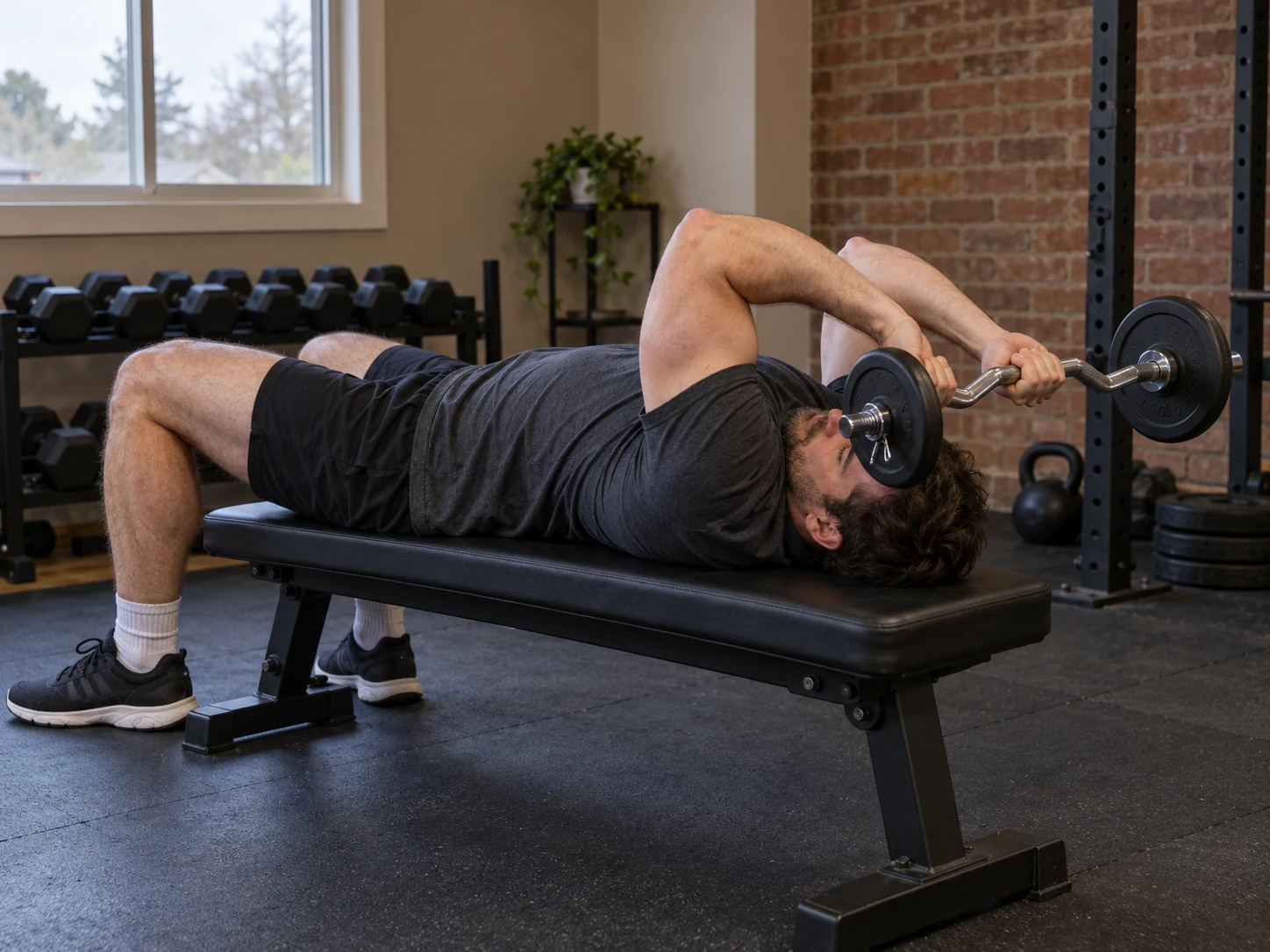
- Arrange the start and finish. Use an appropriate compatible rack arrangement or a competent helper who can hand you the light bar after you lie down and accept it when the set ends. Agree on assistance if control starts to fail, and rehearse before adding plates.
- Set the starting position. Keep your feet supported, head and torso on the bench, and thumbs around the bar. Hold it balanced with straight elbows and upper arms close to vertical.
- Bend the elbows slowly. Lower toward the forehead or slightly behind the head while keeping wrists aligned with the forearms. Stop short of contact and before the upper arms start drifting backward.
- Straighten and finish. Extend your elbows without throwing the bar upward. After the last repetition, steady the bar in the start position, then use the return you rehearsed.
A lying triceps extension with an EZ curl bar uses the same movement pattern with angled hand positions. The angled grip changes hand position while the elbow-extension pattern stays the same. Treat it as a variation of the lying exercise when planning your sets.
Keep the load light enough that your shoulders do not start swinging the bar to finish the set. I prefer ending a set early to turning the last repetitions into a different movement. If the bar position, grip, or elbow bend causes pain, stop and reassess the load and exercise choice.
Overhead Extensions With a Straight or Curl Bar
Overhead extensions place the upper arms beside your head while the elbows bend to lower the bar behind it. Choose this option only if you can hold that position, control the bar's path, and complete the transfer into and out of the overhead start.
- Rehearse the transfer. With a manageable light bar, rehearse a controlled press from the fronts of your shoulders to straight arms overhead, then lower back to the shoulder hold before returning the bar. Use a compatible rack for pickup and return, or a competent helper for the handoff. If you cannot control this transfer, choose another exercise.
- Stand steadily. Keep your feet planted and abdomen firm. Hold the straight or curl bar overhead with a closed grip and aligned wrists. Avoid leaning back to create the position.
- Lower behind the head. Bend your elbows while keeping upper arms as steady and upright as you comfortably can. Stop before losing shoulder position or trunk control.
- Extend and return. Straighten the elbows under control. End with repetitions remaining, then reverse the rehearsed transfer and return the bar to its supports or helper.
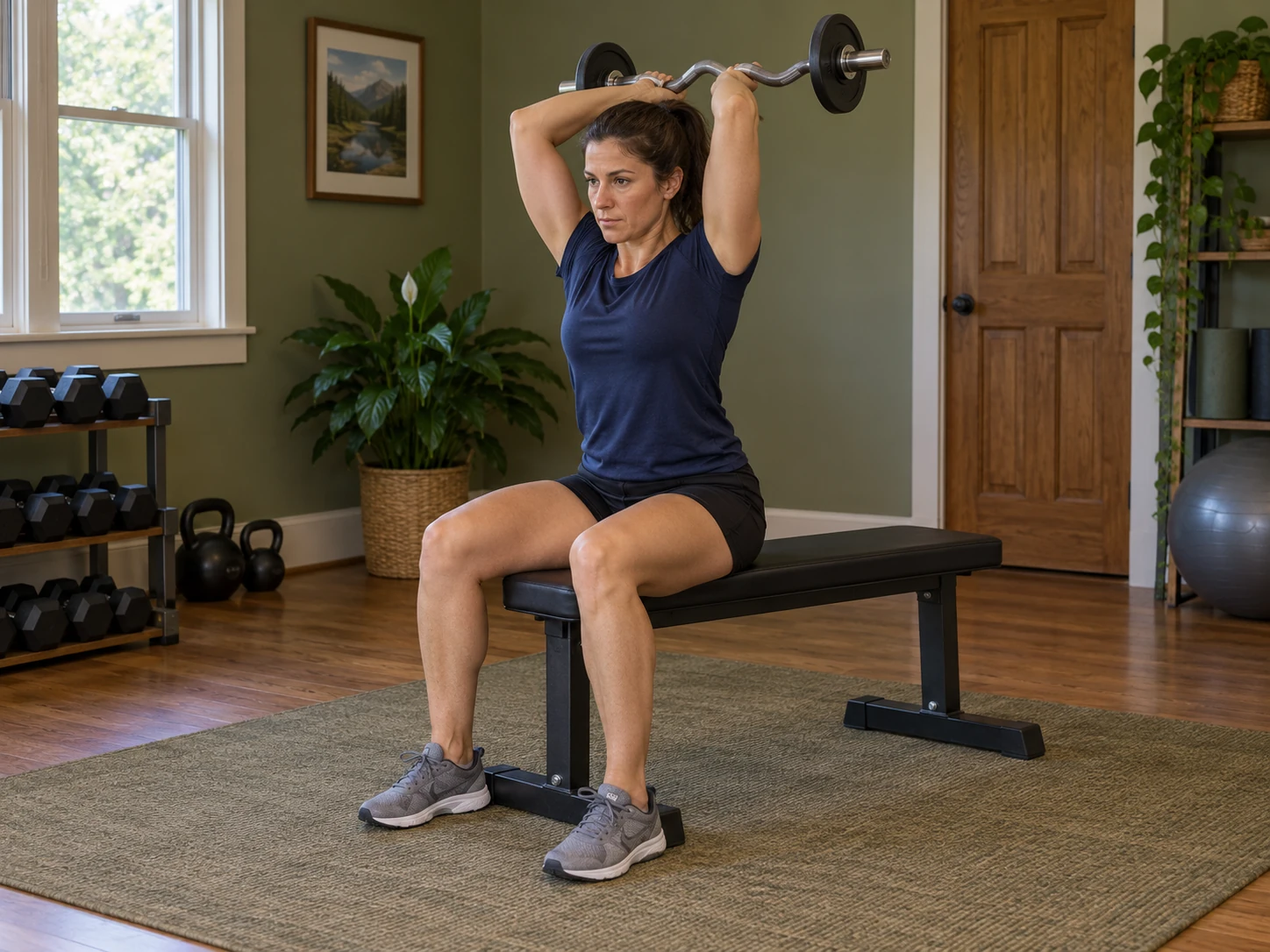
Seated overhead extensions with a curl bar, sometimes called seated cambered-bar extensions, use the same elbow action. A suitable stable exercise bench and supported feet replace the standing base. Check that the seat or backrest allows the bar to pass behind your head and that you can still receive and return it. Practice receiving and returning the bar while seated before loading it.
Shoulder position can influence the training response. In a 12-week study of 21 adults, Maeo and colleagues found greater measured triceps growth with overhead cable extensions than with cable extensions performed with the arm by the side (1). That comparison did not test barbells or lying skull crushers. It supports considering arm position, without establishing a superior barbell exercise.
I keep overhead work optional because the extra setup has to be worthwhile for the person doing it. If holding the upper arms overhead or returning the bar is awkward, choose the lying extension when its bench setup works. You do not need both extensions in the same session.
A Practical Tricep Workout With a Barbell
For a tricep workout with a barbell, use the press first and choose one extension afterward. The example below is for someone who has a workable bench station and wants a modest press-plus-extension session. Fit it into the week before deciding to perform all four working sets.
| Order | Exercise | Working sets and reps | Rest |
|---|---|---|---|
| 1 | Close-grip bench press | 2 sets of 8 to 10 | 2 to 3 minutes |
| 2 | Lying OR overhead extension | 2 sets of 10 to 15 | 90 to 120 seconds |
Finish both exercises with about 2 to 3 controlled repetitions remaining. This effort estimate is called repetitions in reserve. Take longer rests if breathing, grip, or bar control has not recovered. While learning, leave more margin and use lighter practice sets before the working sets.
The 2026 American College of Sports Medicine overview supports progressive resistance training and found that training to momentary muscle fatigue did not consistently improve training outcomes (2). The sets, repetitions, rests, and exercise pairing here are editorial starting choices, rather than an experimentally established optimal triceps routine.
A triceps workout with an EZ curl bar can use the same choices if that particular bar fits the supports and permits controlled pressing. With a short curl bar, choose one feasible extension and start with 1 to 2 working sets of 10 to 15, resting 90 to 120 seconds. This is a smaller accessory session, with a different stimulus from the press-plus-extension plan. Adding a second extension does not make the two routines equivalent.
If you want a press but have no usable barbell press station, a suitable close-grip push-up is a nonbarbell substitution. Use a stable floor or appropriate raised support and a range you can control, then add one feasible extension if needed. Skip the substitution when your existing chest training already supplies enough pressing for this session.
Fit Triceps Work Around Chest and Shoulder Training
Count your existing presses before adding direct triceps work. Bench and overhead pressing already involve elbow extension, so a separate triceps day can add more overlapping work than the exercise list suggests.
If you follow the full-body barbell plan, keep those base sessions. Each already contains two bench-press working sets, giving you four bench sets across the week. Begin with one extension set after Monday's bench press instead of adding the full four-set triceps session on another day.
| Day | Keep the base work | Initial triceps addition |
|---|---|---|
| Monday | Full-body session, including 2 bench sets | 1 lying OR overhead extension set |
| Thursday | Full-body session, including 2 bench sets | None at first |
This records four compound press sets plus one direct extension set. It does not convert each bench set into an exact number of direct triceps sets. If your elbows feel irritated or the next pressing session deteriorates, reduce or remove the addition and review the load and scheduling.
In an upper/lower split, the close-grip press can occupy an existing upper-body push slot, followed by one extension. If you also use the shoulder exercise guide, account for its presses before adding this session. I would keep one manageable extension after an existing press before creating another full pressing day.
Add Reps or Weight Without Changing the Movement
Add weight only after reaching the top of the range in every prescribed working set with the same controlled range and about 2 to 3 repetitions remaining. For the main example, that means both press sets reach 10 or both extension sets reach 15. Progress each exercise independently.
For example, 15 and 12 extension repetitions mean you should keep that load while building the second set. When both sets reach 15 with consistent elbow and wrist positions, consider the smallest practical increase. Return toward 10 repetitions after increasing, and reduce again if the new load makes the bar hard to handle.
Log the total bar-plus-plate weight, repetitions in each set, and your effort estimate. If the available plates create too large a jump, repeat the weight and improve the remaining sets rather than shortening the range to claim progress.
One missed repetition target does not automatically require a deload, a planned reduction in training demands. Repeated loss of performance or control is a reason to review load, sets, scheduling, and recovery. Stop a painful exercise; persistent or recurring symptoms need appropriate medical advice.
FAQs
Is a straight bar or curl bar better for triceps?
Neither a straight bar nor a curl bar is universally better for triceps training. Choose the grip you can control comfortably, then check that the bar fits the supports and the start and return work for your exercise.
Do you need both presses and extensions in one session?
No, you do not need both presses and extensions in every triceps session. If chest or shoulder training already provides pressing, one manageable extension may be enough for the addition you are planning.
Can you train triceps with a barbell without a bench?
Yes, a standing overhead barbell extension can train triceps without a bench when you can control the overhead position and the bar transfer. If that setup does not work, choose another available implement or a suitable push-up rather than improvising unsupported bar handling.
Can you add triceps work after chest training?
Yes, you can add triceps work after chest training, but count the pressing you have already done. Start with a small extension addition and reduce it if it interferes with recovery or the next pressing session.
This content is for informational and educational purposes only. It is not a substitute for professional medical advice, diagnosis, or treatment. Consult your healthcare provider before starting a new fitness program if you have a medical condition, an injury, or concerns about exercise.
References
- Maeo S, Wu Y, Huang M, et al. Triceps brachii hypertrophy is substantially greater after elbow extension training performed in the overhead versus neutral arm position. Eur J Sport Sci. 2023;23(7):1240-1250. doi:10.1080/17461391.2022.2100279
- Currier BS, D'Souza AC, Fiatarone Singh MA, et al. American College of Sports Medicine position stand. Resistance training prescription for muscle function, hypertrophy, and physical performance in healthy adults: an overview of reviews. Med Sci Sports Exerc. 2026;58(4):851-872. doi:10.1249/MSS.0000000000003897