
Barbell Workout for Beginners: A Full-Body Plan for Home

Founder
I founded HomieGym to help you make informed decisions about training at home. My background includes university-level sports science education, practical coaching, gym training and combat sports.
Follow a twice-weekly beginner barbell routine with clear equipment needs, working sets, repetitions, effort, progression, and feasible substitutions.
Beginner barbell workouts can start with one full-body routine performed twice a week on nonconsecutive days. Use a squat, a press, a hip hinge, and a row, with light practice before working sets. I prefer repeating a small group of lifts while you learn the setup and record your progress.
The main plan below requires a rack with suitable safeties, a bench, a bar, plates, and collars; the substitutions explain what to do with less equipment.
Table of Contents
Barbell Workouts for Beginners - The Weekly Plan
Train on Monday and Thursday, or another pair of days with at least one day between them. Repeat the session below, completing one exercise before moving to the next. In the first week, use one working set per movement if learning the routine is already demanding. Build to the listed two sets when you can recover and repeat the movements comfortably, keeping the load unchanged while you add that second set.
The US Physical Activity Guidelines recommend muscle-strengthening activity on at least two days a week. The exercise order, repetition ranges, rest periods, and progression below are my sample programming choices, rather than an official routine prescribed by the guideline.
| Order and exercise | Working sets | Repetitions | Rest between sets |
|---|---|---|---|
| 1. Barbell back squat | 2 | 6-8 | 2-3 minutes |
| 2. Barbell bench press | 2 | 8-10 | 2-3 minutes |
| 3. Barbell Romanian deadlift | 2 | 8-10 | 2-3 minutes |
| 4. Barbell bent-over row | 2 | 8-12 | 2 minutes |
| 5. Standing bodyweight calf raise | 2 | 12-15 | 60-90 seconds |
| 6. Dead bug | 2 | 5-8 per side | 60 seconds |
The squat trains the legs, the bench press provides upper-body pushing, the RDL trains the hip hinge, and the row provides upper-body pulling. Calf raises and the dead bug add simple lower-leg and trunk work. Reserve roughly 45-60 minutes, including setup and practice; that is a planning estimate, and an unfamiliar rack or slower transitions can take longer. Allow the listed rest after the final set before starting the next loaded exercise.
For the loaded exercises, aim to finish working sets with about two or three controlled repetitions still possible. Keep the first week easier while learning what that feels like. For calf raises and dead bugs, stop before balance or trunk position becomes difficult to control.
Check the Equipment Before You Load the Bar
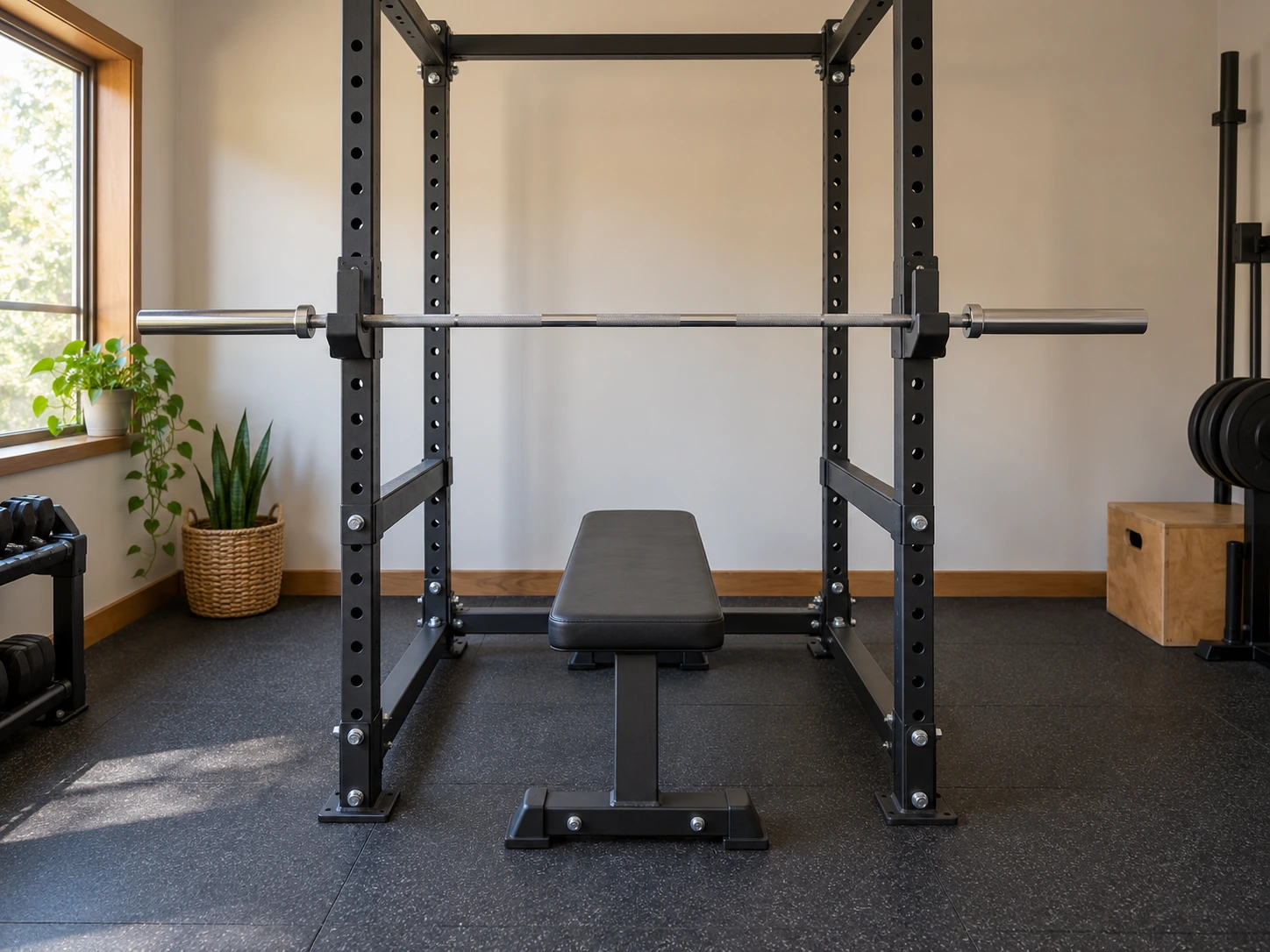
Use a compatible rack, safeties, and bench for the main routine. The back squat starts from rack hooks; the bench press needs hooks and safety supports that work with your bench position. Check the exact rack, bench, bar, plate, and collar instructions before assembling the training area.
Use the bench setup guide to check its adjustments before arranging the main routine.
- Rack and safeties: use a properly assembled and stabilized rack with the manufacturer's required anchoring and compatible supports.
- Bench and bar: confirm stable bench placement, suitable hook spacing, and a bar light enough for each exercise.
- Plates and collars: match the sleeve and plate openings, load both sides evenly, and secure the load as instructed.
- Working area: leave loading access beyond both bar ends, a clear path, and suitable flooring and storage.
The National Strength and Conditioning Association's professional standards call for appropriate safety equipment and attentive spotting for free weights supported on the trunk or moved over the head or face. These standards concern supervised facilities and also require equipment setup to follow manufacturer instructions. For this beginner routine, get practical instruction in unracking, reracking, and using the safeties, and arrange competent spotting for the squat and bench press. If the required support or help is unavailable, use the substitutions below.
Check squat supports through your intended range and bench supports with your actual bench and body position, using an unloaded bar and competent help. They must allow the normal movement and provide a workable catch and exit arrangement. Do not assume a hook height that works for one exercise covers the next. Use the power rack exercise guide for more setup detail.
A conventional gym bar can be too heavy for a beginner's press even when it is easy to squat. Use a lighter compatible bar or the substitutions below. Getting the routine started with manageable equipment is more useful than treating an empty full-size bar as a compulsory minimum.
The barbell types guide includes lighter technique bars when a full-size starting bar is too heavy.
Warm Up and Choose Your First Working Load
Practice the movement before making it demanding. The NSCA distinguishes a general warmup from a specific warmup using easier movements similar to the coming activity. For this routine, I recommend the following starting sequence, with more practice when needed.
- Move easily for about five minutes, such as walking or marching, until you feel ready to train.
- Rehearse several bodyweight squats and unloaded hip hinges through a comfortable, controlled range.
- Before each barbell exercise, perform an easy practice set with a light bar or suitable alternative.
- If your working load is heavier, add one or more small practice increases, with fewer repetitions as the weight rises.
Warmup sets do not count as the table's working sets. If the lightest bar is already your working load, keep the practice brief enough that it does not turn into another demanding set. You should reach the first work set ready to repeat the movement, rather than tired from a long warmup.
Choose a first load that lets you reach the bottom of the listed repetition range with stable technique and plenty left. As you become familiar with the lift, use repetitions in reserve, or RIR: your estimate of how many more controlled repetitions you could complete. The 2026 ACSM position stand describes two or three RIR as one way to achieve sufficient training effort.1 You do not need a one-repetition maximum test to select this starting load.
RIR is an estimate, especially when you are new. If a repetition slows dramatically, your position changes, or you are uncertain about completing the next one, finish the set. A meta-analysis found no overall advantage of reaching failure for strength or muscle size, although its studies involved young adults and some subgroup findings differed.2 I leave a margin in this beginner plan so its load decisions do not depend on a missed repetition.
Perform the Selected Barbell Exercises
Learn each movement with a light load before progressing it. The cues below help you follow the program; an instructor can check details that a written description cannot see. Stop an exercise that causes pain, dizziness, or loss of control, and seek appropriate guidance rather than trying to complete the table at any cost.
Squat and Bench Press
For the back squat, begin and end at the rack. Place the bar securely across the upper back, take a controlled step into position, and squat through a range you can control with your feet supported. Return to both hooks deliberately. Keep the first working sets light enough that you can repeat the same depth and position.
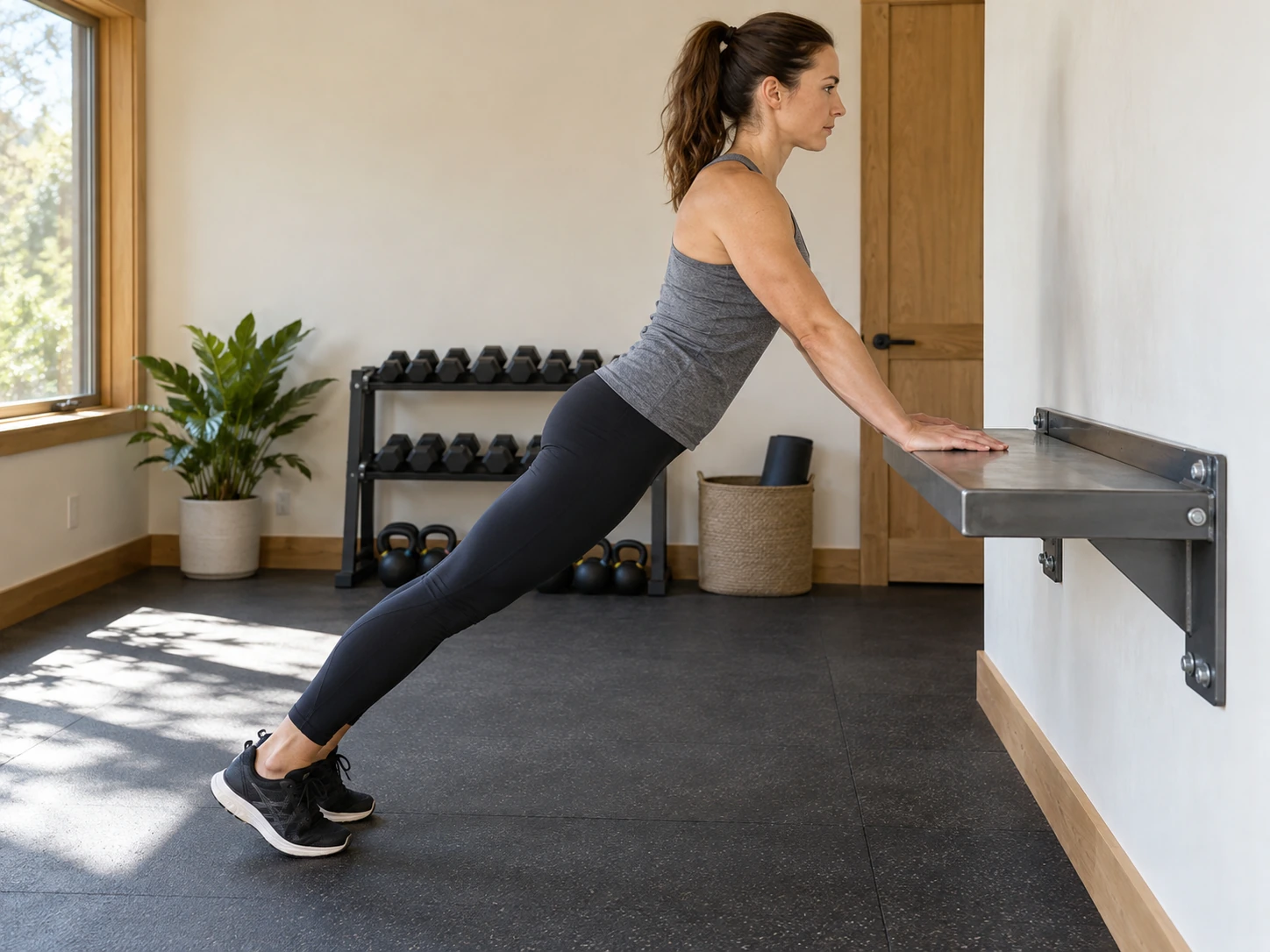
For the bench press, use a closed grip and a stable bench position. Lower the bar under control and press without bouncing it off your chest. Practice the unrack and return as part of the exercise, with the safeties and competent spotting arranged before you begin. If the starting bar or setup is unsuitable, choose a manageable push-up variation instead.
Review the rack bench press setup before rehearsing the unrack and return.
Romanian Deadlift and Row
The Romanian deadlift starts standing with the bar in your hands. Use suitable low rack hooks to pick it up, then move the hips back with softly bent knees while keeping the bar close. Lower only as far as you can maintain control, and stand by bringing the hips forward. Reaching the floor is not the goal of this hip hinge.
For the bent-over row, take the light bar from suitable low hooks, hinge into position, and pull toward the lower ribs without repeatedly lifting the torso. Choose the load for the row itself, rather than reusing the RDL weight for convenience. If holding the hinge becomes the limiting task, use the supported dumbbell row substitution instead of forcing extra repetitions.
RDLs and rows both require you to hold your trunk position, so I keep their starting volume modest. If the second exercise becomes difficult to control even after reducing the load, replace it or get instruction before progressing. The dumbbell back exercise guide explains supported pulling options if you already have a suitable dumbbell and stable support.


Calf Raise and Dead Bug
Use bodyweight for the calf raises at first, with your fingertips on a stable support for balance. Rise through the forefoot and lower under control on a level floor. Work through a comfortable range, and stop before the motion turns into bouncing. You can progress repetitions before adding a handheld weight later.
For the dead bug, lie on your back, raise the arms and bent legs, then slowly reach the opposite arm and leg away. Return and change sides while keeping your trunk steady. Shorten the reach if your back starts to arch; a controlled short movement is the useful version for this plan. Five repetitions on each side means ten alternating reaches in total.
Add Repetitions Before Adding More Weight
Keep the load until both working sets reach the top of the range with the intended control and effort. Then use the smallest practical increase and return toward the bottom of the range. This is my sample progression method; adjust it when your available increments or recovery require a smaller step.
For example, the squat's range is six to eight repetitions. You might record 8 and 7, then 8 and 8 at the same weight. Once both sets are controlled and you still estimate about two or three repetitions left, increase the load at the next session. If the next increase is too large to complete six controlled repetitions, return to the previous load or obtain smaller compatible plates.
- Record the full load: bar plus all plates, along with sets, repetitions, and a short effort note.
- Progress each exercise separately: a stronger squat does not require a heavier row in the same week.
- Repeat a difficult session: use the same load, more rest, or fewer repetitions before deciding you need a different program.
- Reduce the demand when needed: take off weight or temporarily use one set if recovery or technique deteriorates.
For calf raises and dead bugs, first reach the upper end with the same control on both sets. For the dead bug, gradually lengthen the arm and leg reach only while you can keep the trunk steady. After several weeks, assess whether the routine is getting more consistent and whether you want more work for a particular goal; a two-set introduction is not a promise of maximum muscle growth.
If you miss Monday, move the workout to another suitable day and preserve recovery before the next one. Keep the two sessions manageable before adding a third. Persistent fatigue, soreness that changes your movement, or repeated loss of performance calls for adjustment, rather than an automatic weekly increase.

Adapt the Plan When Equipment Is Missing
Replace the movement that your equipment cannot support. A missing rack changes the squat and pressing choices; a missing bench does not justify trying to get under a loaded bar from the floor. The adapted routine can remain useful even when it uses bodyweight or dumbbells alongside a barbell.
| Missing or unsuitable equipment | Replacement | Sample dose |
|---|---|---|
| No rack for back squats | Bodyweight squat; goblet squat if you own a suitable dumbbell | 2 sets of 8-12 |
| No suitable bench, rack, or pressing bar | Push-up at a manageable height | 2 sets of 6-12 |
| Cannot obtain a controlled RDL starting position | Unloaded hinge practice and bodyweight glute bridge | Bridge: 2 sets of 10-15 |
| Rowing hinge is the limiting task | One-arm dumbbell row with stable support, if available | 2 sets of 8-12 per side |
Use one set per movement if you are following the first-week option. Otherwise, use the table's two sets and rest about two minutes between them, keeping a similar margin of controlled repetitions. For one-arm rows, perform the prescribed repetitions on each side, resting as needed between sides, then take about two minutes before the next round. For a push-up, use a stable surface that cannot slide or tip; choose a higher hand position if the lower one is too demanding. Keep the calf raises and dead bugs at the end of the session.
A barbell RDL or row can be performed without a rack only if you can first lift the bar into position and return it under control. Learn that pickup separately. Small-diameter plates can leave the bar too low for your current range; do not improvise unstable supports or learn a clean as a shortcut to pressing.
If you have only a bar and cannot set up a workable pulling movement, the available routine has a pulling gap. Add an appropriate pulling option or use access to better equipment before describing it as a complete full-body plan. A dumbbell full-body routine may fit better when a suitable pair is already available.
Prepare the First Session Before Adding Exercises
Choose your two training days, check the support setup, and write down the first session's exercise order. Start with manageable loads, rehearse the transitions, and record what you complete. If one movement needs a different implement, use the substitution and keep the rest of the routine consistent.
This is a strength session, so maintain aerobic activity separately. The US Physical Activity Guidelines also recommend weekly aerobic activity alongside strengthening. Begin with a schedule you can recover from, then adjust the training as your skill, equipment, and goals develop.
This sample program provides general exercise education for healthy adults. It is not an individualized prescription or medical advice. Seek qualified instruction for unfamiliar lifts and appropriate clinical advice when a health condition or symptoms affect exercise.
FAQs
How often should beginners do barbell workouts?
Two nonconsecutive full-body sessions a week are a practical start for this routine. Build confidence and recovery with those sessions before adding another day.
What barbell weight should a beginner use?
Use a load that lets you complete the planned repetitions with stable technique and several controlled repetitions still possible. A lighter bar or another implement may be needed, particularly for presses; there is no single starting weight that fits every beginner.
Can you do barbell exercises at home without a rack?
Yes, some barbell exercises are feasible without a rack when you can lift the bar into position and return it under control. Replace back squats and unsupported barbell presses with the alternatives above, and account for any missing pulling exercise.
Should beginners do this workout every day?
No, this plan schedules recovery days between full-body sessions. Add activity on other days according to your goals and recovery rather than repeating the loaded routine daily.
Does an Olympic barbell require Olympic lifts?
No, an Olympic-style bar can be used for ordinary squats, presses, hinges, and rows when it fits the setup and load. Snatches and clean-and-jerks are separate technical skills and are not required in this beginner routine.
References
- Currier BS, D'Souza AC, Fiatarone Singh MA, et al. American College of Sports Medicine position stand. Resistance training prescription for muscle function, hypertrophy, and physical performance in healthy adults: an overview of reviews. Med Sci Sports Exerc. 2026;58(4):851-872. doi:10.1249/MSS.0000000000003897.
- Grgic J, Schoenfeld BJ, Orazem J, Sabol F. Effects of resistance training performed to repetition failure or non-failure on muscular strength and hypertrophy: a systematic review and meta-analysis. J Sport Health Sci. 2022;11(2):202-211. doi:10.1016/j.jshs.2021.01.007.