Cable Machine Chest Exercises: 6 Presses and Flyes With a Workout

Founder
I founded HomieGym to help you make informed decisions about training at home. My background includes university-level sports science education, practical coaching, gym training and combat sports.
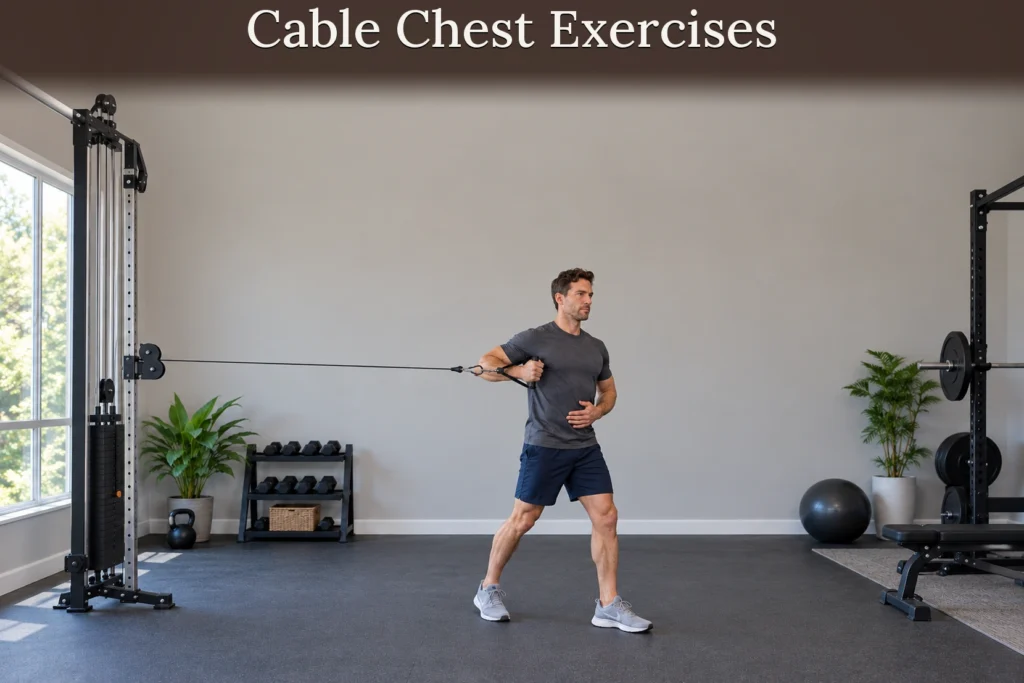
Cable machine chest exercises include standing presses, bench-supported presses, and flyes that move your arms across the body at different angles. I recommend starting with a press you can control without shifting your feet, then one fly variation. That gives you a useful starting session without turning every available pulley position into another exercise.
A single adjustable pulley and handle can cover one-arm work. Two-arm variations need a station designed for that use, and a bench press needs compatible support and a manageable way to get into and out of position. Choose from the six options below according to your equipment.
Jump to the sample workout, press instructions, fly instructions, or progression plan.
Table of Contents
Cable Machine Chest Workouts: Exercises, Sets, and Reps
Start with two sets of a chest press and two sets of a mid-height fly. The third exercise below is an optional addition once you can repeat the first two comfortably and recover before your next session. The six exercises in this guide are choices, not a six-exercise workout.
Before the working sets, move around for a few easy minutes, then rehearse your press with a light load for 8 to 10 controlled repetitions. Practice several light fly repetitions after adjusting the pulleys. Check that each height pin and handle clip is secure and that the cable travels freely throughout the movement.
For one-arm exercises, the listed repetitions are per side. Complete both sides to finish one round, taking enough time between them to reset your stance and recover, then take the listed rest. Keep about 2 to 3 repetitions in reserve: finish each set while you could still perform that many controlled repetitions. ACSM's 2026 position stand supports training short of failure (1).
| Exercise | Sets | Reps | Rest | Equipment |
|---|---|---|---|---|
| Single-arm press | 2 per side | 8 to 12 per side | 90 to 120 sec | One pulley, handle |
| Mid-height fly | 2 | 10 to 15 | 60 to 90 sec | Two cables, handles; one-arm option below |
| Low-to-high fly, optional | 1 to 2 | 10 to 15 | 60 to 90 sec | Low adjustable outlets; omit if unavailable |
This is my sample prescription for learning the movements, rather than a study-tested cable routine. A dual-cable or supported press can replace the first row with two sets of 8 to 12 repetitions using both arms together. If you use a one-arm fly, do the listed sets and repetitions on each side; do not double them again.
If you are beginning resistance training, try the two-exercise version on two nonconsecutive days, such as Monday and Thursday, and reassess how the second session feels. If another workout already includes bench presses or push-ups, use these cable sets to replace some of that chest work. Avoid adding a separate cable session automatically.
Chest Press on a Cable Machine: How to Do It
To perform a chest press on a cable machine, begin with a handle beside your chest, press it forward by extending the elbow, and return along the same path. Your chest, front shoulders, and triceps contribute. The main choice is whether to stand with one or two handles or use a bench for support.
A standing press also asks you to resist the cable's pull through your feet and trunk. In a small study of 14 recreationally trained men, stability helped limit standing pressing force. That comparison involved maximal efforts and a barbell bench press; it cannot tell us which cable variation produces more muscle growth (2).
Standing Single-Arm Cable Chest Press
This is my first choice when only one pulley is available. You can position the handle for either arm without finding a matching second outlet, although resisting the pull on one side takes attention. Select a load you can hold at the starting position without turning toward the machine.

- Set the outlet around chest height and attach a single handle. Take the handle while close to the machine, then turn away with it near your chest. Place the opposite foot forward in a comfortable staggered stance.
- Keep your feet separated from side to side, rather than balancing on one narrow line. Start with the working elbow bent and slightly below shoulder height, the wrist straight, and the cable behind the working arm.
- Brace your abdomen and breathe out as you press forward to nearly straighten the elbow. Let the hand finish in front of that side of your chest, without reaching across to the opposite shoulder.
- Bring the handle back slowly until the elbow returns beside your torso. After the set, move closer to the outlet under control and let the stack settle before releasing the handle. Repeat on the other side.
Watch your belt line and breastbone: they should continue pointing forward as the arm moves. If your hips turn with every repetition, reduce the weight and shorten an overreaching finish. The free hand can rest lightly on your abdomen as a reminder to keep your trunk steady.
If the lightest setting still pulls you out of position, use a lighter resistance option or an incline push-up against a secure, immovable surface. A heavy minimum stack setting is a real equipment limit; moving the pin is not always enough to make an exercise suitable.
Standing Dual-Cable Chest Press
Two handles let both arms press together, which can shorten the session. Check the station's instructions first: two visible outlets do not necessarily provide two independently controlled cables. Use a setup intended for simultaneous pressing, with matching handle lengths and appropriate resistance on both sides.
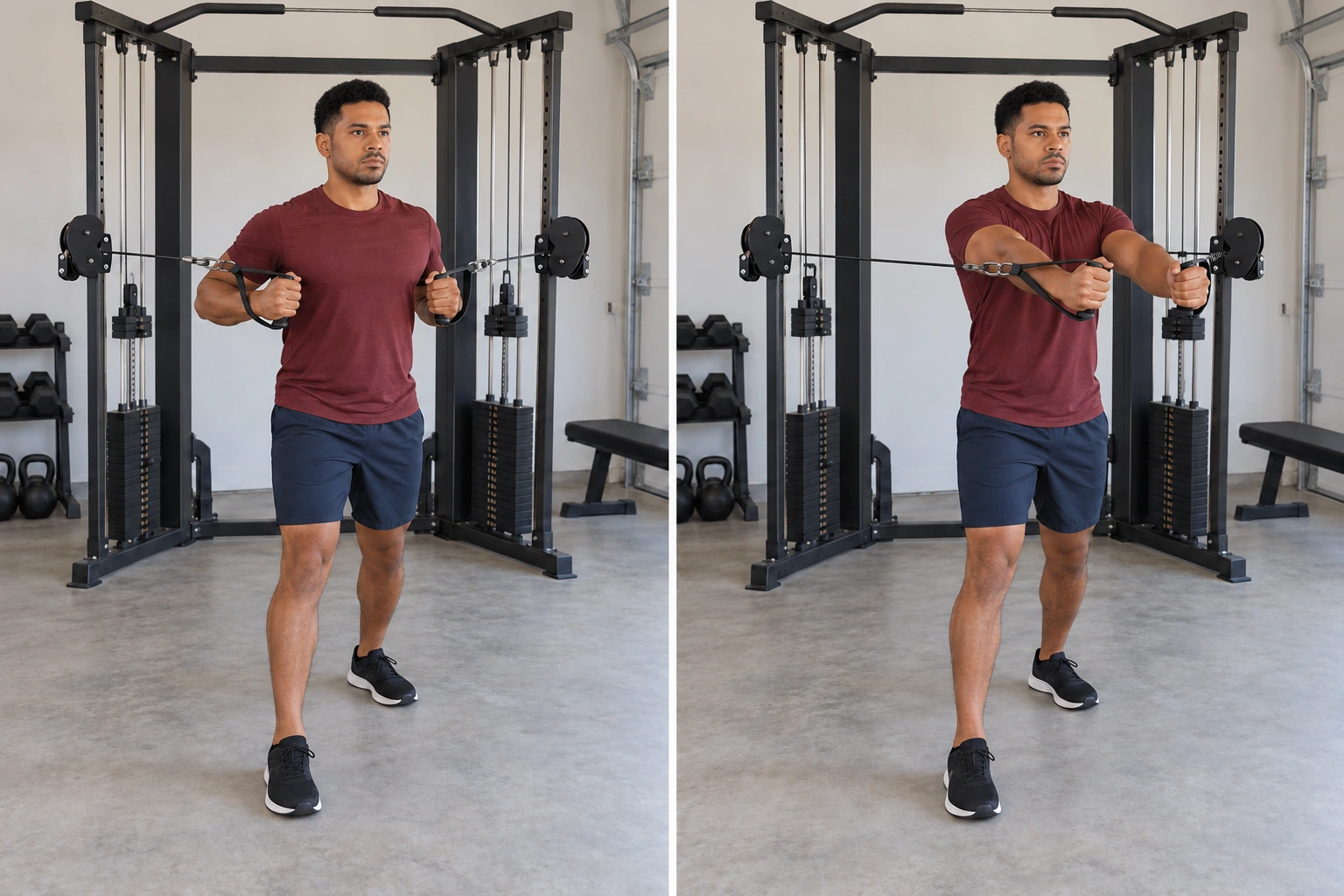
- Adjust both outlets to the same height, around the upper chest, and fit single handles. Choose a light load before taking the handles and stepping forward into a staggered stance.
- Bring the handles beside your chest with elbows bent and below shoulder level. Position yourself so the cables clear your arms, shoulders, and neck instead of rubbing against them.
- Press both handles forward together, allowing the hands to come somewhat closer as the elbows straighten. Keep your ribs over your pelvis and your head facing ahead.
- Return both handles evenly to your starting position. To finish, bring the handles close to your body and carefully reverse your setup until the weights settle. Do not drop one handle while the other is still loaded.
The handles should reach the front at roughly the same time. If one side surges forward, reduce the load and check the pulley heights, attachment lengths, and cable routing before blaming an arm-strength difference. Avoid banging the handles together to manufacture a stronger finish.
A single-arm press is the direct substitute when the station has one usable cable or its two outlets are coupled in a way that prevents this setup. You do not need to hold a second unused handle to train the first side.
Bench-Supported Cable Chest Press
A supported press gives your back a stable surface while your arms work. Here I use a seated version with the backrest upright or close to upright, rather than assuming that every low pulley can accommodate a lying bench press. The bench must be suitable for the station and remain stable against the backward pull.

- With the cables unloaded, center a suitable bench between the outlets, facing away from them. Secure its adjustments, plant both feet, and set the pulleys around seated chest height, behind and outside the shoulders.
- Rehearse taking and returning the handles at the lightest load. You must be able to bring them beside your chest without twisting backward, dragging the bench, or reaching into an unsupported position. Follow the equipment's entry and exit instructions; get a qualified trainer's help if the setup is unfamiliar.
- Sit with your hips and back supported, wrists straight, and elbows bent slightly below shoulder height. Press the handles forward and gently inward until your arms are nearly straight.
- Return to the same comfortable starting depth without lifting your chest off the backrest. Finish while you still control the handles, and reverse the rehearsed return procedure before standing.
Check that the bench stays in place and your back stays supported throughout the set. Sliding forward on the seat or arching farther with each repetition usually calls for a lighter load or a different bench position. Do not wedge an unsuitable bench against loose weights or furniture to keep it from moving.
If you cannot reach and return both handles comfortably, choose the standing single-arm press or a purpose-built chest-press machine. I favor an easy-to-reach standing setup over back support that requires an awkward loaded entry.
Chest Fly on a Cable Machine: Three Variations
A chest fly on a cable machine brings your upper arms inward while the elbows keep a small, fairly constant bend. Presses involve much more elbow extension. Begin flyes lighter than your press and choose the path you can repeat without shrugging or stretching the shoulders beyond a comfortable range.
The three angles below change the direction in which your arms meet. I use the angle to find a workable movement for the available pulley height and a comfortable shoulder position. You do not need all three flyes.
Mid-Height Cable Chest Fly
The mid-height fly is a useful starting point because the hands travel mostly across the body at chest height. Use a dual-cable station with enough width that the cables can pull from behind and outside your arms. The handles should not be squeezed into an awkward path by a very narrow frame.

- Fit single handles to outlets near shoulder height and select a light load. Take the handles while close to the station, bring them beside your chest with elbows bent, then face away and step into a staggered stance with a small, steady forward lean.
- Press the handles forward to bring your hands in front of your chest, palms facing each other. With a soft bend in each elbow, open the arms slowly until the upper arms are roughly beside your torso or you reach your comfortable limit sooner.
- Sweep the upper arms inward to bring the handles toward each other in front of your chest. Keep the elbow bend nearly unchanged; the handles can stop just short of touching.
- Open back to the same position under control. At the end, bend your elbows to bring the handles closer, step back carefully, and settle the weights before letting go.
From the side, your torso should hold its angle while the arms open and close. Turning the return into a deep backward stretch often makes the next repetition a lurch forward. Shorten the opening and lower the load until you can reverse direction smoothly.
With one pulley, perform the same arc using the arm nearest that outlet, with the cable coming from behind and outside that shoulder. Keep your chest facing ahead, finish near your body's midline, and repeat on the other side. If resisting rotation becomes the main task, return to a lighter single-arm press.
Low-to-High Cable Chest Fly
The low-to-high fly moves the hands upward and inward from beside the hips. It is an option when the upward arc feels controlled and your station has low outlets. Reaching higher does not automatically make the repetition better, and you should not need to lean backward to finish it.

- Set both pulleys low, attach handles, and select a light load. Take the handles close to the station, then face away and step forward with one foot ahead, leaving enough room for the cables to clear your legs.
- Start with the hands beside your hips and a slight elbow bend. Keep your shoulders relaxed and your abdomen firm, with palms oriented comfortably forward and upward.
- Bring the arms up and inward in a smooth arc, ending with the handles in front of the upper chest, below chin height. Keep the torso quiet.
- Lower along the same path until the hands return beside the hips. Resist the downward pull instead of allowing the weights to pull your arms behind you. After the last repetition, keep the handles close to your body and step back carefully until the stack settles before releasing them.
Watch the space between your shoulders and ears. If it disappears as you lift, you are shrugging through the finish. Lower the resistance and stop the arc earlier; if you keep bending the elbows more to lift the handles, the load is also too demanding for the fly you intended.
A single low outlet allows one arm at a time with the same path and a stable torso. If the cable catches your leg or your station has no usable low position, choose the mid-height fly. There is no need to lower your body into an improvised squat to imitate a low pulley.
High-to-Low Cable Chest Fly
This variation brings the hands downward and inward, finishing below the chest. It can replace the optional low-to-high fly when that direction is easier to control. Select it because its path fits your shoulders and equipment, without treating the lower finish as a separate requirement for chest development.
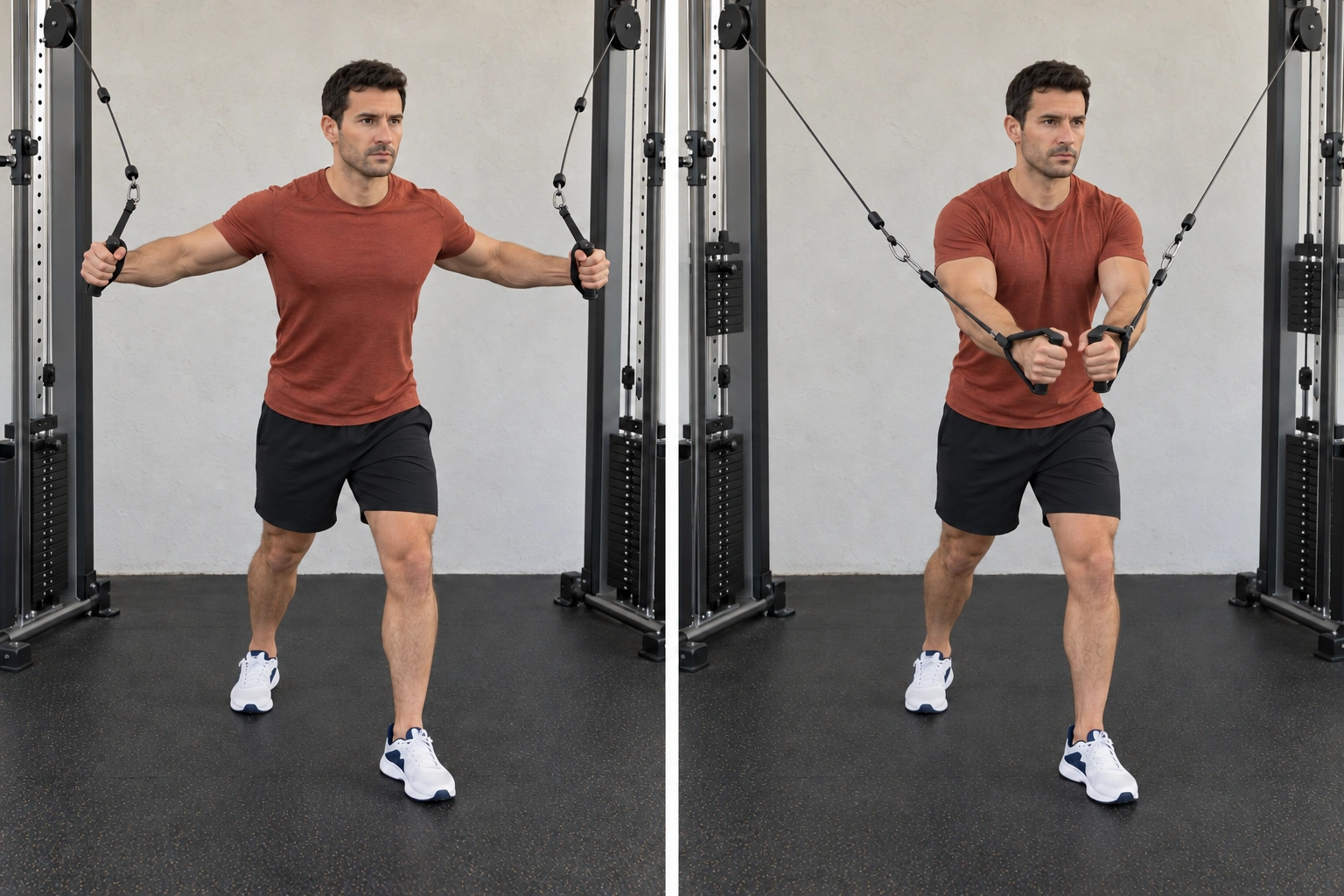
- Attach handles to outlets above shoulder height. Take them close to the station, then face away and step into a secure staggered stance.
- Begin with the arms open, elbows softly bent, and upper arms around shoulder level or slightly lower. Keep a small forward lean that you can hold throughout the set.
- Sweep the arms down and inward until the hands meet in front of the lower chest or upper abdomen. Keep your wrists straight and the elbow angle steady.
- Let the arms return upward and outward slowly to the same opening. Keep your feet planted and avoid letting the cables pull your shoulders up toward the outlets. To finish, bend your elbows to bring the handles closer to your body, then step back carefully until the weights settle before releasing them.
If your torso folds forward with the handles, the movement has become partly a body-weight pull. Use less resistance and keep your breastbone facing the same direction from start to finish. Finishing farther down near your thighs is unnecessary when it changes the movement you can control.
One high pulley can serve one side at a time: keep the working outlet behind and outside that shoulder and bring the hand toward the lower midline. If the high setting is out of comfortable reach, use the mid-height fly rather than climbing onto a bench while holding a loaded handle.
How to Progress Your Chest Workout With a Cable Machine
Progress by doing more controlled repetitions with the same setup, then adding the smallest manageable weight increase. Record the station, pulley height, stance, attachment, repetitions, and weight setting. A different cable arrangement can change how a marked stack weight feels, so compare your log within the same setup.
Choosing a Press and a Fly
Keep one press and one fly long enough to learn their paths. A single-arm press plus a mid-height fly works with one adjustable pulley, while two suitable cables let you use both arms together. Choose the supported press only when bench placement and handle access are straightforward.
I keep the press-and-fly pair unchanged while the movements remain comfortable and repetitions or load are improving. If your press already leaves the chest tired and the fly becomes difficult to control, end there. Add the optional third exercise only when it fits your total weekly work and does not reduce the quality of the next session.
When combining chest training with other body parts, use the full-body cable workout plan to organize the week. Substitute a suitable press into its pushing slot instead of stacking this entire chest session onto it. The cable exercise guide covers the station and broader movement choices.
Adding Reps or Weight Without Changing Your Form
For a press prescribed at 8 to 12 repetitions, keep the same load while building toward 12 on both sets and both sides. Once you can do that with the same range, stance, and reserve effort on two sessions, try the smallest available increase. Returning toward eight repetitions is reasonable; falling below eight or losing control means that increase was too large.
Use the same method for flyes within their 10-to-15 range. For any one-arm exercise, start with the less capable side and match its load and controlled repetitions on the other side. If the next stack plate is too much, stay at the current load while improving consistency or use a manufacturer-approved small increment. Do not hang loose plates or improvised weights from the selector pin.
Rest longer when you need it to repeat the movement cleanly. If performance keeps falling across sessions, first reduce the optional work and review the chest pressing already in your week. Stop an exercise that causes pain rather than trying to complete its target repetitions.
FAQs
Can You Train Your Chest With One Cable Pulley?
Yes, one adjustable pulley can train your chest with single-arm presses and flyes performed on each side. Its available heights, minimum resistance, and cable clearance determine which variations are practical.
Do You Need a Bench for Cable Chest Exercises?
No, standing presses and flyes let you train your chest without a bench. A bench adds support when the equipment is compatible, but you still need stable positioning and a controlled way to take and return the handles.
Do Different Cable Fly Angles Isolate Different Parts of the Chest?
Do not assume that a cable fly angle isolates a particular part of the chest. Choose a higher or lower finish because it suits your equipment and feels comfortable to repeat, without expecting guaranteed growth in one region.
References
- Currier BS, D'Souza AC, Fiatarone Singh MA, et al. American College of Sports Medicine Position Stand. Resistance Training Prescription for Muscle Function, Hypertrophy, and Physical Performance in Healthy Adults: An Overview of Reviews. Medicine & Science in Sports & Exercise. 2026;58(4):851-872. doi:10.1249/MSS.0000000000003897.
- Santana JC, Vera-Garcia FJ, McGill SM. A kinetic and electromyographic comparison of the standing cable press and bench press. Journal of Strength and Conditioning Research. 2007;21(4):1271-1277. doi:10.1519/R-20476.1.