Is Reformer Pilates Good for Weight Loss? Evidence and Expectations

Founder
I founded HomieGym to help you make informed decisions about training at home. My background includes university-level sports science education, practical coaching, gym training and combat sports.
Yes, reformer Pilates can help with weight loss by adding physical activity, but the result also depends on food intake and the rest of your routine. Taking classes does not guarantee a calorie deficit, which means using more energy than you consume over time. I recommend choosing reformer Pilates for resistance work you enjoy and can progress, then tracking whether your overall plan is moving your weight in the direction you want.
Table of Contents
Can Reformer Pilates Help You Lose Weight?
Reformer Pilates can help you lose weight, and a supervised reformer trial found a reduction in average body weight. That is evidence for a particular program, with a different level of instruction and structure from practicing independently at home.
A 2025 trial assigned 47 women ages 30 to 60 with overweight or obesity to supervised reformer sessions or an inactive control group. The sessions lasted 50 to 60 minutes, three days a week for eight weeks. Average weight fell from 76.04 to 74.67 kg in the exercise group and rose from 75.03 to 75.32 kg in the control group. Assessors knew the group assignments, diet was not controlled, and body-composition results came from bioelectrical impedance estimates.(1)
I would keep any personal target tied to your own starting point and routine, rather than copy this group's eight-week result. For home practice, the useful question is whether you can keep doing the sessions while also managing the rest of your activity and food intake.
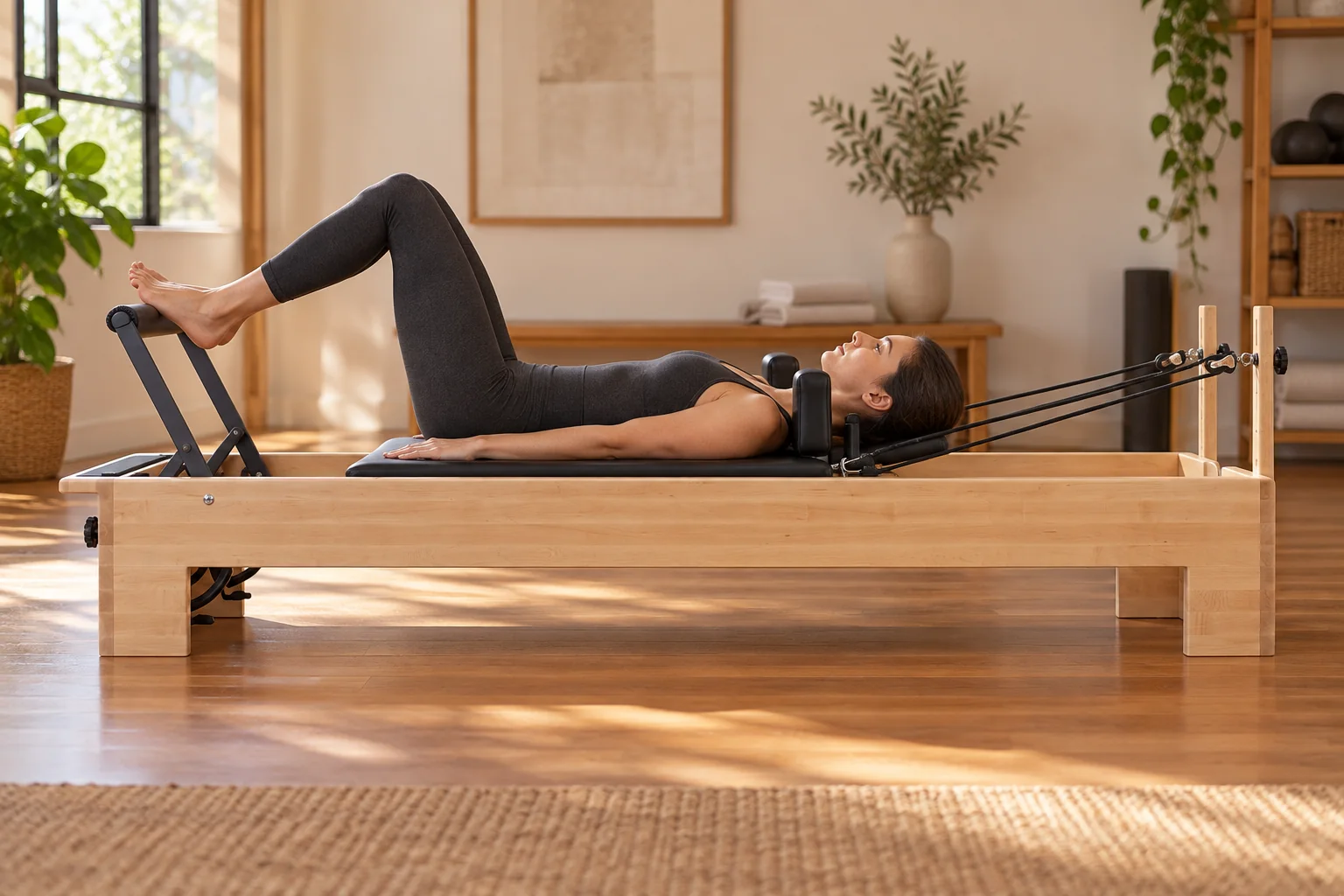
Why Do Pilates Weight-Loss Results Differ?
Pilates studies test different programs, populations, and outcomes. A change in body weight, body-fat percentage, or a fitness test answers a different question. Check which outcome improved before translating a result into a personal expectation.
A 2021 meta-analysis combined 11 trials involving 393 adults with overweight or obesity. It found reductions in weight, BMI, and body-fat percentage compared with controls, but no clear improvement in lean mass or waist circumference. Programs lasted eight to 24 weeks, most participants were women, and study differences and quality limited certainty. The review did not isolate a single standard home reformer program.(2)
Other results are less favorable. A 2020 meta-analysis of mat Pilates found no advantage over comparison conditions for the body-composition outcomes assessed. It leaves the comparison between reformer training and other activities unanswered.(3)
A before-and-after photograph leaves many of those details unanswered. It cannot separate the exercise from dietary changes, other training, the time between photographs, or differences in posing and lighting. Use your own measured goal and actual routine instead of treating another person's photograph as a timetable.
How Many Calories Does Reformer Pilates Burn?
There is no reliable calorie count that applies to every reformer class. Session length, exercises, pauses, effort, and participant characteristics change energy use. A watch estimate is an approximation of the session, not a prediction of weight loss.
A 2026 systematic review of Pilates energy cost found sparse, highly varied evidence. The authors cautioned that pooled averages may not represent an actual session, and the certainty of estimates was low to very low. Mat and apparatus sessions, rest periods, and measurement methods differed between studies.(4)
I advise against building a food allowance around an advertised burn for a 45-minute class. Record what you did and how long the session lasted, including pauses for instruction or equipment changes. Those details make the activity record more useful than a calorie claim that treats every class as the same workout.
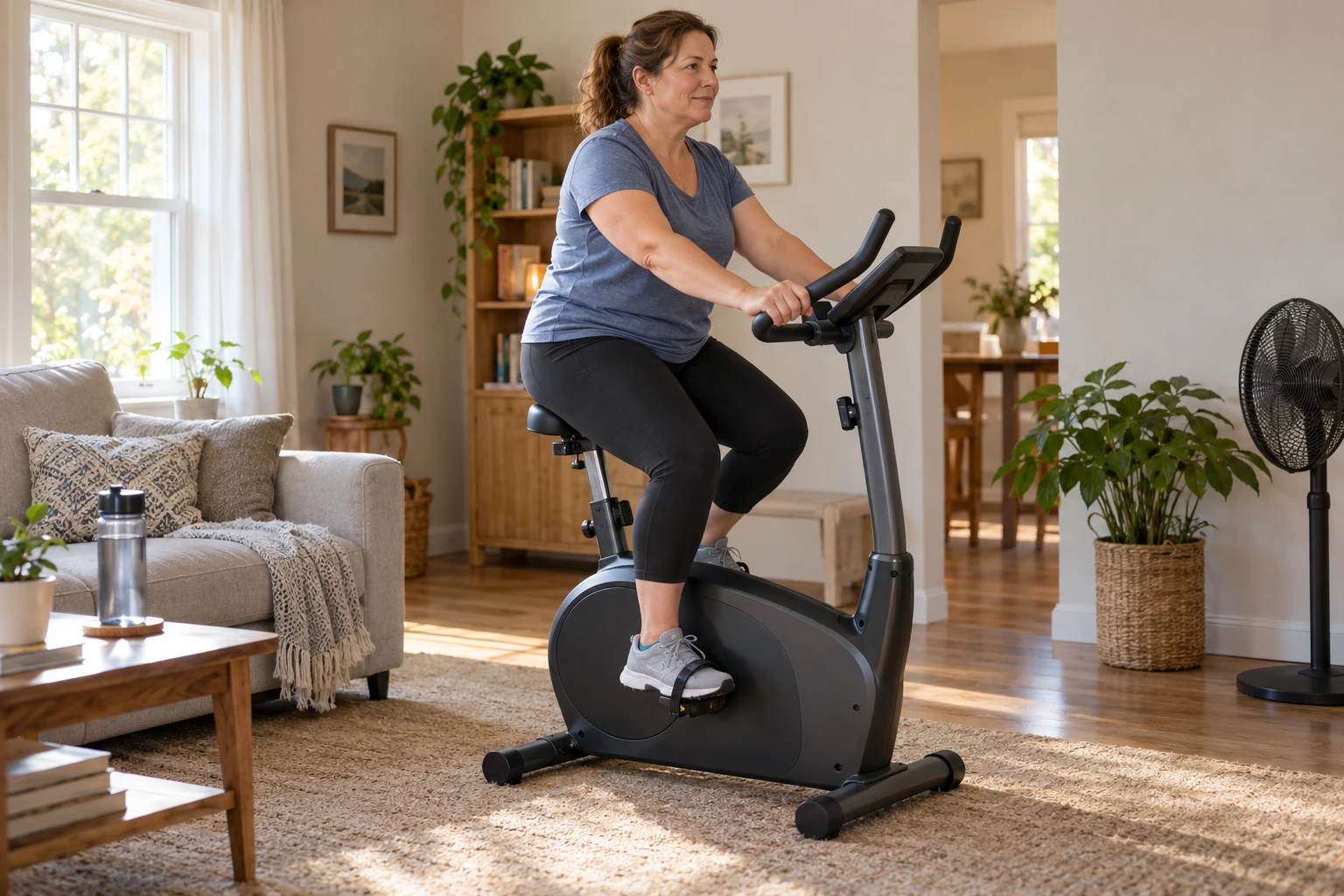
If you also want sustained aerobic activity, choose a suitable option you can fit around Pilates. Walking or cycling can be a separate part of the week. Keep the purpose of each session clear instead of forcing a control-focused reformer class to meet every fitness and weight-management need.
How Should You Fit Reformer Pilates Into a Weight-Loss Routine?
Use a taught, repeatable reformer program alongside a realistic plan for the rest of your week. Begin with a schedule you can maintain and progress appropriately, rather than copying a study's session count or an influencer's daily routine.
| Part of the plan | Question to answer |
|---|---|
| Reformer instruction | Which exercises and progression have you learned? |
| Other activity | What movement fits the rest of your week? |
| Food intake | Does your eating pattern support your goal? |
| Progress record | Are the measures consistent and relevant? |
| Practical access | Can you sustain the time and cost? |
For example, you could keep the reformer classes you can attend with instruction and walk on other days when it fits. Choose the schedule around your current activity and recovery, then add more only when it remains manageable.
Our beginner reformer exercise guide covers taught movement options and a sample routine. If a bike is part of your wider plan, the stationary-bike weight-loss guide explains a separate beginner activity option.
What Should You Track Besides the Scale?
Track training progress separately from changes in body size. Your ability to perform a taught exercise, the progression used, and how consistently you practice describe the training. A weight trend or another consistently taken measurement describes a different outcome.
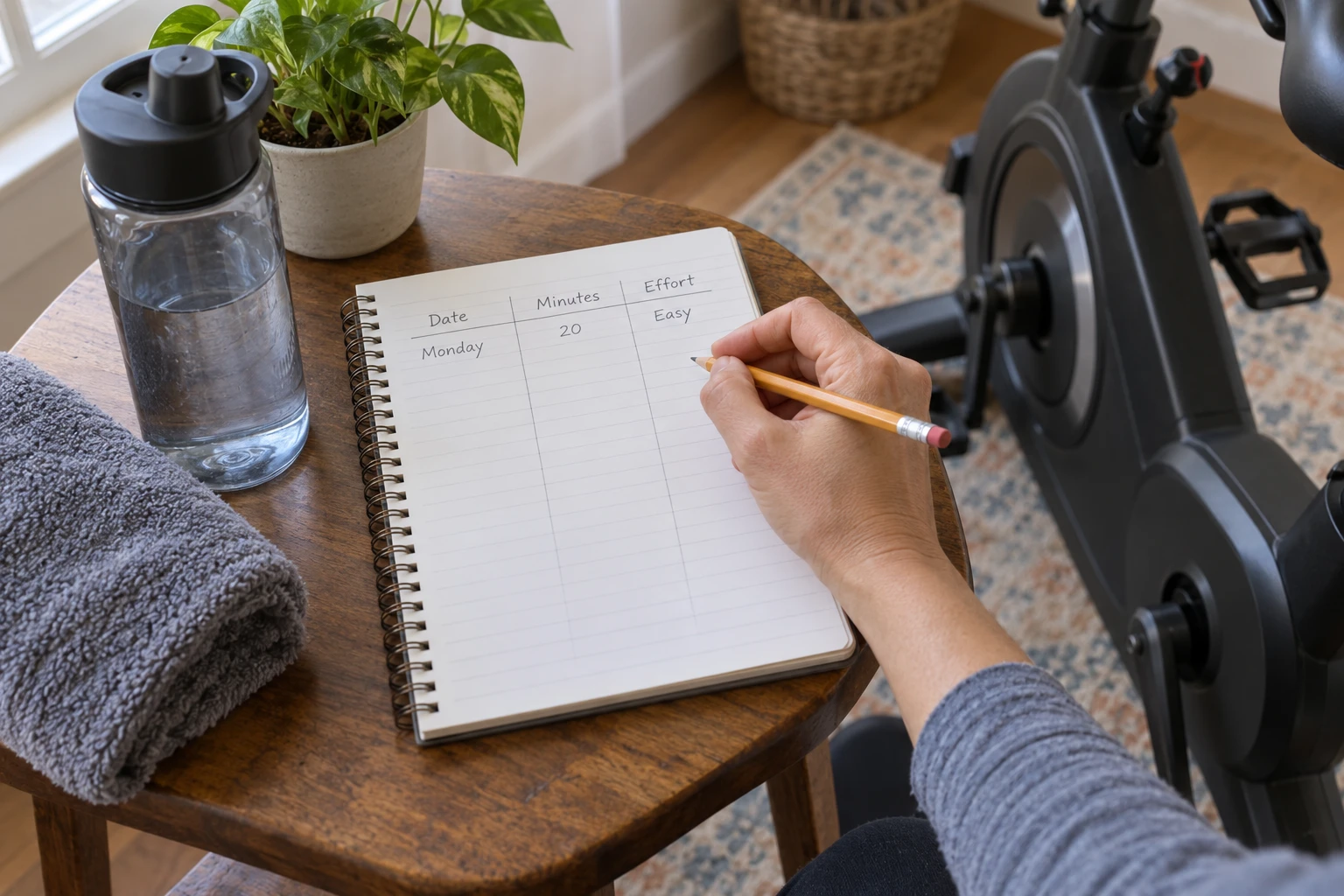
If you use scale weight, take measurements under similar conditions and look at the pattern rather than treating one reading as the result of yesterday's class. If you use a consumer body-composition device, remember that its fat and muscle figures are estimates. Keep the device and measurement conditions consistent when discussing the readings.
Record the practical costs of the routine too: travel, setup time, missed sessions, and any difficulty recovering between activities. That helps you decide whether to keep, simplify, or change the schedule. More equipment and more classes are not automatically the solution to a plan that is difficult to maintain.
Choose the Activity You Want to Continue
Keep reformer Pilates when you enjoy its resistance work, can learn the equipment, and have a workable way to practice. Review food intake and total activity alongside it when weight loss is the goal. Judge the plan by its actual progress and sustainability, with professional help when your health or weight-management needs call for individual guidance.
Before purchasing a home machine, try an introductory session with instruction. Bring questions about the setup, how you would progress at home, and the ongoing cost of classes or guidance. Use the answers to decide whether a home reformer fits the routine you can maintain.
This guide is for general education and is not medical advice or an individualized Pilates program. If you have an injury, ongoing pain, pregnancy-related exercise needs, or a health condition that affects training, get advice from a qualified clinician and an appropriately trained Pilates instructor.
FAQs
Does reformer Pilates specifically burn belly fat?
Reformer Pilates has not been shown to selectively remove belly fat in the studies discussed here. A change in overall body-fat percentage also does not tell you where fat was lost.
Do you need reformer Pilates every day to lose weight?
No, daily reformer sessions are not an established requirement for weight loss. Choose an appropriate progression and review total activity and food intake rather than assuming more classes guarantee a calorie deficit.
Can you rely on a calorie estimate for a 45-minute class?
No, a generic calorie estimate for a 45-minute class is not an exact personal measurement. Exercises, pauses, effort, and individual characteristics can make the actual energy cost different.
How long does reformer Pilates take to produce weight loss?
There is no reliable personal timetable based only on starting reformer Pilates. Your overall routine, food intake, starting point, and response all affect the result.
References
- Gökalp Ö, Kirmizigil B. Effects of reformer Pilates on body composition, strength, and psychosomatic factors in overweight and obese women A randomized controlled trial. Sci Rep. 2025;15(1):23602. doi:10.1038/s41598-025-09683-8.
- Wang Y, Chen Z, Wu Z, Ye X, Xu X. Pilates for overweight or obesity: a meta-analysis. Front Physiol. 2021;12:643455. doi:10.3389/fphys.2021.643455.
- Cavina APS, Pizzo Junior E, Machado AF, et al. Effects of the mat Pilates method on body composition: systematic review with meta-analysis. J Phys Act Health. 2020;17(6):673-681. doi:10.1123/jpah.2019-0171.
- Vitor GBB, de Oliveira LC, Pessôa RAG, Aguiar AF, de Oliveira RG. Metabolic intensity and energy cost of Pilates exercises: an exploratory systematic review and meta-analysis of limited and heterogeneous evidence. Syst Rev. 2026;15(1):42. doi:10.1186/s13643-025-03056-y.