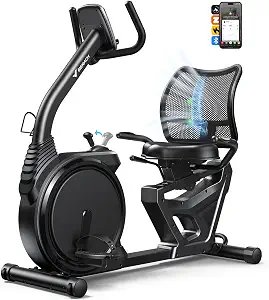
MERACH S19 Recumbent Exercise Bike
For seated cardio with a mesh backrest and a lever instead of a conventional resistance knob.
$359.99
As an Amazon Associate I earn from qualifying purchases. Read our disclosure.
Compare recumbent exercise bikes by seat comfort, fit, resistance, power needs and rider limit. We have ridden every bike in this category ourselves, at home, at clients’ homes or at the gym, and each product page tells you what it was like to use.
For seated cardio with a mesh backrest and a lever instead of a conventional resistance knob.

For seated cardio where avoiding a wall-power cord is a priority.
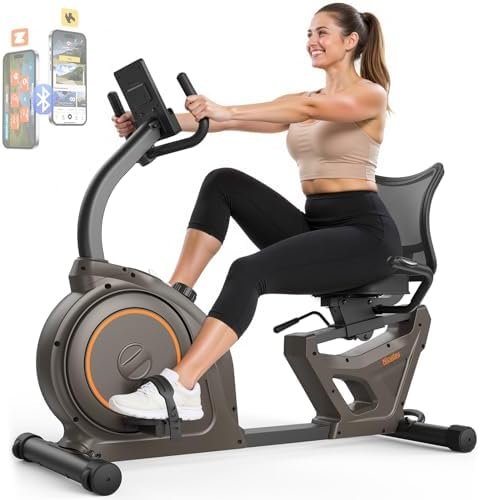
A quiet recumbent bike with manual resistance and a mesh backrest.
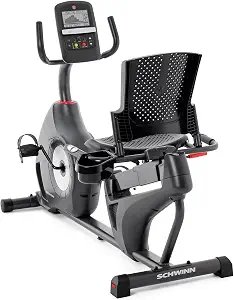
A recumbent option for seated cardio with built-in workout programs.
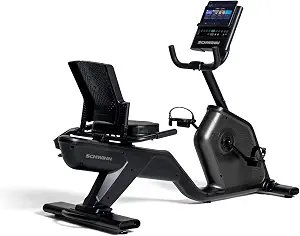
For home riders who prefer a supported seated position and a built-in console rather than relying entirely on a phone.

300 lb rider limit · electronic recumbent · 56 × 29 × 60 in assembled

For seated cardio with console-controlled resistance and preset workouts.
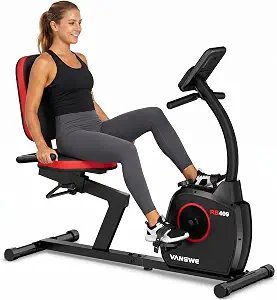
For seated home cardio with a sliding seat and an onboard workout display.
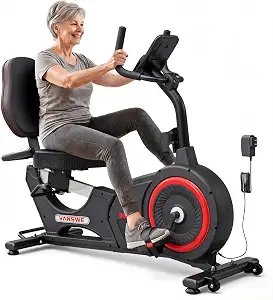
For users comparing recumbent bikes with a higher listed weight limit and electronic workout controls.
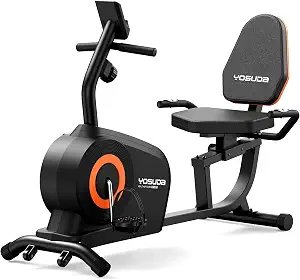
For basic seated home cardio with a backrest and manually selected resistance.
A recumbent bike puts you in a reclined seat with a backrest and the pedals in front of you. It is easy to get on and off and comfortable for longer, steady rides, but it takes more floor space than an upright bike.
The seat matters more than the console. The bikes we liked most had a seat that slides and locks with one lever and a backrest that stayed comfortable past 30 minutes. A hard plastic seat and a backrest that does not breathe were the complaints we noticed most in our own riding.
Check the height range. Several bikes we rode felt short for riders above about 6 ft 1 in to 6 ft 3 in, even when the listing promised more.
Reliability does not follow price. Most of the bikes we used ran for months without a fault, while one started clicking after about six months. Our recumbent bike shortlist puts the strongest ones side by side.
The recumbent frames we list run from about 45 to 66 inches long, by the makers’ figures. Measure the full length and leave room beside the seat to get on and off.
Plug-in bikes with programs need a fixed spot near an outlet. Bikes with battery displays, or ones that power themselves as you pedal, can stand anywhere.
| Criterion | What to check |
|---|---|
| Seat | Is it padded, does the backrest breathe, and how does the seat lock |
| Fit | Which rider heights does the seat range really cover |
| Resistance | Manual knob or electronic control, and how many levels |
| Power | Outlet, adapter, batteries or self-powered |
| Programs | Which workouts run on the console without an app or membership |
| Home fit | What length, weight and clearance does the frame need |
Neither is better for everyone. A recumbent gives you a backrest and an easy step-through, while an upright takes less floor space and feels closer to riding a bicycle.
Some do. Bikes with electronic resistance and programs plug in, while many manual-knob bikes run their display on batteries and some power themselves as you pedal.
Check the seat range, not only the listing headline. In our riding, several bikes felt short above about 6 ft 1 in, and our product pages note the heights we tried.
Treat them as the seller’s claim. On at least one bike, an owner found a lower limit in the manual than in the listing, so check the manual or the frame label.