
Best Fitness Power Rack, Red
A straightforward cage with full-length safety bars for a basic free-weight setup.
$290.99
As an Amazon Associate I earn from qualifying purchases. Read our disclosure.
Compare power racks by frame dimensions, working area, safety components, published capacities, and attachment compatibility. Start with ceiling height, floor space, and the barbell movements you plan to perform.
A straightforward cage with full-length safety bars for a basic free-weight setup.
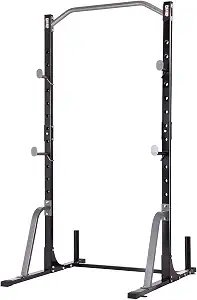
An open rack option with bar and weight storage for a dedicated home training corner.

A walk-in cage worth comparing when ceiling height limits a home or basement gym.
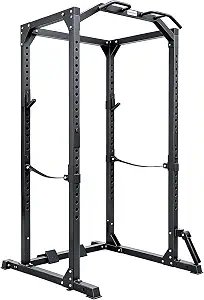
A black Gen 2 cage with a multi-grip pull-up bar and reinforced base for barbell training.
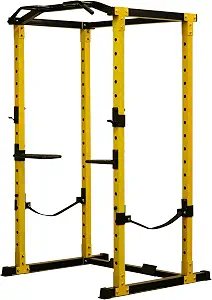
A yellow power cage combining barbell support, pull-ups and dip handles in one frame.

A freestanding cage for a basic barbell setup with an integrated multi-grip pull-up bar.
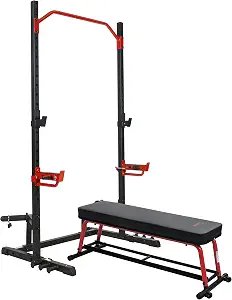
A rack-and-flat-bench bundle for starting a home barbell training area.
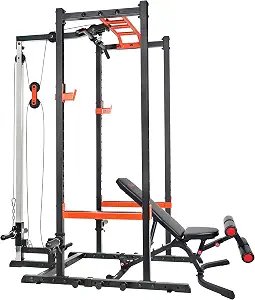
For a home strength station combining a rack, cable attachment and adjustable bench in one package.
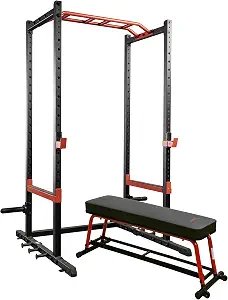
A named Sunny rack and flat-bench bundle for shoppers comparing complete training setups.
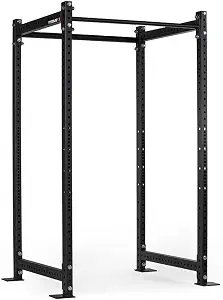
A deeper T-3 cage for barbell work with two pull-up bar diameters and closely spaced bench-zone holes.
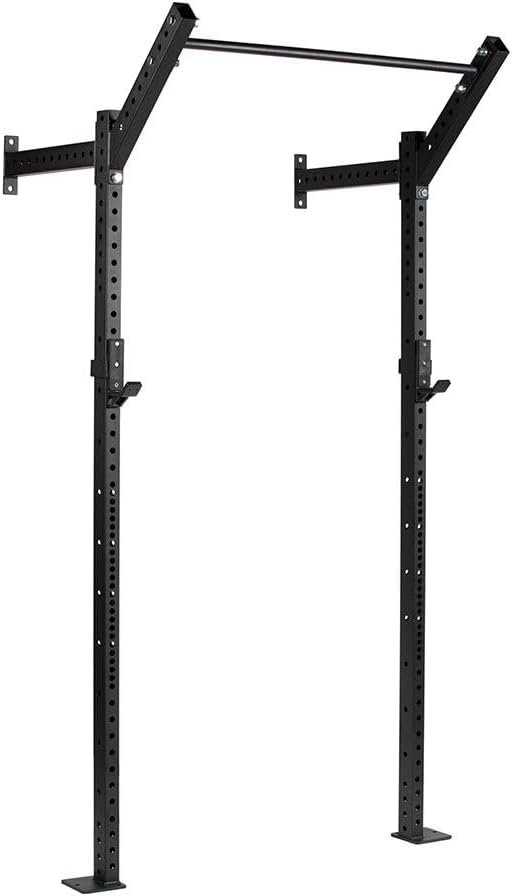
A fixed wall-mounted rack for a home gym where a full cage would occupy too much floor space.
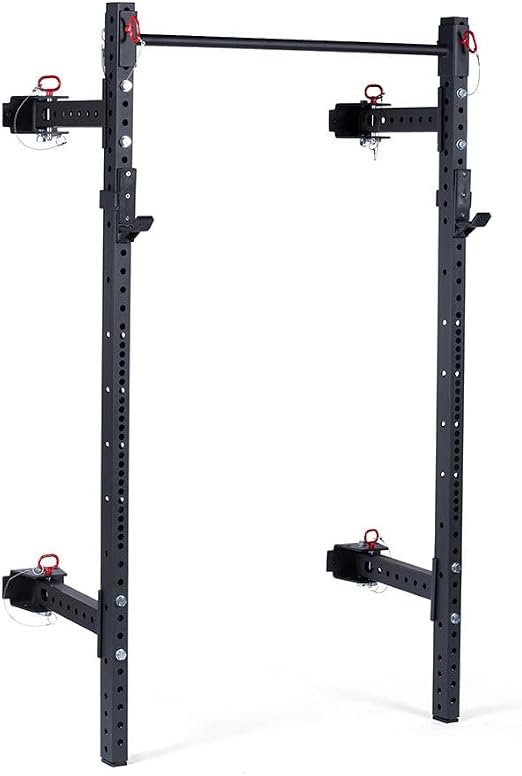
A folding wall rack for a shared room or garage that needs floor space back between sessions.
A power rack needs enough room for the frame, barbell, plates, bench positions, and safe access to every adjustment point.
A full power rack surrounds the lifting area with uprights and crossmembers, while depth, width, hole spacing, and included safety components vary by model. Compare the complete working area rather than the outside frame alone. Compare the power rack shortlist by cage depth, included safeties and room demands.
Plan for the exercises, bench positions, and attachments you expect to use. Attachment compatibility depends on the exact upright dimensions, hole size, spacing, and rack series. For an integrated cable option, compare the rack-and-pulley shortlist.
Measure ceiling height and allow room for the barbell and plates on both sides. Include the space needed to move a bench, load plates, reach safeties, and use any planned attachments.
Follow the manufacturer’s anchoring and floor instructions. Confirm that every accessory matches the exact rack specifications and is used within its published limits.
| Criterion | What to check |
|---|---|
| Frame size | What external and internal height, width, and depth are published |
| Rack system | What upright, hole, and spacing specifications define compatibility |
| Safeties | Which safety components are included and where can they be positioned |
| Capacities | What limits are stated for the rack, J-cups, safeties, and attachments |
| Installation | What anchoring, floor, assembly, and clearance requirements apply |
| Support | What do parts availability, expansion options, and warranty terms cover |
A full power rack typically has uprights and crossmembers surrounding the working area. Squat racks can use a more open format. Compare frame structure, safeties, dimensions, and manufacturer guidance.
Follow the instructions for the exact model. Anchoring requirements can depend on the frame, attachments, setup, and intended use.
No. Check upright dimensions, hole diameter, hole spacing, mounting direction, rack series, and the attachment manufacturer’s compatibility list.
Allow room for the barbell and plates, loading and unloading, bench movement, safeties, and every planned attachment, in addition to the rack’s external width.