
Power Bar vs Olympic Weightlifting Bar: Which Fits Your Training?

Founder
I founded HomieGym to help you make informed decisions about training at home. My background includes university-level sports science education, practical coaching, gym training and combat sports.
Compare power, Olympic weightlifting and multipurpose bars by the lifts you repeat, with clear guidance on shaft size, rotation, knurl and ratings.
The power bar vs Olympic bar choice depends on your main lifts: choose a power bar for training centered on squats, bench presses and deadlifts, and a dedicated Olympic weightlifting bar for the snatch and clean and jerk. A multipurpose bar is a sensible third option when one home bar has to cover both.
I prioritize the features your repeated sessions need: shaft feel and grip for strength work, or appropriate rotation and grip layout for weightlifting. The word Olympic alone is too broad to settle the purchase because many power and multipurpose bars also take Olympic-style plates.
Table of Contents
Power Bar vs Olympic Bar at a Glance
A power bar is built around powerlifting; an Olympic weightlifting barbell is built around the snatch and clean and jerk. Multipurpose bars combine features for mixed training. REP Fitness separates these three categories in its barbell guide.
| Feature | Power bar | Weightlifting bar | Multipurpose bar |
|---|---|---|---|
| Main use | Squat, bench, deadlift | Snatch, clean and jerk | Mixed lifting |
| Common 20 kg shaft | 29 mm | 28 mm | 28.5 mm |
| Sleeve mechanism | Often bushings | Often bearings | Bushings or hybrid |
| Grip marks | Powerlifting | Weightlifting | Often both |
| Center knurl | Common | Model dependent | Often absent |
The diameters above are common 20 kg design choices, not universal category rules. Rogue's current guide describes the same broad 29 mm, 28 mm and 28.5 mm pattern, while also listing models that depart from it. A 15 kg weightlifting bar is another relevant option, with a different shaft specification.
In a shop listing, Olympic may describe the plate-fitting sleeves without promising weightlifting-specific grip, flex or rotation. A power bar can accept the same plates as a weightlifting bar. Check the intended lifts and construction to tell them apart.
Compare standard and Olympic barbells to separate the plate-loading system from the lifting discipline.
I start with the training category, then compare finishes and steel specifications. A very sharp power bar can be an awkward compromise for frequent cleans even if its sleeve size matches all your plates. A weightlifting-focused purchase can also spend money on features that a squat-and-bench routine rarely uses.
Shaft Diameter and Whip Change the Feel
Shaft diameter changes the size of the bar in your hands, while whip describes its elastic flex and springback. A power bar generally favors a stiffer feel for the main strength lifts. A weightlifting bar's flex characteristics are selected for its faster movements, although their usefulness depends on the actual bar, load and lifter.
The International Weightlifting Federation specifies a 28 mm shaft for the men's competition bar and 25 mm for the women's bar. The International Powerlifting Federation allows a shaft diameter from 28 to 29 mm, so “power bars must be exactly 29 mm” overstates the rule.
The Rogue 45LB Ohio Power Bar in Black Zinc, for example, has a 29 mm shaft and powerlifting grip marks. The Rogue 28MM IWF Olympic Weightlifting Bar in Cerakote has a 28 mm shaft and weightlifting marks. Compare those fields on the exact version you are considering, since a family name can cover several designs.
For competition preparation, match the bar mass, grip size and construction used at your event. For general home training, I give grip comfort and the planned lifts more weight than a promise of extra whip. Choose the shaft you can use for the grips your program requires.
A dedicated deadlift bar is a separate choice from a power bar used for all three lifts. If you compete, check whether your federation uses a specialized bar for the deadlift. That rule determines which type deserves a place in your preparation.

Sleeve Rotation Matters Most During Turnover
Rotating sleeves let the loaded ends turn relative to the shaft. That feature becomes especially relevant as the hands and bar change position during a clean or snatch. A power bar can have rotating sleeves too; bushings do not mean the plates are fixed to the grip shaft.
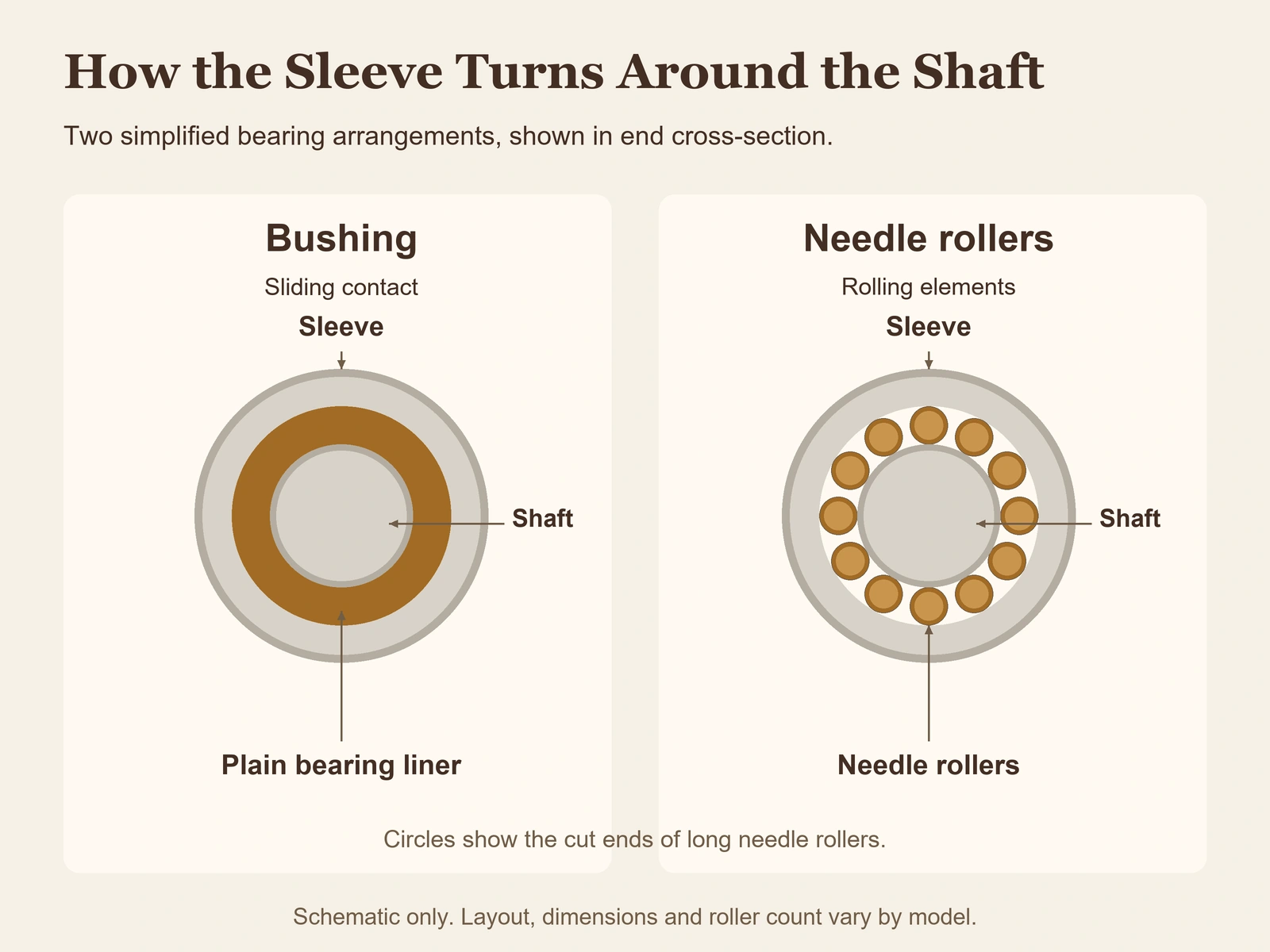
Bushings support rotation through sliding contact between bearing surfaces. Needle bearings use small cylindrical rollers. Both let the sleeve turn relative to the shaft, so compare the complete model's intended use, construction and condition rather than ranking quality from the mechanism name alone.
The documented examples show the category pattern. The Ohio Power Bar uses bronze bushings, while the IWF Cerakote weightlifting bar uses needle bearings. The multipurpose Ohio Bar in E-Coat also uses bronze bushings, with a 28.5 mm shaft, dual grip marks and no center knurl.
Rogue's 28MM Training Bar in Cerakote uses bronze bushings and a 28 mm shaft for Olympic weightlifting training. It gives you a weightlifting-specific option to compare with the bearing competition model, rather than forcing a choice between a power bar and a premium bearing bar.
For frequent snatches and cleans, I prioritize a bar designed for weightlifting turnover. When those lifts are occasional, compare the bushing training bar with a multipurpose model before paying for competition-focused bearings. Long unloaded spin by itself does not show how the sleeves behave during a loaded lift.
Compare barbell types to see where multipurpose bars fit alongside power and weightlifting designs.
Knurling and Grip Marks Should Match the Lifts
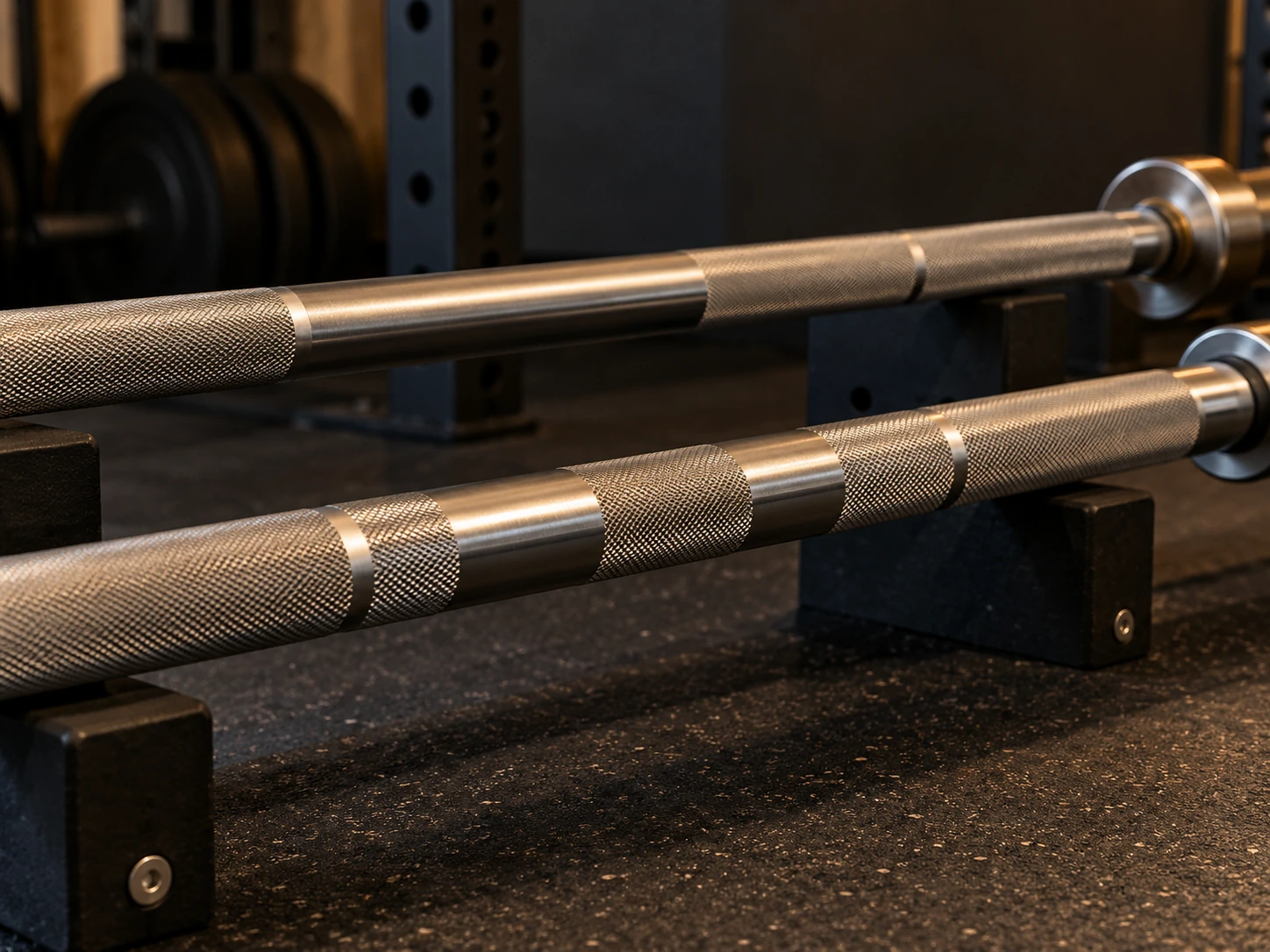
Knurling is the textured grip surface; grip marks are the smooth reference rings within it. Texture affects contact with your hands and body. The rings help you repeat hand placement, and their location can differ between disciplines.
When comparing power bar knurling, check the main grip and the center section separately. The center knurl adds friction at the bar's contact with your back during a squat. An aggressive texture that suits heavy pulls may be less welcome in repeated cleans, when the bar comes across the front of the shoulders.
The IWF men's bar has center knurling, and so does the Rogue IWF Cerakote model above. The Rogue 28MM Training Bar omits it. Check both its presence and texture when choosing a weightlifting bar for repeated front-rack contact.
The IPF specifies grip markings 81 cm apart; the IWF uses a different grip-reference layout. On a dual-marked bar, identify which set you are using before recording hand placement. The marks help repeat a grip, while formal competition approval requires a separate equipment check.
For grip, I compare the exact finish and knurl pattern together. Coated, bare-steel and stainless versions can feel different within one family. If you can handle the version before ordering, check the grips you will use, including where the center knurl contacts your body.
Read Strength Ratings Without Turning PSI Into Pounds
Tensile strength in PSI describes the steel's resistance to failure under tensile stress, measured in pounds-force per square inch. It is not a safe working-load limit in pounds. The number alone also cannot tell you how much the bar flexes or how it tolerates repeated loading.
Rogue lists 205,000 PSI for the Black Zinc Ohio Power Bar and 215,000 PSI for the IWF Cerakote weightlifting bar. Yet its power-bar description emphasizes rigidity. The higher tensile figure therefore does not identify the stiffer bar in this pair.
A manufacturer's capacity statement needs its own definition. REP lists a 1,500 lb static rating for the Black Diamond Power Bar, alongside its separate tensile-strength specification. A static figure is not permission to use every movement or dropping arrangement at that load.
My order check includes the model's intended use, maintenance instructions and warranty exclusions. Rogue's IWF bar page, for example, excludes damage from specified abusive dropping situations, including impact on rack pins or inadequate bumpers. The bar, plates, floor and lifting space have to support the way you intend to train.
Keep material strength, model load rating, permitted use and warranty coverage in separate fields. If the manufacturer publishes no static rating, use its intended-use guidance and ask about your planned loads and lifts. A PSI figure cannot fill that gap.
Choose From the Training You Repeat
Choose the category for the program you expect to repeat. Start with its main lifts, then decide which grip or rotation compromise you can accept when other exercises share the same bar.
A beginner barbell routine shows how squats, presses, hinges and rows can share one bar.
- Mostly squat, bench and deadlift: start with a power bar whose shaft, grip and center knurl suit you.
- Mostly snatch and clean and jerk: start with a weightlifting bar or appropriate weightlifting training bar, matched to the intended mass and grip size.
- One bar for mixed sessions: compare multipurpose bars, accepting that a compromise in grip or flex may be preferable to buying two specialized bars immediately.
For bench presses, squats and deadlifts, I put the preferred grip and stiffness ahead of premium bearings. Rows, overhead presses and other controlled accessories usually fit the same purchase. A second bar needs to solve a problem that the first one creates in the program.
For frequent weightlifting, appropriate rotation and grip layout take priority. Compare a dedicated bushing training bar when cost matters. A bearing competition bar becomes more relevant when familiarity with competition equipment is part of the goal.
Buy a second bar when it solves a repeated problem, such as a grip texture that works for your pulls but bothers you during cleans. Until then, I would keep the budget for the plates, storage or rack features your routine already needs.
Check the Bar Against the Rest of Your Home Gym
The right bar category still has to fit the room, rack, plates and training load. Confirm those details for the exact model and finish. A power bar and weightlifting bar can both be full-length implements, so a discipline choice does not resolve a tight-space problem.
Use the bar dimensions guide to separate overall length, rackable shaft span and loadable sleeves.
- Check rack contact and room access. Compare the usable shaft span with the J-cups and leave workable access beyond both bar ends.
- Check plate and collar fit. Verify sleeve sizing, loadable length and the actual plate stack.
- Check the starting implement. Confirm the bar's stated mass and shaft diameter suit the user and planned practice.
- Check the ownership requirements. Read care instructions, storage requirements, return terms and permitted use.
The power rack dimensions guide helps with the support and room checks. For pressing, also allow for the bench in its actual working position; the weight bench dimensions guide covers that separate footprint.
Before ordering, put two exact model sheets beside your weekly program. Mark the grip, rotation or fit compromise each would require, and resolve any missing specification with the supplier. Choose the bar whose compromise you can live with across the sessions you expect to repeat.
This comparison uses published rules and manufacturer documentation checked October 16, 2026. Follow the instructions for the exact bar and lifting setup.
FAQs
Can you use a power bar for Olympic lifts?
Yes, a power bar can be used for Olympic-lift practice if the exact model permits it, but its stiffness, knurling and sleeve rotation may be a poor match for frequent snatches and cleans. For a program centered on those lifts, choose a suitable weightlifting or weightlifting training bar.
Can you squat and bench with an Olympic weightlifting bar?
Yes, a suitable weightlifting bar can be used for squats and bench presses within its intended use and setup limits. A power bar may still be preferable when you want a stiffer shaft, a particular center knurl and powerlifting grip marks for most sessions.
Is an Olympic bar the same as a multipurpose bar?
An Olympic-labeled bar may be a multipurpose bar, a power bar or a dedicated weightlifting bar. Read the intended use and specifications because the label often refers to sleeve and plate compatibility.
Are bearings better than bushings?
Neither mechanism is better for every bar: bearings often suit dedicated weightlifting, while bushings work in power bars, multipurpose bars and some weightlifting training bars. Choose a model designed for your lifts, with the grip and rotation appropriate to that use.
Does a higher tensile strength mean a higher safe load?
No, a higher tensile-strength figure alone does not establish a higher safe working load. Use the manufacturer's model-specific rating, intended-use limits and instructions instead of converting PSI into pounds.