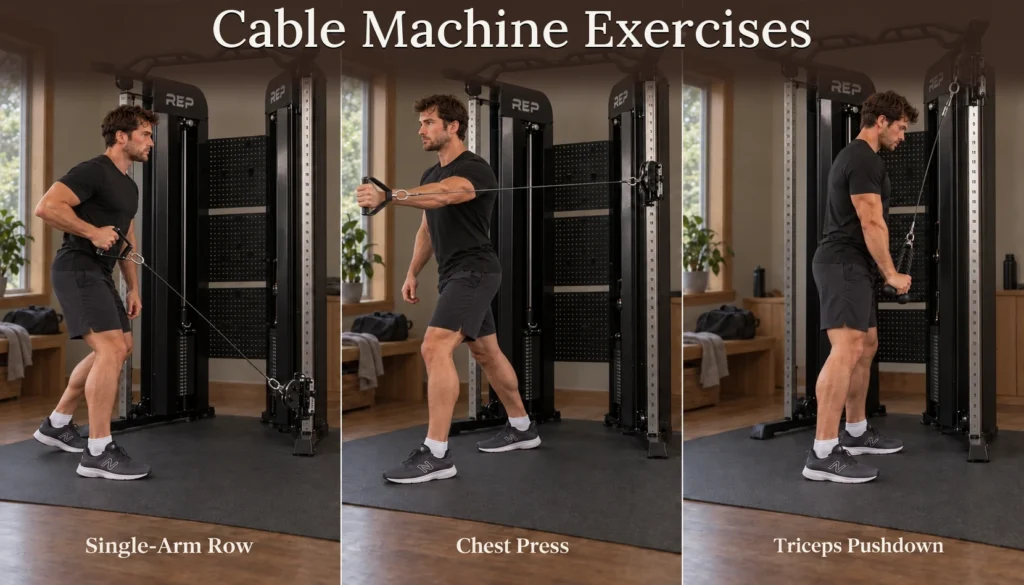
Cable Machine Exercises: 12 Moves for Home

Founder
I founded HomieGym to help you make informed decisions about training at home. My background includes university-level sports science education, practical coaching, gym training and combat sports.
Equipment editor on our team: Milutin Tucakov
Cable machine exercises can bring rows, presses, leg work, and core training into the same home workout. That variety is useful when you want more from one station, but you do not need a long session or every attachment to get started.
I would choose a few movements that fit your machine and build from there. The 12 exercises below show you the options for different parts of the body, while the starter workout turns a smaller selection into a session you can follow. Along the way, you will see which movements suit a single cable and which need a different arrangement.
Table of Contents
Before You Start Cable Machine Exercises
Set the pulley height, connect the right attachment, and choose a light starting load before you step into position. A functional trainer usually gives you adjustable cable outlets, while a dedicated row or pulldown station may have a fixed outlet and built-in support. Check what your own machine allows.
Read the model's operating instructions, including installation and anchoring requirements. Inspect the cable, attachment, and connections; do not use frayed cables or a machine that catches or malfunctions. The Inspire FT1 manual, for example, requires intended use and warns against operating faulty equipment. Its instructions apply to that model, so use your own manual for the controls and approved attachments.
To change an adjustable pulley, let the weight stack settle and remove tension from the handle. Support the carriage, the sliding unit that holds the pulley, and release its height lock as the manual directs. Move it to the desired position and fully engage the lock again. Keep your fingers away from moving parts.
If your machine uses a weight stack with a selector pin, insert the supplied pin completely. A plate-loaded machine, where you add weight plates yourself, uses its own loading procedure. Close the attachment connector before taking a light test rep.
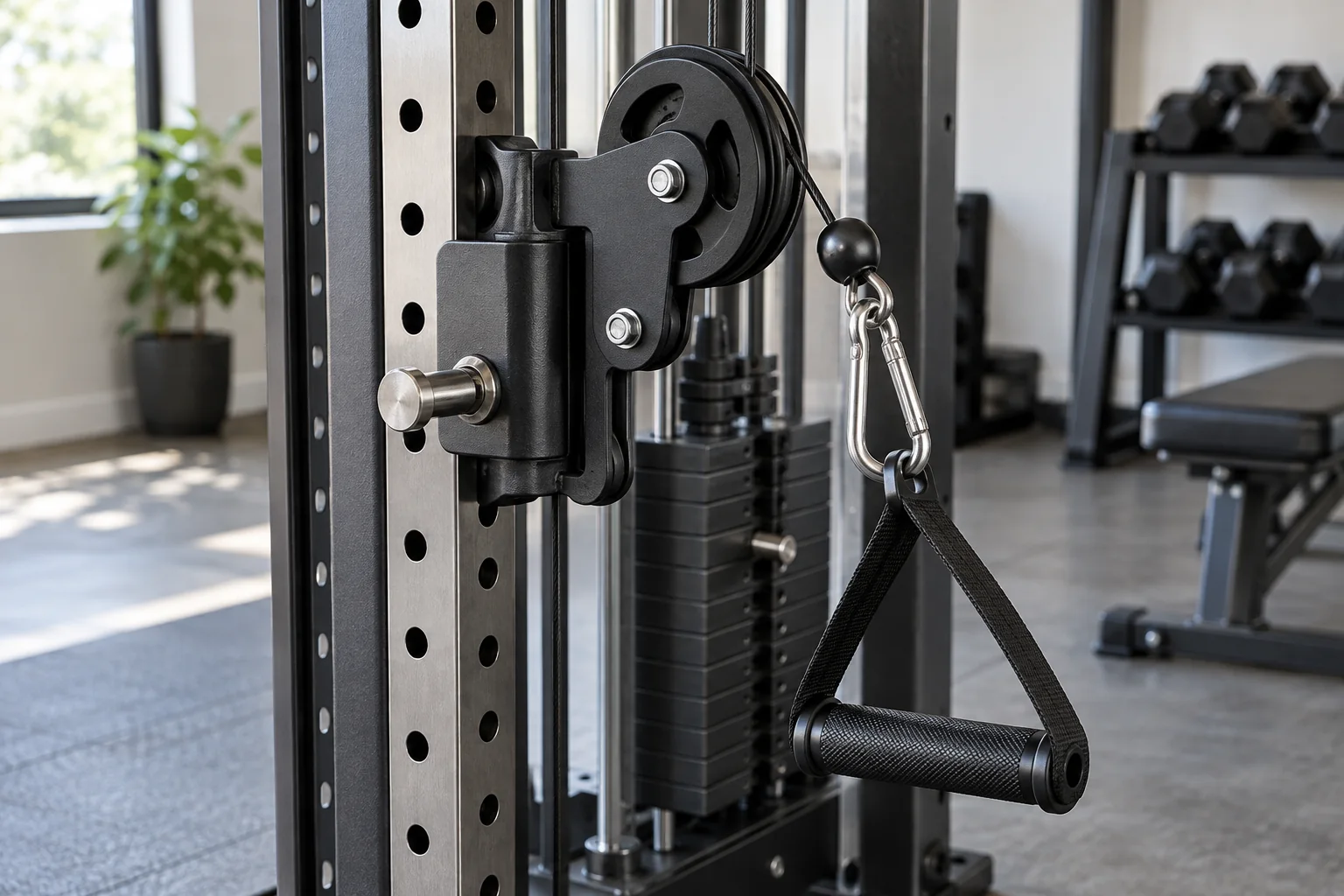
I check the whole movement path, including the return. You need room for your stance and arms, and enough cable travel to complete the exercise without hitting the machine's limit. If the cable scrapes across you, the stack bottoms out halfway through a rep, or furniture prevents a stable stance, change the position or choose another movement.
Choose the attachment for the movement
| Attachment | Useful for | What to check |
|---|---|---|
| D-handle | Row, press, raise, curl, Pallof press | Closed connector, comfortable grip, clear cable path. |
| Rope or bar | Pushdown, curl, crunch | Approved connection and enough clearance for the intended movement. |
| Ankle cuff | Kickback, standing leg curl | Correct size, secure fit, compatible attachment ring. |
| Pulldown bar | Supported seated pulldown | Approved seat and thigh support as well as a high pulley. |
You can start with one D-handle for rows, presses, curls, lateral raises, and the Pallof press. Add a compatible ankle cuff for the leg options. For a first session, select a load that lets you finish each rep steadily while keeping enough effort in reserve to do another two or three controlled reps. If even the smallest setting pulls you out of position, use an easier exercise instead.
For a first session, use the five-movement starter workout and review the instructions for the exercises your station supports. Keep the full library below for looking up other options later.
Cable Rows and Pulldowns for Your Back
A standing row is my first choice when a home cable station has no seat or footplate. A seated lat pulldown is another useful option when the station has the necessary support. They give you a horizontal pull and a vertical pull, respectively; you do not need both in your first workout.
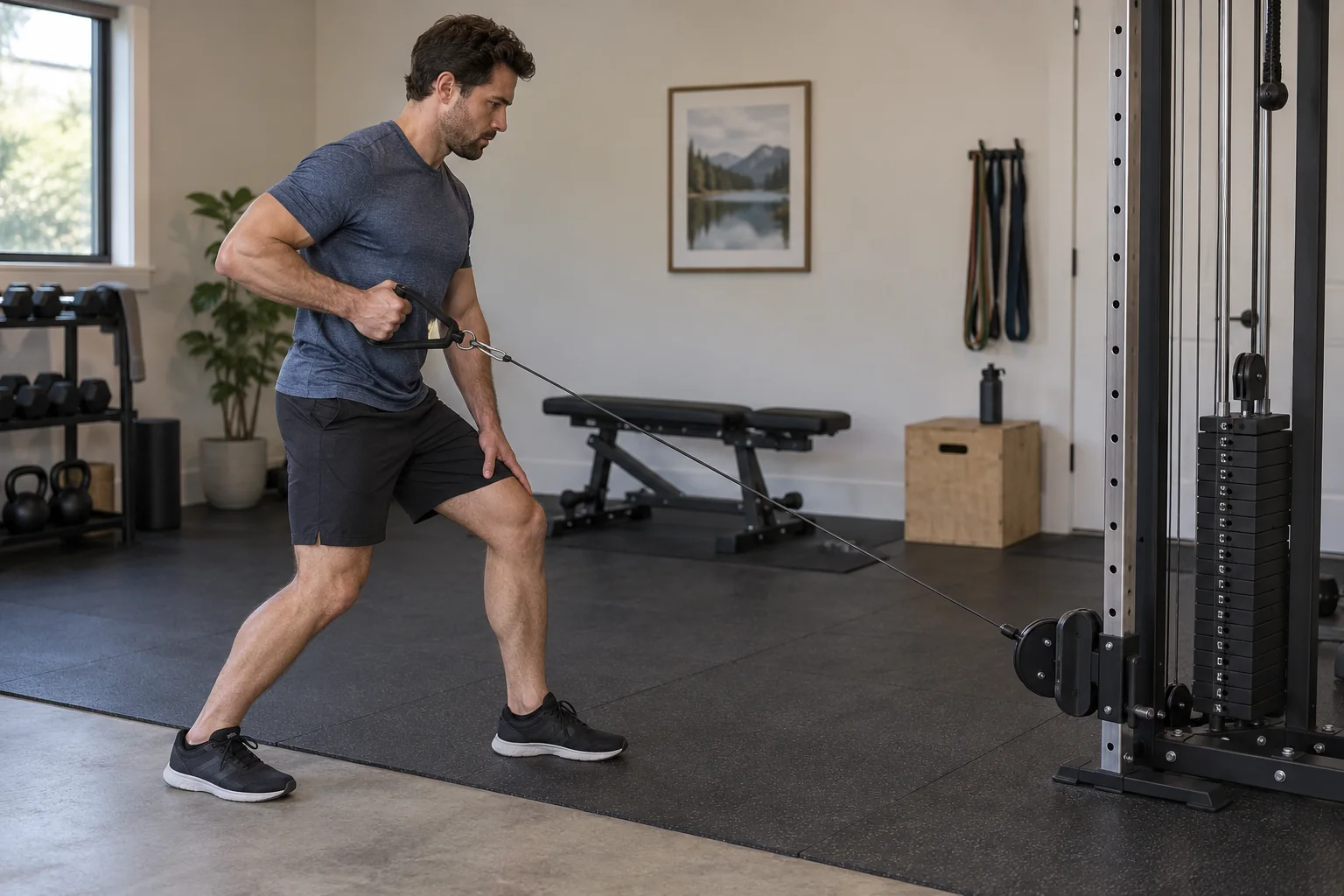
1. Standing Single-Arm Row
Use a low pulley and D-handle. Face the machine with staggered feet, pull toward your side, and return slowly; keep your torso steady. ACE includes this standing version in its cable exercise guidance.
The lats, the large muscles along the sides of your back, contribute along with the upper back and biceps. I use body position as the load check: if the pull makes you twist or rock backward, reduce the weight. Leave enough room for the arm to straighten on the return. Complete the same number of reps on each side at a setting both sides can control.
2. Seated Lat Pulldown
Use a pulldown station with a suitable seat, thigh pad, and compatible bar. Adjust the pad against your thighs, pull the bar toward your upper chest with a small fixed backward lean, and return under control. ACE's instructions include the thigh support and warn against adding backward lean during the pull.
A high pulley alone does not provide that setup. If your trainer has no approved seat and restraint, choose the standing row for this session. Do not wedge yourself under furniture or tie yourself down to imitate a pulldown station. When the supported version is available, end the pull before your elbows start traveling behind you to drag the bar lower.
For additional row and pulldown variations, setup choices, and a focused session, use our cable back exercise guide. Choose the variation that fits your station rather than adding every option to this starter workout.
Cable Presses and Flyes for Your Chest
Choose a single-arm press if you have one adjustable pulley. Use a standing fly when you have two independent cables and space between them. I would begin with the press because it fits more home stations and avoids having to manage two handles at once.
3. Standing Single-Arm Chest Press
Set a D-handle around chest height and face away from the pulley in a staggered stance. Begin with the handle beside your chest, press forward, and guide it back. Keep your wrist aligned with your forearm and your chest facing forward. ACE includes the single-arm chest press among unilateral cable-training options.
Here, unilateral means working one side at a time. Your chest, triceps, and front shoulder contribute to the press, while you also have to resist turning toward the cable. Lower the load if you need to lean into every rep or rotate to finish it. For an unfamiliar movement, I choose a stable stance before extra resistance.
4. Standing Chest Fly
Use two D-handles on separate pulleys slightly above shoulder height. Step forward into a staggered stance, keep a small bend in your elbows, and bring your hands together in front of your chest. Return only through a comfortable range. ACE describes this two-pulley setup for its standing fly.
The chest does much of the work as the arms come together. Keep the elbow bend fairly consistent, rather than turning the movement into a press. I leave this exercise out when the machine is too narrow for a comfortable starting position or when the minimum load makes the return hard to control. Choose the press instead if you cannot manage both handles comfortably.
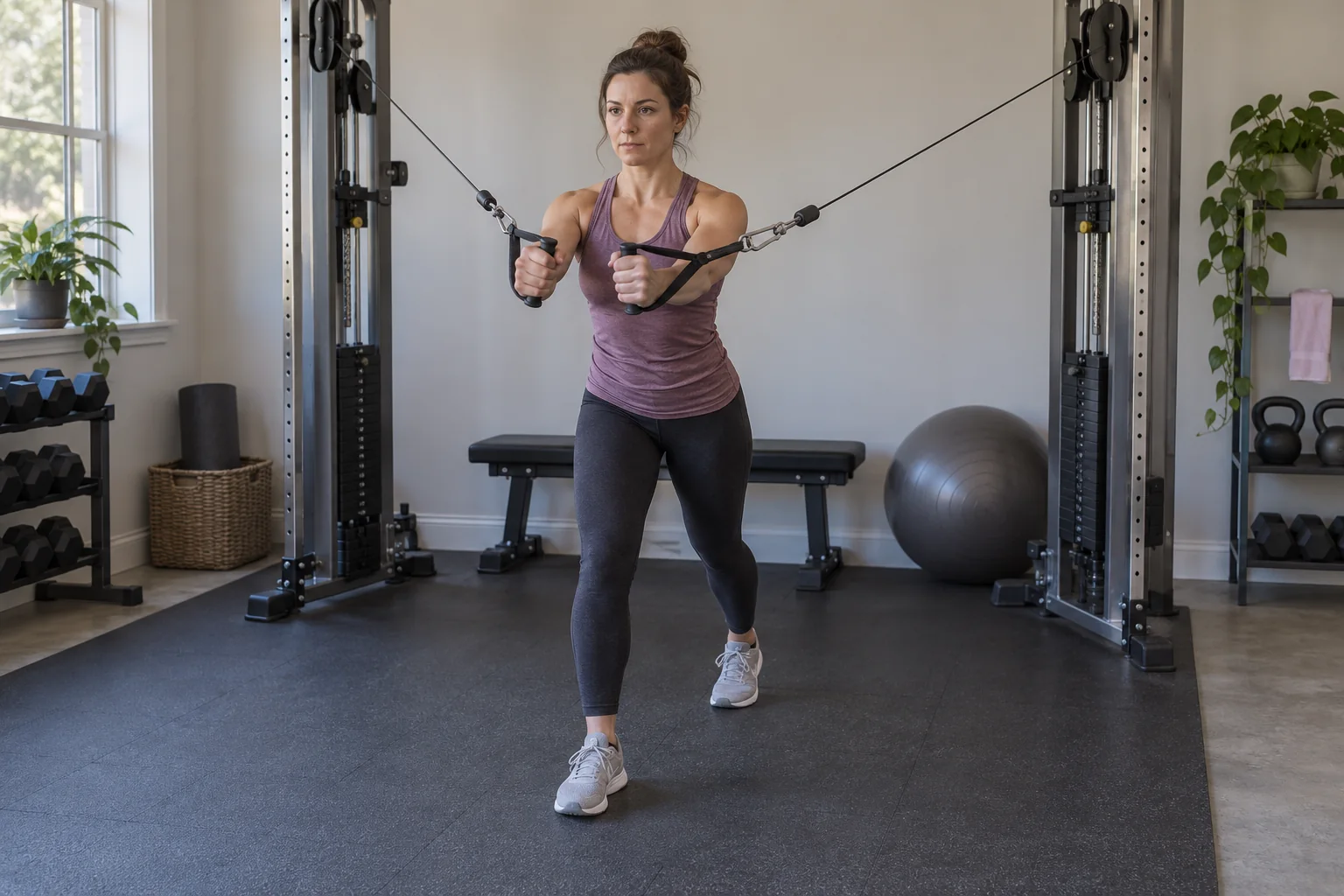
Our cable chest exercise guide covers six press and fly variations, including single-pulley and supported options, with a separate session and progression plan.
Cable Exercises for Shoulders and Arms
A lateral raise, curl, and pushdown give you three distinct options for shoulder and arm work. Add the one that fits your goal after your main pulls and presses. You do not need all three every time you train.
5. Single-Arm Lateral Raise
Stand side-on to a low pulley, holding a D-handle in the hand farther from it. Raise that arm out to the side with a softly bent elbow, then lower it slowly. This targets the side of the shoulder; keep the movement within a comfortable range around shoulder height.
I would use a lighter load here than for a row and check that you can lift the arm without shrugging toward your ear. Reduce the load if you need sideways leaning or a shrug to finish. Move far enough from the pulley for the cable to clear your body, but do not step so far away that you cannot safely start and finish.
6. Standing Biceps Curl
Face a low pulley with a compatible curl bar or single handle. Bend your elbows to bring the attachment upward, keeping your upper arms near your sides. Lower it steadily. With a single handle, finish one side and then use the same controlled load and rep count on the other.
I prefer a handle or bar that lets your wrists stay comfortable through the rep. If your shoulders roll forward to finish the curl or your back starts swinging, lower the setting. Changing the grip may make the attachment more comfortable, but keep the same steady elbow movement.
7. Triceps Pushdown
Attach a rope or suitable pushdown handle to a high pulley. Face the machine, keep your upper arms near your torso, and straighten your elbows to move the attachment down. Return steadily without letting the upper arms drift forward. ACE's pushdown guidance emphasizes the elbow movement and controlled return.
The triceps, along the back of your upper arms, straighten the elbows. Keep your wrists comfortable and breathe through the set. I reduce the load when a pushdown starts looking like a whole-body press, with the shoulders driving downward and the torso dropping over the handle. Finish each set by guiding the attachment back before stepping away.
Keep the arm exercises distinct
| Exercise | Main action | Load check |
|---|---|---|
| Lateral raise | Lift the arm to the side | No leaning or shoulder shrug to finish. |
| Biceps curl | Bend the elbow | No back swing or forward shoulder roll. |
| Pushdown | Straighten the elbow | Upper arms stay near the torso. |
Cable Squats, Kickbacks, and Leg Curls
Cables can give you squat, glute, and hamstring options, but the station's layout matters. I start with a floor-based squat and add ankle-cuff work only when there is a secure connection and a fixed support within reach. These movements do not make every trainer a leg press or heavy squat station.
8. Low-Cable Squat
For this light variation, face a low pulley and hold a compatible handle near your chest. Choose a comfortable stance, bend your knees and hips to squat, then stand. Keep your feet planted and allow your knees to follow the direction of your toes. Begin with a depth you can control.
The thighs and glutes contribute, but a cable pulling forward changes the balance of the movement. I treat this as a modest squat option: if the pull drags you toward the machine or limits your depth, lower the resistance or use an unloaded squat. Do not sling a cable bar behind your neck or improvise a loaded barbell setup to make this version heavier.
9. Standing Glute Kickback
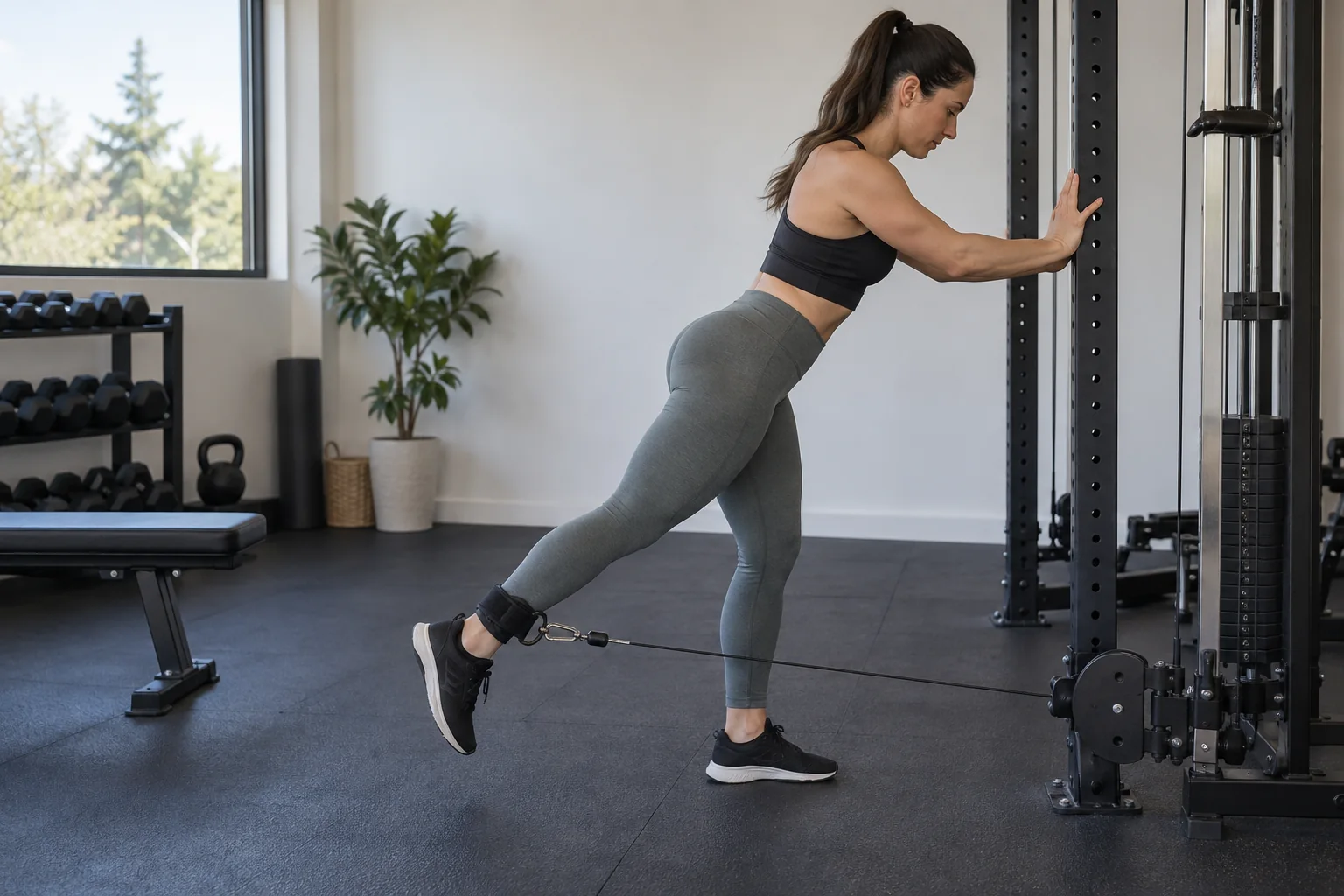
Secure a compatible padded cuff around your ankle, connect its attachment ring to the low cable, and check that the cuff cannot slide off. Face the pulley, hold a fixed support, and move the working leg a short distance backward. Return slowly with your pelvis steady.
This is hip extension, moving the thigh behind the body, with the glutes contributing. I would stop the range where you have to arch your back or turn your pelvis to lift the leg farther. A short controlled kickback is enough for this exercise. Use the fixed frame only where the manufacturer permits it, keeping hands clear of cables, pulleys, and the weight stack.
10. Standing Leg Curl
Use the same low-pulley ankle-cuff setup and face the machine with a secure fixed support. Bend the working knee to bring your heel toward your buttock, then lower it. Keep the thigh fairly still so the movement comes mainly from bending the knee.
The hamstrings run along the back of the thigh and help with that knee bend. This differs from the kickback, where the thigh moves backward. I choose the curl when I want direct knee-bending work and the cuff stays comfortable. If the strap twists, the cable rubs your other leg, or you cannot balance without hanging from the frame, stop and change the setup rather than adding weight.
The bench attachment guide explains supported leg-curl options when standing cuff work does not suit your setup.
For more lower-body choices, the cable leg exercise guide adds lunges, hip abduction and adduction, pull-throughs, and Romanian deadlifts. It also explains which three movements to choose for a focused session.
Cable Pallof Presses and Kneeling Crunches
A Pallof press asks you to keep the trunk still against a sideways pull. A kneeling crunch asks you to bend it deliberately. I start with the Pallof press when the main challenge is controlling position, then use crunches as a separate abdominal option if the movement is comfortable.
11. Standing Pallof Press
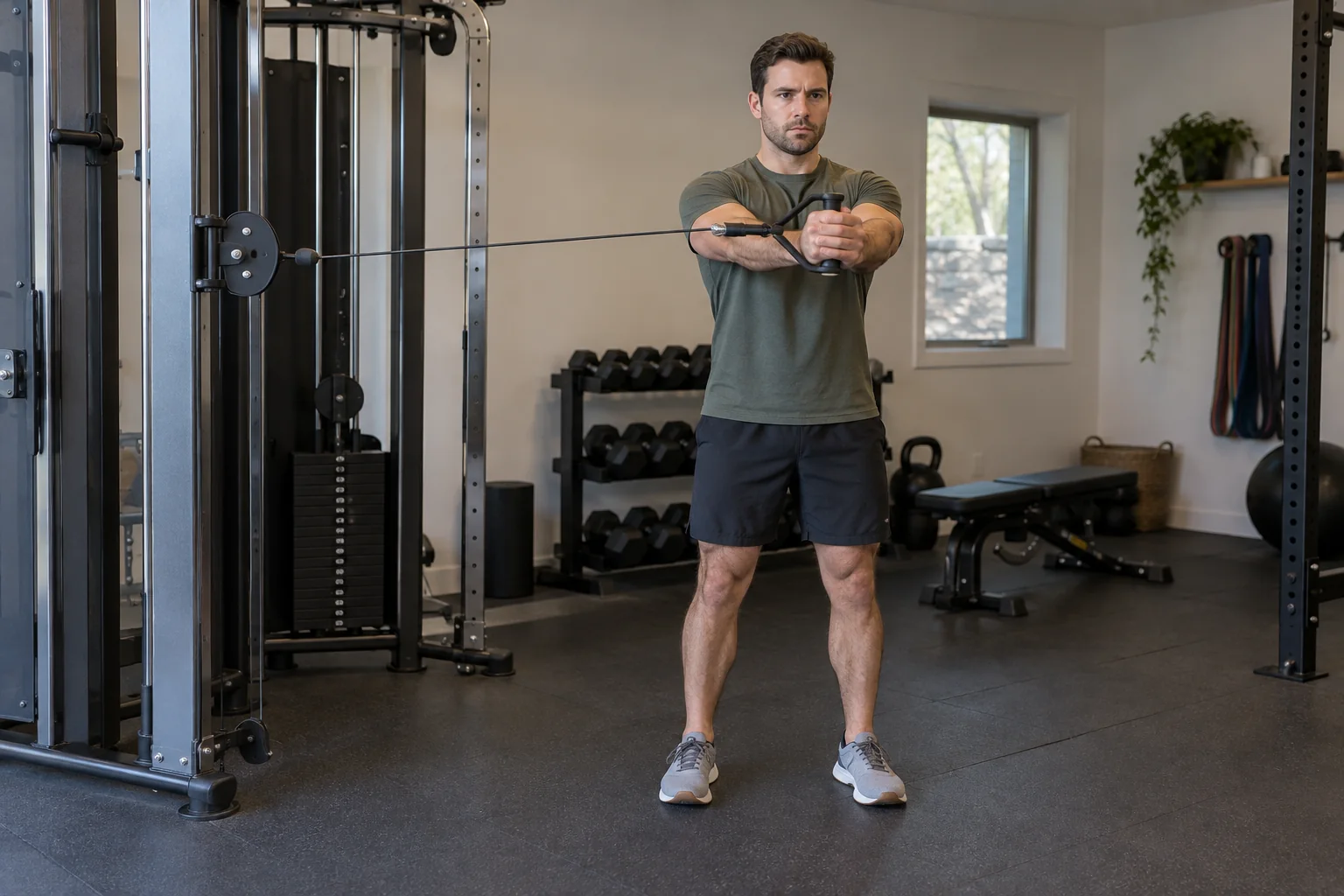
Set a single handle around chest height and stand side-on to the pulley. Hold it with both hands at your chest, press straight forward, pause briefly, and bring it back. Keep your chest and hips facing ahead, then turn around to work the other side.
This is anti-rotation, resisting the cable's attempt to turn you. NASM describes the Pallof press as a core exercise with that purpose. Keep your chest and hips facing forward as your hands move. Lower the weight if the press makes you rotate, tilt, or lean away, and keep breathing through the set.
12. Kneeling Cable Crunch
Attach a rope to a high pulley and kneel on a comfortable mat facing the station. Hold the rope ends beside your head, keep your hands there, and bring your rib cage toward your pelvis. Return slowly through a comfortable range, with the cable clear of your face.
Your abdominals bend the trunk. If you mostly sit your hips backward or pull the rope down with your arms, the exercise has changed. I recommend a light practice set to check that distinction before increasing the load. If kneeling or repeated trunk bending is uncomfortable, leave out the crunch and try the standing Pallof press only if that movement feels comfortable.
The cable core exercise guide goes further into crunches, Pallof variations, and diagonal movements. Use it to distinguish controlled trunk movement from resisting movement before choosing an additional exercise.
A Starter Cable Machine Workout
Start with five exercises, one or two sets each: a squat, row, chest press, leg curl, and Pallof press. This combines lower-body work, pulling, pushing, and trunk control without requiring two independent pulleys or a pulldown seat. The table is my starting example; adapt the exercise choices and amount of work to your experience.
Run the session. Warm up with easy movement and lighter practice reps before your working sets. A set is one group of repetitions before a rest. Complete the sets for one exercise before changing the machine, allowing about 60 to 90 seconds between sets and longer if you need it to recover or set up safely. Do both sides for the single-side movements; the listed reps are per side.
Starter session: one or two sets per exercise
| Exercise | Reps per set | Setup or limit |
|---|---|---|
| Squat | 8 to 12 | Low pulley; use an unloaded squat if the cable pull is awkward. |
| Single-arm row | 8 to 12 each side | Low pulley, D-handle, stable staggered stance. |
| Single-arm press | 8 to 12 each side | Chest-height pulley; enough room to face away and press. |
| Leg curl | 8 to 12 each side | Low pulley, compatible cuff, approved fixed support. |
| Pallof press | 6 to 10 each side | Chest-height pulley; brief pause without turning. |
Adapt the exercises. Without a suitable ankle cuff, leave out the cable leg curl and use a comfortable glute bridge or another hamstring exercise you already know. That is a substitution, not the same knee-bending movement. If the cable squat is awkward, use an unloaded squat. I would learn fewer movements well before trying every option in this guide.
Plan the week. Repeat a manageable session on two nonconsecutive days, such as Monday and Thursday, and account for any strength work you already do. ACSM's current guidance recommends training all major muscle groups at least twice a week; your broader plan may need other exercises to cover them. The example above introduces cable training rather than satisfying every training goal by itself.
For the exercises listed at eight to 12 reps, build toward 12 controlled reps at the same load. Once all planned sets reach 12 with effort still in reserve, try the smallest available increase and return to eight. For the Pallof press, use its six-to-10 range and keep the pause and forward-facing position consistent. Treat this as an adjustable rule of thumb. If the new load disrupts the movement, return to the previous one.
Check what the displayed load represents before logging it. For example, REP lists the Arcadia at a 2:1 ratio: a 100 lb stack selection corresponds to about 50 lb at the handle, before friction and other mechanical effects. That example belongs to Arcadia; check your own machine before dividing its displayed number.
When you are ready for an alternating weekly routine, follow our full-body cable workout plan. Its A/B sessions include exercise instructions, working sets, rest periods, and two-day or three-day schedules. Use that plan in place of this starter session rather than stacking both routines together.
FAQs
Can you build muscle with cable machines?
Cable exercises can support muscle growth when the work is challenging enough and progresses over time. The broader plan still needs suitable work for the muscles you want to train, using movements that fit the station and allow gradual loading.
Do cable machines halve the weight?
A cable machine with a 2:1 ratio provides roughly half the moving stack load at the handle before friction and other mechanical effects. Check the exact model’s ratio and whether its label means stack load or handle resistance before dividing a displayed number or comparing machines.
Can you do this workout with one cable?
This starter cable workout uses one cable at a time, provided it offers the required heights, attachments, travel and space. The fly needs two independent cables and the seated pulldown needs its supported station, so a fixed high pulley cannot cover every low-pulley exercise.
Can a cable machine replace every leg machine?
An ordinary cable machine cannot replace every leg machine, because a cuff or cable outlet does not supply a leg-extension seat or leg-press platform. Use approved accessories only as designed, and choose another exercise when the required support, loading path or attachment is missing.
Choose Your First Cable Session
I would begin with the starter session using only the movements your station accommodates comfortably. If the row, press, and squat are unfamiliar, practice those first and add the cuff and core work once setting up feels straightforward. You do not need to complete all 12 cable machine exercises in one visit.
Keep the settings for the next session if you can finish with control and recover comfortably. Reduce the load or number of sets when technique deteriorates; progress when the same work becomes manageable. If cables leave a specific gap in your home setup, the Home Gym Essentials guide can help you decide which addition would solve it.
Stop an exercise that causes pain, dizziness, or unusual symptoms. Seek qualified guidance for persistent discomfort, injury, or a medical condition affecting exercise.